




Here's how it works
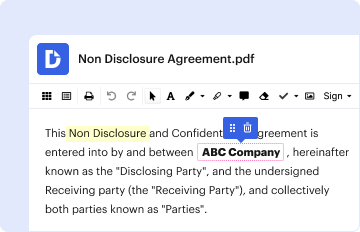
01. Edit your conservatorship questionnaire online
Type text, add images, blackout confidential details, add comments, highlights and more.
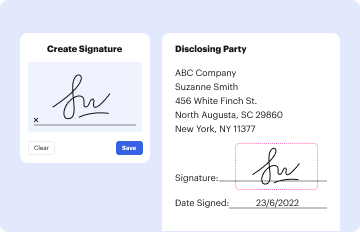
02. Sign it in a few clicks
Draw your signature, type it, upload its image, or use your mobile device as a signature pad.
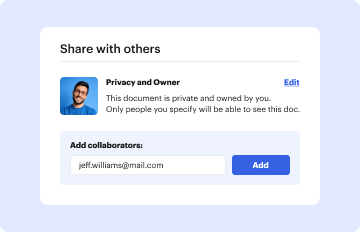
03. Share your form with others
Send confidential guardianship questionnaire via email, link, or fax. You can also download it, export it or print it out.
How to use or fill out conservatorship questionnaire with our platform

- Click ‘Get Form’ to open the conservatorship questionnaire in the editor.
- Begin by filling out Section I, which requires information about the incapacitated adult. Enter their name, current mailing address, date of birth, and social security number.
- Provide details regarding any existing care arrangements, such as a Patient Advocate or Power of Attorney. Indicate 'Yes' or 'No' and fill in the corresponding names and contact information if applicable.
- Move to Section II for Petitioner Information. Fill in your name, relationship to the incapacitated adult, and contact details.
- In Section III, specify reasons for guardianship and conservatorship needs by selecting appropriate options. Provide additional explanations where necessary.
- Complete Section IV by listing family members of the incapacitated adult and indicating any legal incapacity among them.
- Review all entries for accuracy before saving your completed form. Utilize our platform's features to easily edit or adjust any information as needed.
Start using our platform today to efficiently complete your conservatorship questionnaire for free!
Fill out conservatorship questionnaire online
It's free
It's free
See more conservatorship questionnaire versions
We've got more versions of the conservatorship questionnaire form. Select the right conservatorship questionnaire version from the list and start editing it straight away!
| Versions | Form popularity | Fillable & printable |
|---|---|---|
| 2024 | 4.9 Satisfied (56 Votes) | |
| 2022 | 4.8 Satisfied (32 Votes) | |
| 2022 | 4.8 Satisfied (53 Votes) | |
| 2021 | 4.8 Satisfied (58 Votes) | |
| 2021 | 4.7 Satisfied (140 Votes) | |
| 2021 | 4.8 Satisfied (105 Votes) | |
| 2020 | 4.8 Satisfied (60 Votes) | |
| 2020 | 4.4 Satisfied (30 Votes) | |
| 2020 | 4.4 Satisfied (1248 Votes) | |
| 2020 | 4.3 Satisfied (177 Votes) | |
| 2020 | 4.8 Satisfied (71 Votes) | |
| 2019 | 4.9 Satisfied (31 Votes) | |
| 2019 | 4.8 Satisfied (110 Votes) | |
| 2019 | 4.9 Satisfied (27 Votes) | |
| 2019 | 4.5 Satisfied (54 Votes) |
Got questions?
We have answers to the most popular questions from our customers. If you can't find an answer to your question, please contact us.
Contact us
What can legally be controlled as part of a conservatorship in the United States?
A conservatorship lets someone manage a loved ones finances and healthcare when they cant make decisions on their own. Its important to discuss this option with the person before they need it. Since state and local laws dictate how conservatorships work, you may want to consult an attorney.
How difficult is it to get conservatorship?
In a limited conservatorship, the judge first decides if a person with a developmental disability needs a conservatorship. If the judge decides they do, the judge must consider one by one whether the person needs help in each of the seven areas of life covered by the seven powers.
What are the 7 powers of conservatorship?
Petitioning the court to make major changes can be a costly, time-consuming, and cumbersome process. Although it is possible to get an emergency temporary conservatorship, the process of establishing a permanent conservatorship can take six months.
What are the disadvantages of a conservatorship?
People under conservatorship are stripped of their civil liberties and their autonomy. Conservatees are at risk of abuse and exploitation by their conservatorships.
What does a conservator have control over?
In California, a conservatorship is the legal term for a court proceeding in which a probate judge appoints a responsible adult or organization, known as a conservator, to manage the personal life and/or finances of an incapacitated adult, known as a conservatee.
Security and compliance
At DocHub, your data security is our priority. We follow HIPAA, SOC2, GDPR, and other standards, so you can work on your documents with confidence.
Learn more


People also ask
What are the 7 powers of a conservatorship?
7 powers in a limited conservatorship Consent or withhold consent to the conservatee to marry. Exercise the conservatees right to enter into a contract. Give or withhold medical consent on behalf of the conservatee. Exercise or limit the conservatees right to control social and sexual contacts and relationships.