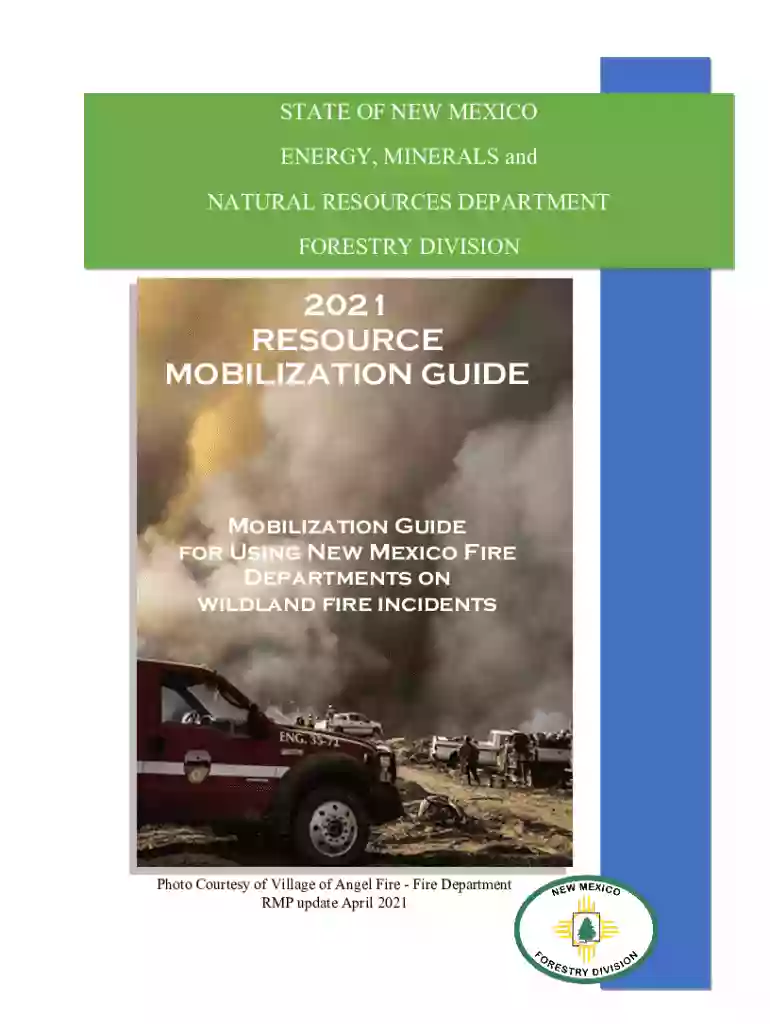
NM Resource Mobilization Guide 2026

Get Form
NM Resource Mobilization Guide Preview on Page 1

Here's how it works

01. Edit your form online
Type text, add images, blackout confidential details, add comments, highlights and more.

02. Sign it in a few clicks
Draw your signature, type it, upload its image, or use your mobile device as a signature pad.

03. Share your form with others
Send it via email, link, or fax. You can also download it, export it or print it out.

How to use or fill out NM Resource Mobilization Guide with DocHub

Form edit decoration
9.5
Ease of Setup
DocHub User Ratings on G2
9.0
Ease of Use
DocHub User Ratings on G2
  1. Click ‘Get Form’ to open the NM Resource Mobilization Guide in our platform.
  2. Begin with the 'Introduction' section. Read through the guidelines carefully to understand the purpose and scope of the document.
  3. Move on to 'Chapter 1: Qualification System for Personnel'. Fill in any required fields regarding personnel qualifications, ensuring you have all necessary documentation ready.
  4. Proceed to 'Chapter 2: Standards for Fire Apparatus'. Here, input details about your fire apparatus, including safety features and equipment specifications as outlined in the guide.
  5. In 'Chapter 3: Mobilization of Resources', complete sections related to resource mobilization procedures. Ensure that all personnel and equipment are documented accurately.
  6. Continue through each chapter, filling out relevant information as needed. Use our editor's tools to highlight important sections or add comments for clarity.
  7. Once completed, review your entries for accuracy. Utilize our platform’s features to save or share your filled-out guide with team members for feedback.

Start using our platform today to streamline your document editing and ensure a smooth completion of the NM Resource Mobilization Guide!

See more NM Resource Mobilization Guide versions

We've got more versions of the NM Resource Mobilization Guide form. Select the right NM Resource Mobilization Guide version from the list and start editing it straight away!
Versions Form popularity Fillable & printable
2021 4.8 Satisfied (112 Votes)
2016 4 Satisfied (25 Votes)
be ready to get more

Complete this form in 5 minutes or less

Get form

Got questions?

We have answers to the most popular questions from our customers. If you can't find an answer to your question, please contact us.
Contact us
They can be natural, like land, water, air, minerals, and forests, or they can be human-made, like factories, machines, and tools. Both types of resources are important for our economy.
To start, resources can include labor, management, expertise, equipment, finances, energy, land and time. Resource management is the process of allocating those resources as efficiently as possible.
Resource-Mobilization Theory emphasizes the importance of resources in social movement development and success. Resources are understood here to include: knowledge, money, media, labor, solidarity, legitimacy, and internal and external support from a power elite.
The steps that FAO has identified in their ap- proach to resource mobilization are directly appli- cable to the IPPC context and include Identify Engage Negotiate Manage and Report Com- municate Results.
Resource mobilisation is the process of acquiring and managing resources, including financial, human, and natural, to achieve specific goals and ensure sustainability. It involves acquiring new resources, maximising the use of existing ones, and strategic planning for long-term growth.

Security and compliance

At DocHub, your data security is our priority. We follow HIPAA, SOC2, GDPR, and other standards, so you can work on your documents with confidence.

Learn more
ccpa2
pci-dss
gdpr-compliance
hipaa
soc-compliance

People also ask

Key Takeaways: Resource Mobilization Theory The five categories of resources that organizations seek to obtain are material, human, social-organizational, cultural, and moral. Sociologists have found that being able to effectively utilize resources is linked to a social organizations success.
Key sources of resource mobilisation include taxation, public and private savings, foreign direct investment (FDI), and disinvestment.
resource mobilization plan following this structure: Analytical overview (WHERE ARE WE NOW?) Vision and objectives (WHERE DO WE WANT TO GO?) Implementation plan (HOW DO WE GET THERE?) Resource mobilization reflection note- Invest in partnerships not projects.

Related links