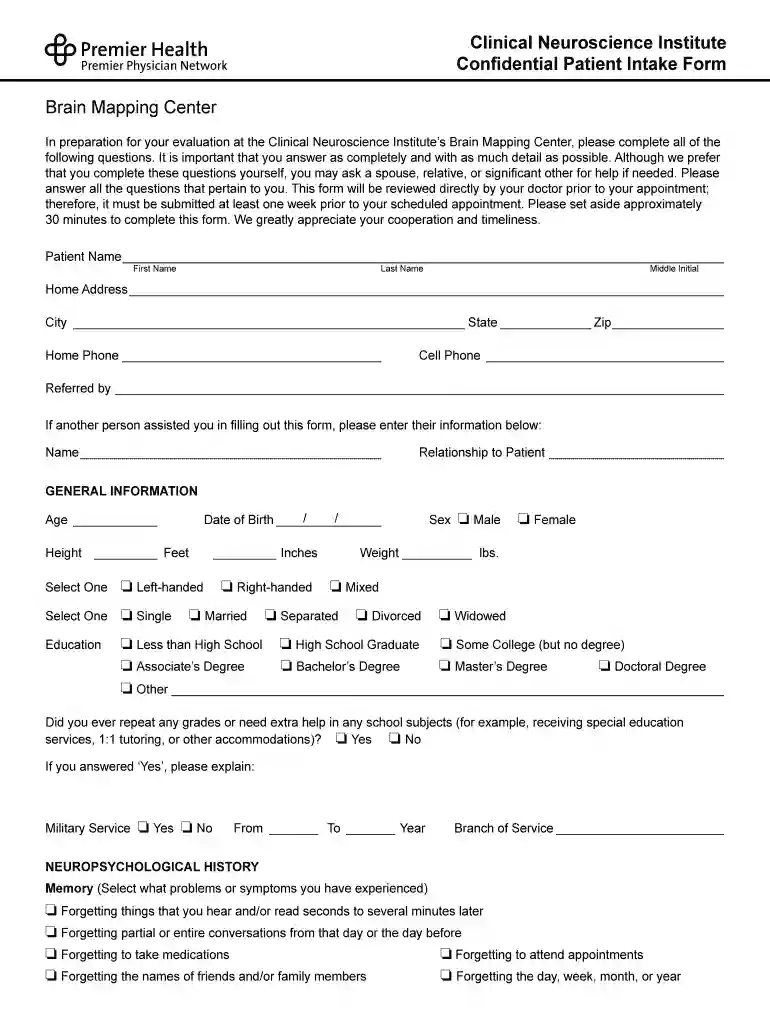
Brain Mapping TechnologyNeuroscienceAurora Health Care Preview on Page 1

Brain Mapping TechnologyNeuroscienceAurora Health Care 2026

Here's how it works

  • 01. Edit your form online

    Type text, add images, blackout confidential details, add comments, highlights and more.

  • 02. Sign it in a few clicks

    Draw your signature, type it, upload its image, or use your mobile device as a signature pad.

  • 03. Share your form with others

    Send it via email, link, or fax. You can also download it, export it or print it out.

How to use or fill out Brain Mapping TechnologyNeuroscienceAurora Health Care with our platform

Form edit decoration
9.5
Ease of Setup
DocHub User Ratings on G2
9.0
Ease of Use
DocHub User Ratings on G2
  1. Click ‘Get Form’ to open it in the editor.
  2. Begin by entering your personal information, including your name, address, and contact details. Ensure accuracy as this will be reviewed by your doctor.
  3. Fill out the General Information section. Provide your date of birth, age, height, weight, and education level. Select options for handedness and marital status.
  4. In the Neuropsychological History section, select any memory issues you have experienced. Be thorough in detailing symptoms to assist in your evaluation.
  5. Complete the Medical History section by indicating if you have primary care physicians or specialists. List any relevant tests performed along with dates.
  6. For Occupational History, outline your work experience starting from your current job backward. Include position titles and duties.
  7. Finally, review all entries for completeness and accuracy before submitting the form at least one week prior to your appointment.

Start using our platform today to streamline your form completion process effortlessly!

See more Brain Mapping TechnologyNeuroscienceAurora Health Care versions

We've got more versions of the Brain Mapping TechnologyNeuroscienceAurora Health Care form. Select the right Brain Mapping TechnologyNeuroscienceAurora Health Care version from the list and start editing it straight away!

VersionsForm popularityFillable & printable
20184.8 Satisfied (30 Votes)

be ready to get more

Complete this form in 5 minutes or less

Got questions?

We have answers to the most popular questions from our customers. If you can't find an answer to your question, please contact us.

Brain mapping is specifically defined, in summary, as the study of the anatomy and function of the brain and spinal cord through the use of imaging, immunohistochemistry, molecular optogenetics, stem cell and cellular biology, engineering, neurophysiology and nanotechnology.
Brain mapping may be described as the study of the specific regions of the brain and the tasks they perform, also known as localization of function. It uses machines like an EEG, MRI, or PET to map and understand the brain.
Proven Benefits of Brain Mapping and Neurofeedback Research shows that combining brain mapping with biofeedback can effectively reduce symptoms of anxiety, ADHD, depression, PTSD, and other conditions. Below is a list of clinical studies that support how well this approach works.
The team often consists of a neurosurgeon, neuroanesthesiologist, neuropsychologist and other health care professionals. Brain mapping is performed either intraoperatively, that is, during surgery to treat a condition, or preoperatively, that is, before surgery to treat a condition.
Unlike other diagnostic procedures, brain mapping is completely non-invasive and safe. It does not require surgery or the use of radiation, making it a low-risk option for individuals seeking to understand their mental health better.

Security and compliance

At DocHub, your data security is our priority. We follow HIPAA, SOC2, GDPR, and other standards, so you can work on your documents with confidence.

People also ask

Neurofeedback is one of the main tools in brain mapping therapy. In a typical session, you would wear sensors that track your brains electrical activity. The goal here isnt just to measureits to teach your brain how to stay calm and focused.
Brain mapping is a minimally invasive technology used to diagnose and treat: Brain tumors. Parkinsons disease. Subcortical tumors and cysts that would otherwise be inaccessible to surgeons, and that were once considered inoperable.

Related links

Brain dynamics reflecting an intra-network brain state is - PMC

by MSE Sendi 2025 Cited by 12 In the AURORA study, understanding whether dFNC variables derived from resting-state fMRI early after a trauma can link with future PTSD symptom severity isRead more

Learn more
Neuroscience

Neuroscience research at CSHL is centered on three broad themes: sensory processing, cognition, and mental disorders.Read more

Learn more
If you believe that this page should be taken down, please follow our DMCA take down process here