




Here's how it works
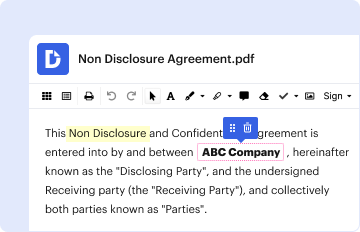
01. Edit your land disturbance permit greenville online
Type text, add images, blackout confidential details, add comments, highlights and more.
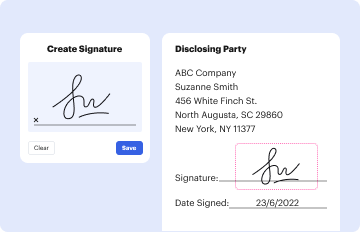
02. Sign it in a few clicks
Draw your signature, type it, upload its image, or use your mobile device as a signature pad.
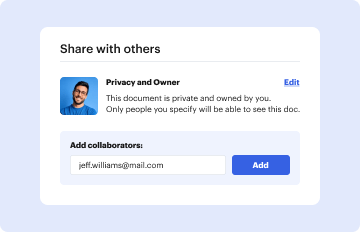
03. Share your form with others
Send greenville county land disturbance permit via email, link, or fax. You can also download it, export it or print it out.
How to use or fill out land disturbance permit greenville with our platform

- Click ‘Get Form’ to open the land disturbance permit greenville in the editor.
- Begin by entering the RECEIVED DATE and FACILITY or PROJECT NAME at the top of the form. Ensure all details are accurate as this information is crucial for processing your application.
- In Section I, provide comprehensive site information including County, Municipality, Site Address, Latitude, Longitude, and details about receiving water bodies. This section is vital for environmental assessments.
- Complete Section II with contact information for both primary and secondary permittees. Include names, addresses, emails, and phone numbers to ensure proper communication throughout the permitting process.
- In Section III, carefully read and sign the certifications. Make sure not to use black ink or electronic signatures as specified. This section confirms your compliance with legal requirements.
Start filling out your land disturbance permit greenville today using our platform for free!
Fill out land disturbance permit greenville online
It's free
It's free
See more land disturbance permit greenville versions
We've got more versions of the land disturbance permit greenville form. Select the right land disturbance permit greenville version from the list and start editing it straight away!
| Versions | Form popularity | Fillable & printable |
|---|---|---|
| 2012 | 4.8 Satisfied (163 Votes) |
Got questions?
We have answers to the most popular questions from our customers. If you can't find an answer to your question, please contact us.
Contact us
Do I need a permit to clear land in SC?
Land disturbance (e.g., clearing, excavating and grubbing) is one activity that requires an NPDES permit. SCDES has developed a general (statewide) permit that applies to anyone clearing, excavating, grubbing or otherwise engaged in land disturbance.
What requires a building permit in Greenville, SC?
City code says any owner or owners authorized agent who intends to construct, enlarge, alter, repair, move, demolish or change the occupancy of a building or structure, or to , , enlarge, alter, repair, remove, convert or replace any electrical, gas, mechanical or plumbing system, the installation of which
What are the examples of land disturbance?
Such activities include, but are not limited to, clearing, removal of vegetation, stripping, grading, grubbing, excavating, filling, logging and storing of materials.
What can a homeowner do without a permit in SC?
Home improvement projects that dont require a building permit Replacing an existing wall or ceiling light fixture. Repair or replace plumbing fixtures. Repair non-structural damage to walls and ceilings. replacement windows. new flooring. Installing new countertops or kitchen cabinets.
What happens if you dont get a building permit in SC?
If work is performed without a permit, you may be fined or your permit fee may be doubled. Contractors working without a permit may be reported to the State Department of Labor, Licensing and Regulation.
Security and compliance
At DocHub, your data security is our priority. We follow HIPAA, SOC2, GDPR, and other standards, so you can work on your documents with confidence.
Learn more


People also ask
What is a land disturbance permit for?
Land Disturbance Permit means a permit issued by the City to conduct any land disturbance activity equal to or greater than one acre, earthwork involving moving more than two hundred (200) cubic yards or if grading occurs on a property that has a slope in excess of eight percent (8%).
Do I need a permit to build a fence in Greenville, SC?
Building. Note: Accessory structures less than 200 square feet still require application submittal and approval prior to construction. Note: All fences still require application submittal and planning approval prior to construction.
Do I need a permit to build a fence in SC?
Permits and Approvals In some cases, a building permit is required before constructing a fence in South Carolina. This is especially true for fences that are taller than the usual allowed height. It can also be true for fences located in specific zones, or fences that require excavation.