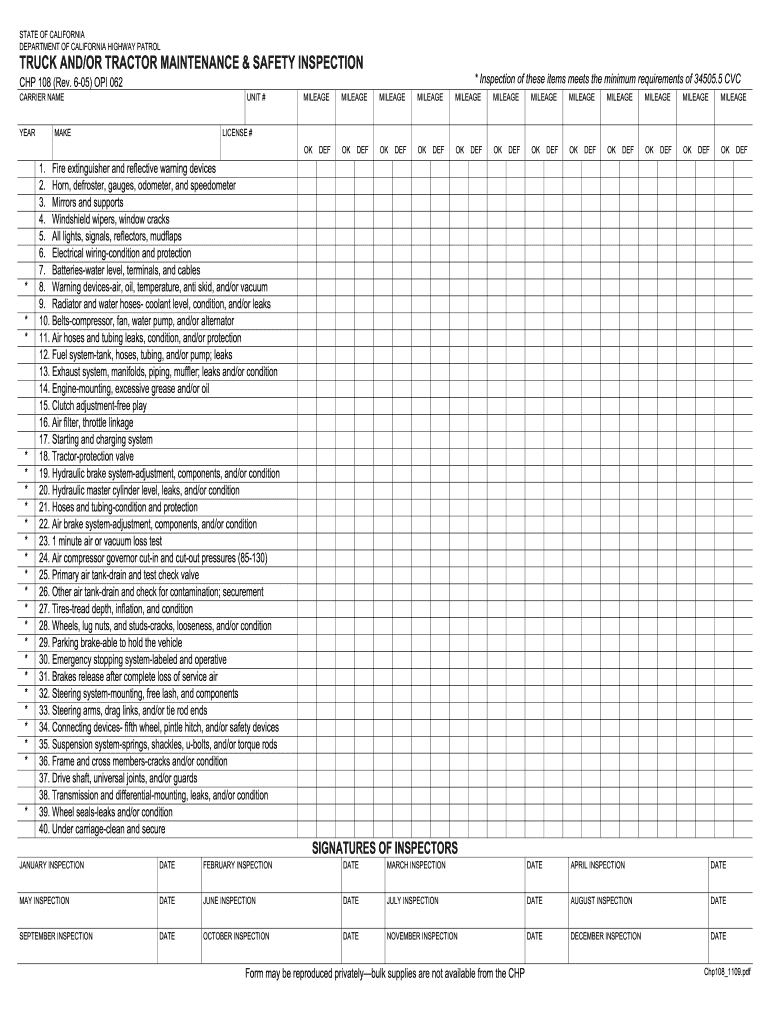







Definition and Purpose of the 90 Day BIT Inspection Form
The "printable 90 day bit inspection form" serves as a vital document for ensuring compliance with safety regulations in commercial vehicle operations, specifically within the context of the California Highway Patrol (CHP) regulations. This form is centered around the biennial inspection requirements for vehicles subject to the California Vehicle Code, focusing on both safety and maintenance inspections. The term "BIT" stands for "Biennial Inspection of Terminals," reflecting its use in confirming that vehicles are maintained and operated in accordance with state standards.
The primary purpose of the form is to document the inspection of commercial vehicles, such as trucks and trailers, every 90 days, ensuring that they meet safety standards related to brakes, tires, lights, and other critical components. It provides a checklist formatted to facilitate the recording of necessary information, which can be utilized by fleet operators and inspectors to verify that vehicles are compliant with regulatory requirements.
How to Use the Printable 90 Day BIT Inspection Form
Using the printable 90 day BIT inspection form involves several straightforward steps to ensure accurate completion and adherence to safety standards. Here’s a guide on how to effectively utilize the form:
- Download or Print the Form: Access the printable version of the form, ensuring it is the most recent update to align with current regulations.
- Inspection Preparation: Gather necessary tools and materials for performing a thorough inspection, including wrenches, flashlights, and tire gauges. Review the inspection criteria outlined in the form prior to beginning.
- Conduct the Inspection: Systematically inspect each vehicle component specified on the form. This includes:
- Brakes: Check functionality, adjustment, and any visible wear.
- Lights: Test all headlights, brake lights, turn signals, and reflectors.
- Tires: Examine tire tread depth, pressure, and overall condition.
- Document Findings: As you complete the inspection, note any discrepancies or issues directly on the form. Use the provided checkboxes to indicate the status of each component.
- Sign and Date: Once the inspection is completed, the inspector should sign and date the form, ensuring accountability and creating a record of compliance.
- Store Records: Keep copies of completed forms for your records and to demonstrate compliance during future inspections or audits.
Following these steps ensures not only compliance but also enhanced safety for the vehicles operated.
Key Elements of the 90 Day BIT Inspection Form
The printable 90 day BIT inspection form consists of several key elements that are essential for a thorough inspection process. Understanding these elements helps ensure that all necessary information is captured efficiently:
- Vehicle Information: This section typically includes fields for the vehicle's make, model, year, and identification number, which aids in tracking and record-keeping.
- Inspection Checklist: A detailed checklist section allows inspectors to assess crucial components of the vehicle, including:
- Brake system functionality
- Tire condition and tread depth
- Lighting systems
- Exhaust systems and emissions controls
- Comments Section: An area where inspectors can note any concerns or deficiencies encountered during the inspection, providing a pathway for follow-up actions.
- Signature Fields: Designated areas for both the inspector and vehicle operator to sign, confirming that the inspection has been completed and understood.
- Date of Inspection: Documentation of the date helps track when the next inspection is due, ensuring compliance within the 90-day timeframe.
Understanding these elements ensures that the inspection is thorough and aligns with regulatory requirements.
Legal Use of the 90 Day BIT Inspection Form
The legal use of the printable 90 day BIT inspection form is crucial for both operators and inspectors within the commercial vehicle industry. This form is a formal requirement under California law, per the guidelines established by the CHP. Key legal aspects include:
- Regulatory Compliance: The form must be filled out correctly and in full compliance with the regulatory standards set forth by the state authorities. Failure to adhere to these requirements can result in fines or vehicle operation restrictions.
- Record-Keeping: Operators must maintain an organized record of all completed inspections, which can be requested during compliance audits. This adherence provides a legal safeguard against potential penalties.
- Accountability: Signing the form affirms that both the inspector and the vehicle operator acknowledge the inspection results and confirm the vehicle's compliance status, thus creating a legal record of accountability.
Properly utilizing the printable 90 day BIT inspection form ensures that operators uphold safety standards while also following legal mandates.
Who Typically Uses the 90 Day BIT Inspection Form?
The printable 90 day BIT inspection form is utilized by a variety of stakeholders in the transportation industry. Understanding who typically uses this form can help streamline compliance efforts:
- Fleet Managers: Responsible for overseeing the maintenance and safety compliance of commercial vehicle fleets, fleet managers utilize this form to ensure all vehicles are inspected according to the required schedule.
- Commercial Drivers: Drivers of commercial vehicles engage with the form as part of their responsibilities, ensuring they report any findings during routine inspections.
- Vehicle Inspectors: Certified inspectors utilizing the form to evaluate vehicle safety adhere strictly to the documentation requirements outlined in the form.
- Regulatory Bodies: Officials from the CHP and other regulatory agencies may use the completed forms to assess compliance during audits or reviews, ensuring that all commercial vehicles meet state safety standards.
Understanding the diverse users of the form allows for better communication and adherence to safety practices.