




01. Edit your texas petition for divorce with child online
Type text, add images, blackout confidential details, add comments, highlights and more.

Type text, add images, blackout confidential details, add comments, highlights and more.

Draw your signature, type it, upload its image, or use your mobile device as a signature pad.

Send texas divorce forms with child pdf via email, link, or fax. You can also download it, export it or print it out.
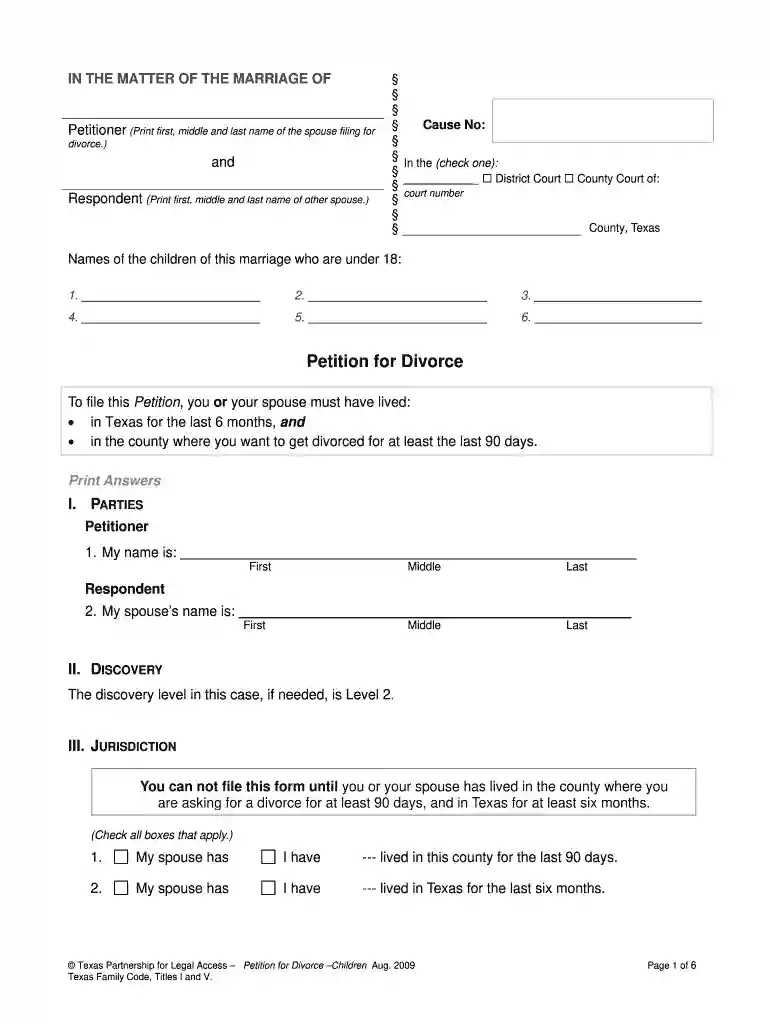
The petition for divorce with children form in Texas is a legal document used to initiate divorce proceedings when there are children involved. This form outlines the necessary information and requirements for a divorce, incorporating aspects related to child custody, support, and other essential details relevant to the children involved. Understanding the components of this form is critical for those seeking to navigate the divorce process effectively.
Basic Information: The form begins with the petitioner’s and respondent’s full names, addresses, and other contact details. This section is crucial for establishing identity and jurisdiction.
Children’s Details: It includes information about all children from the marriage, including names, birth dates, and any existing custody arrangements. This section will address parenting plans and the best interests of the children.
Grounds for Divorce: In Texas, the petition must state the grounds for divorce, typically citing insupportable marital discord as the most commonly used reason. This provides the basis for the legal request.
Custody and Support: The form must outline proposed arrangements for child custody and child support. It is essential to clearly define whether joint or sole custody is being requested and how support will be calculated.
Property Division: This section clarifies the distribution of marital property, including assets and debts. It’s important to note how property will be divided, as this can affect both parties' financial situations post-divorce.
Gather Necessary Information: Before filling out the form, compile all relevant information, such as your marriage certificate, children’s birth certificates, and financial documents.
Complete the Form: Fill in all required fields accurately. Ensure that each section is completed, especially regarding custody and support arrangements.
Review and Sign the Form: Carefully review the document for accuracy, then sign it. Ensure that any required witnesses sign as well, if applicable.
File the Petition: Once completed, file the petition with the appropriate Texas court, along with any required filing fees. Be mindful of local court rules regarding submission.
Serve the Respondent: After filing, the next step is to serve the respondent with the petition, adhering to legal requirements for notification.
Best Interests of the Child: Texas law emphasizes the best interests of the children when determining custody arrangements. This concept should guide the proposed custody plan.
Mediation: Couples may be required to undergo mediation before the court finalizes the divorce, particularly regarding custody and support issues. Understanding this requirement can ease the process.
Modification and Enforcement: Post-divorce, custody and support orders may be modified as circumstances change. Familiarizing yourself with this process can ease future adjustments.
Incomplete Information: Failing to provide complete and accurate information can delay proceedings. Double-check all fields in the form.
Ignoring Filing Deadlines: Be aware of deadlines for filing your petition; missing these can complicate or jeopardize your case.
Neglecting to Communicate: Ensure regular communication with your ex-spouse regarding child-related matters, as this fosters cooperation and reduces conflict.
Legal Aid Services: Consider seeking assistance from legal aid organizations to help navigate the complexities of divorce, especially when children are involved.
Family Law Attorneys: Consulting with an attorney specializing in family law can provide tailored advice and representation throughout the divorce process.
By following these guidelines and thoroughly understanding the petition for divorce with children form in Texas, individuals can approach this challenging time with greater clarity and structure.
We've got more versions of the texas petition for divorce with child form. Select the right texas petition for divorce with child version from the list and start editing it straight away!
| Versions | Form popularity | Fillable & printable |
|---|---|---|
| 2009 | 4.8 Satisfied (124 Votes) |
At DocHub, your data security is our priority. We follow HIPAA, SOC2, GDPR, and other standards, so you can work on your documents with confidence.
Jan 30, 2018 This publication explains the tax rules that apply when you sell or otherwise give up ownership of a home. If you meet.Read more
Mar 3, 2026 Prove-Up Affidavit Affidavit for Prove-Up of Agreed Divorce With Children (TexasLawHelp.org) Affidavit for Prove-Up of Agreed Divorce WithoutRead more


