




01. Edit your respirator fit test form online
Type text, add images, blackout confidential details, add comments, highlights and more.

Type text, add images, blackout confidential details, add comments, highlights and more.

Draw your signature, type it, upload its image, or use your mobile device as a signature pad.

Send respirator fit test record form via email, link, or fax. You can also download it, export it or print it out.
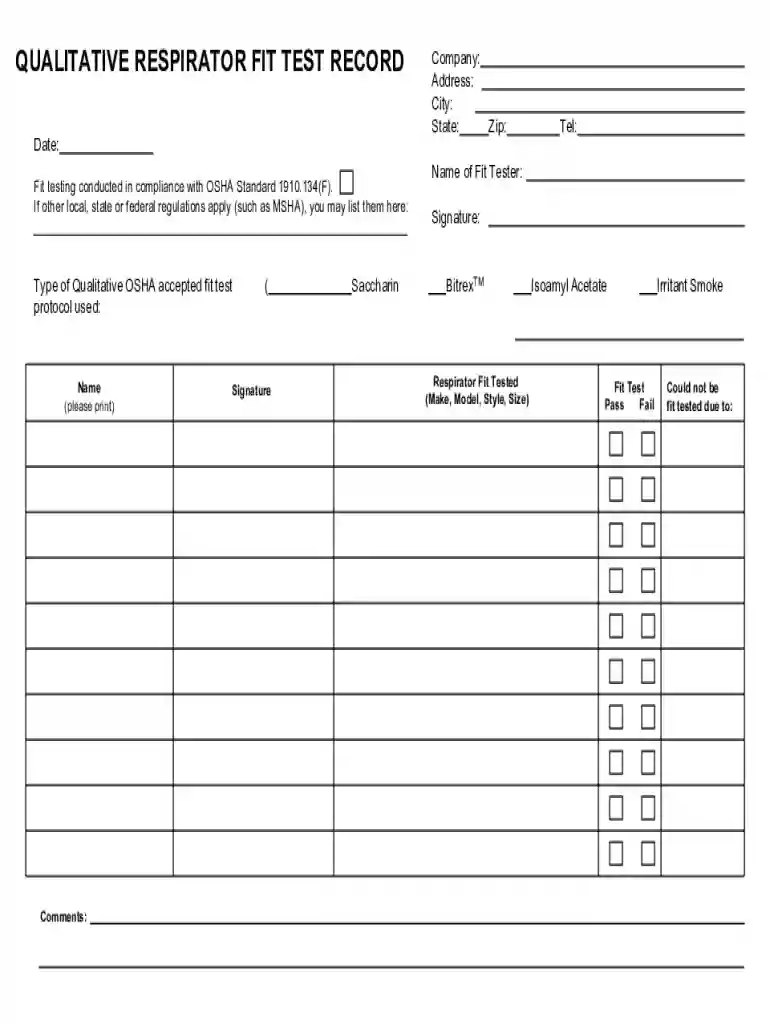
The Qualitative Respirator Fit Test Record serves as a crucial document in ensuring the proper fit of respiratory protective equipment, as required by OSHA standard 1910.134(F). This record complies with the regulations to provide a structured approach to fit testing, enabling employers to validate that a respirator securely fits the individual user.
Tester Information: This section captures the name and credentials of the individual conducting the fit test. A qualified professional must perform fit tests to ensure reliability and regulatory compliance.
Test Protocol Used: Employers must document which qualitative fit test protocol was employed during the assessment, such as the saccharin or Bitrex method. This detail ensures transparency and facilitates tracking.
Respirator Details: The specific type and model of the respirator being tested are noted, including any pertinent accessories. Documenting these details is crucial for future reference and compliance purposes.
Fit Test Results: The record must indicate whether the fit test has been passed or failed, providing a clear outcome of the assessment to inform subsequent actions related to the employee's protective equipment.
Accurate documentation in the Qualitative Respirator Fit Test Record is essential for several reasons:
Legal Compliance: Maintaining thorough records ensures adherence to regulatory requirements set forth by OSHA, minimizing the risk of penalties for non-compliance.
Workplace Safety: Providing a properly fitting respirator significantly reduces the risk of exposure to hazardous airborne substances. Documented fit testing supports a culture of safety in the workplace.
Training and Accountability: The record serves as a training tool, as it provides data for assessing fit test success rates and identifying patterns that necessitate further training for testers or users.
Preparation: Ensure the test area is free from contaminants and that all necessary equipment is available. This includes the appropriate respirator in good condition and the materials needed for the qualitative test.
Conducting the Test: Follow the selected protocol (e.g., saccharin or Bitrex). The test involves having the individual wear the respirator while performing specific movements, ensuring a comprehensive assessment of the fit.
Recording Results: Once the fit test is complete, indicate on the record whether the test was passed or failed. Be specific about the reasons for any failures.
Review and Sign Off: The tester must sign the record to verify the accuracy of the information provided, which adds an additional layer of accountability to the documentation.
Employee Health and Safety Programs: Companies utilize the fit test record in their health and safety initiatives, ensuring employees are equipped with the right protective gear.
Insurance and Liability Protection: In the event of health claims, having comprehensive fit test records can demonstrate compliance with safety protocols, which may protect companies from liability.
Various versions or templates of the fit test record exist, catering to different organizational needs. Companies may design their own based on regulatory requirements or make use of available respirator fit test record forms in various formats, including PDF and Word documents.
Compliance with OSHA’s respirator regulations necessitates proper record-keeping practices. The Fit Test Record should be retained for a specific period, typically for the duration of employment plus a designated number of years thereafter, following the recommendations in the OSHA standard. Establishing a system to index and retrieve documents will ease inspections by regulatory bodies and ensure that safety practices are consistently enforced across the organization.
The Qualitative Respirator Fit Test Record is a critical component of respiratory safety protocols in the workplace. By carefully documenting test results and maintaining compliance, organizations can enhance worker safety, meet regulatory obligations, and contribute to an overall culture of health and safety.
We've got more versions of the respirator fit test form form. Select the right respirator fit test form version from the list and start editing it straight away!
At DocHub, your data security is our priority. We follow HIPAA, SOC2, GDPR, and other standards, so you can work on your documents with confidence.
This form provides information such as the pass/fail results of respirator fit testing and the make and model of the respirator(s) used in fit testing.
Respirator Fit Test Record. ABC Hospital. Date of Test. Employee Name Taste Threshold if qualitative test. 10 20 30 30 cannot taste. Pass? Y NRead more
IMPORTANT: This guidance document was developed for use on the web. Please review the following disclaimers before using the PDF version of the web-basedRead more


