







Definition & Meaning
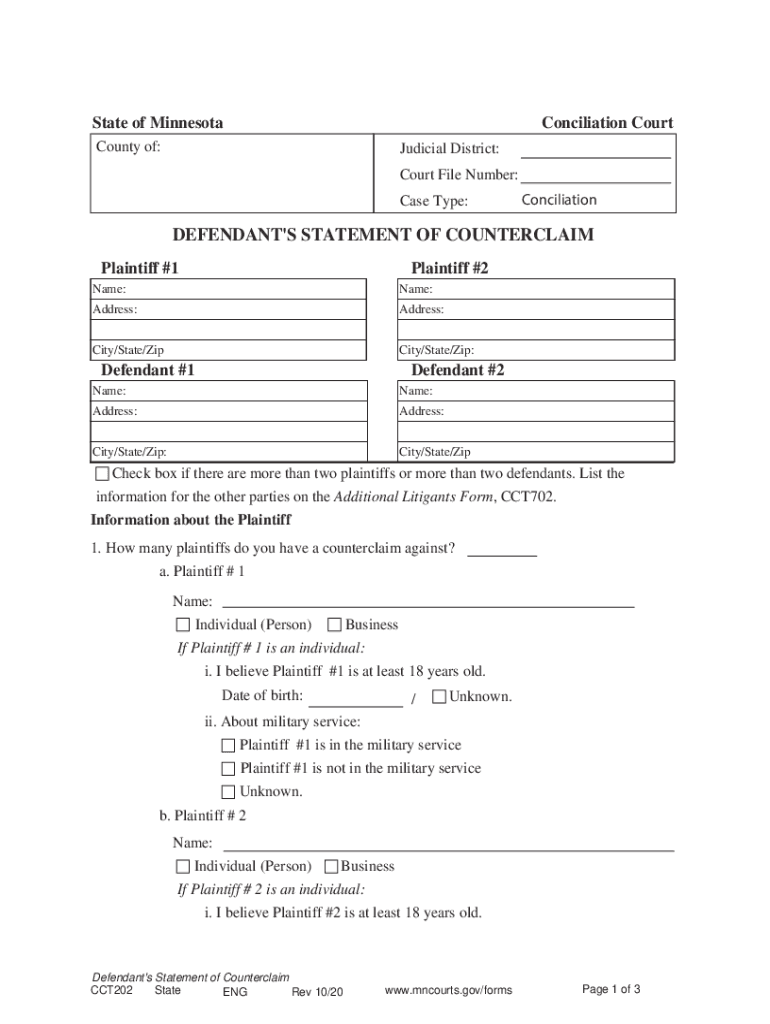
The "Statement Of Counterclaim And Summons Defendant CCT-202" form is a legal document used within the State of Minnesota's Conciliation Court. This form serves as a vehicle for a defendant to make a counterclaim against one or more plaintiffs. Essentially, a counterclaim is a legal claim brought by a defendant against a plaintiff within the same proceedings, usually as a response to the original claim made against them. In the context of conciliation or small claims court, the counterclaim often involves disputes over money or property.
Steps to Complete the Statement Of Counterclaim And Summons Defendant CCT-202
-
Gather Information: Collect all necessary details about the original claim and the basis for your counterclaim. This includes personal information, relevant facts, and evidence supporting your counterclaim.
-
Fill Out Personal Information: Start by entering your details and the plaintiff's details, such as names, addresses, and contact information, in the designated sections of the form.
-
Detail the Counterclaim: Clearly outline the specifics of your counterclaim, including the amount of money or description of the property in question. Ensure all facts are accurately presented.
-
Signature and Declaration: Sign the form where required, confirming that the information provided is true and accurate to the best of your knowledge. The form usually requires a declaration under penalty of perjury.
-
Attach Supporting Documents: Include any evidence, such as receipts or contracts, that supports your counterclaim. Ensure these documents are clear and easy to understand.
-
Submit the Form: Once completed, submit the form according to the specified method either in person, via mail, or through any available online submission process.
Key Elements of the Statement Of Counterclaim And Summons Defendant CCT-202
-
Personal Information: Consider this as the identifier section, where you input the necessary personal details of all parties involved.
-
Counterclaim Details: A comprehensive and fact-based description of the defendant’s counterclaim, including any monetary amounts or property descriptions involved.
-
Supporting Documentation: Any evidence that substantiates the counterclaim, including documentation like contracts, receipts, and other relevant papers.
-
Declaration and Signature: The section dealing with affirming the integrity and accuracy of the information provided in the counterclaim.
Legal Use of the Statement Of Counterclaim And Summons Defendant CCT-202
In conciliation court, the "Statement Of Counterclaim And Summons Defendant CCT-202" is legally binding and critical for defendants seeking to file a counterclaim. Its proper use is essential for providing a formal legal basis for a defendant’s argument or claim of damages against the plaintiff. The document facilitates a formal response and serves as an official counter-action within the same legal proceedings, ensuring both parties' claims are considered.
State-Specific Rules for the Statement Of Counterclaim And Summons Defendant CCT-202
Minnesota's Conciliation Court has specific rules surrounding the use of the CCT-202 form. It includes requirements about the kinds of claims that can be made, the monetary limits applicable in conciliation court, and the appropriate court jurisdiction. To comply with state requirements, defendants should familiarize themselves with these local regulations, which may affect how and when the form can be submitted.
Who Typically Uses the Statement Of Counterclaim And Summons Defendant CCT-202
Defendants in civil disputes involving claims often use this form when seeking to file a counterclaim against plaintiffs. It is particularly common for use in small claims or conciliation court settings, accessible to individuals or businesses involved in legal disputes over smaller sums or property issues.


Important Terms Related to Statement Of Counterclaim And Summons Defendant CCT-202
- Counterclaim: A claim made against a plaintiff in response to the initial claim.
- Defendant: The individual or entity against whom the original legal claim was made and who is filing the counterclaim.
- Conciliation Court: A division of court primarily concerned with smaller claims related to money or property.
Filing Deadlines / Important Dates
The CCT-202 form must be filed within the timeframe stipulated by Minnesota's conciliation court rules. Missing a filing deadline can result in the forfeiture of the right to present a counterclaim, so it is crucial for defendants to be aware of and adhere to these deadlines. These time limits are typically specified in the initial summons that accompanies the plaintiff's claim.




