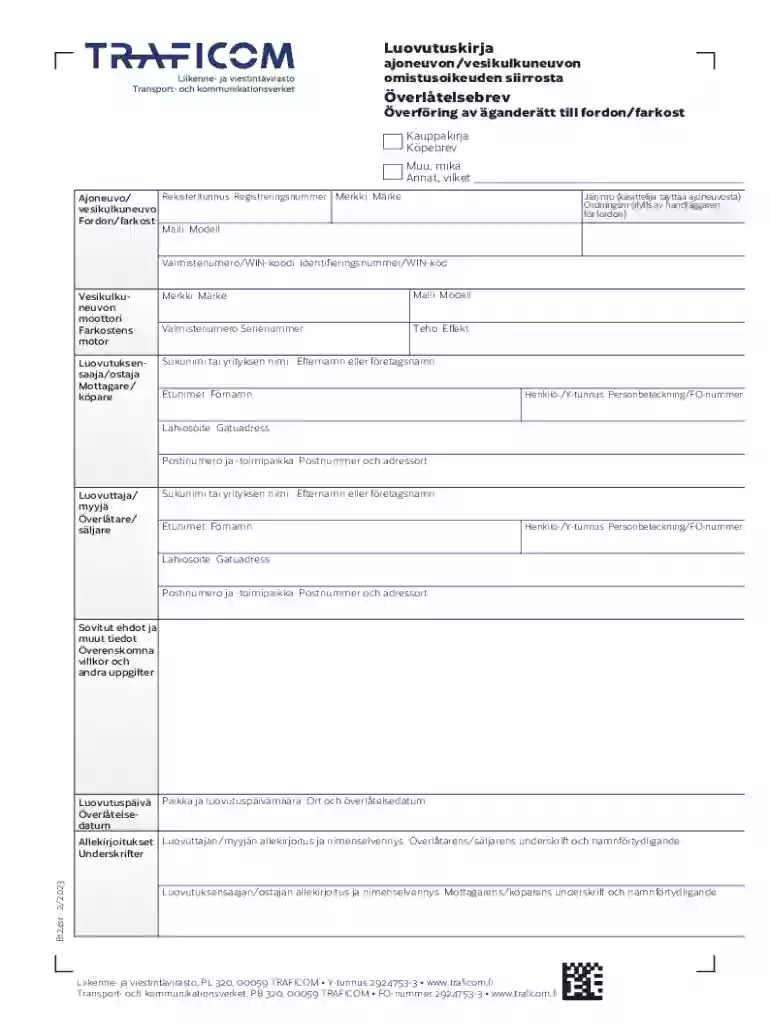
Definition and Purpose of the Luovutuskirja
The luovutuskirja serves as a critical document in the transfer of ownership for various assets, commonly used in the context of vehicles and personal property such as watercraft. This document acts as a legal confirmation that ownership has been transitioned from one party to another. In the United States, it is essential for both sellers and buyers to accurately complete this form to facilitate effective registration and compliance with local regulations.
- The luovutuskirja typically includes essential information about both the seller and buyer, ensuring that the transaction is recorded accurately. This information often encompasses the names, addresses, and contact details of both parties involved in the transfer.
- Additional details, such as the asset's identification number, description, and any financial terms agreed upon, are crucial. This ensures clarity in the transaction and protects both parties in the case of any disputes.
Key Elements Included in the Luovutuskirja
The luovutuskirja encapsulates vital sections that must be thoroughly understood for proper execution. Familiarity with these elements not only streamlines the process but ensures compliance with legal standards.
- Personal Information: This section includes the full names and addresses of the seller and buyer.
- Asset Identification: This involves comprehensive details about the asset being transferred, including identification numbers and a clear description of the item.
- Terms of Sale: It details the agreed-upon sale price, payment methods, and whether any warranties are included.
- Signatures: The document requires the signatures of both parties to validate the transfer officially, signifying acceptance of the terms laid out within.
Steps to Complete the Luovutuskirja
Completing the luovutuskirja accurately is paramount for validating the transfer of ownership. Follow these steps to ensure thorough completion:
- Gather Necessary Information: Collect all personal and asset-related details required for the form.
- Fill Out the Form: Accurately input the gathered information into the corresponding sections of the luovutuskirja.
- Review Terms: Ensure that all terms of sale, including any conditions or warranties, are clearly outlined.
- Sign the Document: Both the seller and buyer must sign the luovutuskirja to officially complete the transfer.
- Submit and Retain Copies: After the form is signed, both parties should retain a copy for their records and to facilitate future reference.
Legal Considerations Surrounding Luovutuskirja
The luovutuskirja must comply with specific legal standards to ensure enforceability. Understanding these legal considerations will help prevent issues during the transfer process.
- Legality: In many jurisdictions, the luovutuskirja is a legally binding document. Non-compliance with any elements may render the agreement invalid.
- State Regulations: Different states may have unique requirements regarding specific additional information that must be included in the luovutuskirja. Always check local regulations.
- Dispute Resolution: If any disputes arise regarding the ownership transfer, having a properly filled luovutuskirja will provide protection and serve as an official record for legal proceedings.
Examples of Luovutuskirja in Practice
Understanding real-world scenarios can clarify the function and importance of the luovutuskirja in asset transfer transactions.
- Vehicle Sales: When selling a vehicle, the seller provides a luovutuskirja to the buyer. This form validates the transfer and ensures that the new owner is recognized by local motor vehicle authorities.
- Watercraft Transfers: Similar to vehicle transactions, when selling a boat, a luovutuskirja documenting the sale details protects the seller and provides essential information to the buyer for registration purposes.
- Personal Property Sales: For other personal property, such as machinery or rare collectibles, the luovutuskirja serves to formally acknowledge the change in ownership, which is often required for insurance coverage and future resale efforts.
Implications of Not Using a Luovutuskirja
Failing to use or properly complete a luovutuskirja can have significant consequences for both parties involved in the transfer.
- Legal Disputes: Without a formal luovutuskirja, sellers and buyers may encounter complications in proving ownership, potentially leading to disputes that could result in civil litigation.
- Registration Issues: When ownership is not officially documented, buyers may face challenges when attempting to register the asset in their name, leading to potential fines or penalties from state authorities.
- Lack of Protection: Without the document, sellers might remain liable for any issues concerning the asset even after the sale, particularly if the buyer engages in unlawful activities using the property.
Understanding these considerations reinforces the importance of the luovutuskirja and its role in safeguarding the interests of all parties involved in an ownership transfer.