




01. Edit your inspection notice template online
Type text, add images, blackout confidential details, add comments, highlights and more.

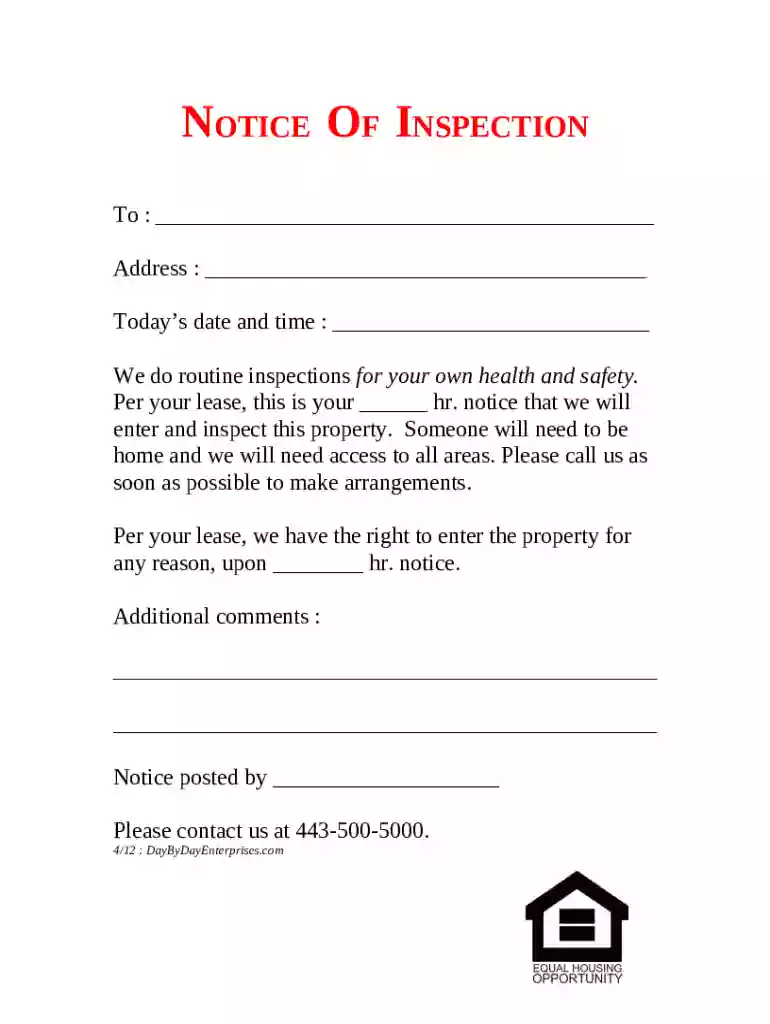
Type text, add images, blackout confidential details, add comments, highlights and more.

Draw your signature, type it, upload its image, or use your mobile device as a signature pad.

Send property inspection letter template via email, link, or fax. You can also download it, export it or print it out.
An apartment inspection letter serves as a formal notification to tenants regarding the scheduled inspection of their rental unit. This document is essential in maintaining clear communication between landlords and tenants. In many cases, the inspection is stipulated in the lease agreement, which requires landlords to inform tenants in advance. The letter should clearly state the date, time, and purpose of the inspection, allowing tenants to prepare accordingly.
Effective communication through the apartment inspection letter ensures that tenants understand their responsibilities and the inspection process. It promotes transparency and fosters a positive landlord-tenant relationship.
An effective apartment inspection letter should have several key components to ensure clarity and completeness. Including these elements can help prevent misunderstandings.
There are various reasons a landlord may need to conduct an inspection. Understanding these can help tenants better prepare for the scheduled visits.
Landlords must adhere to legal standards when conducting apartment inspections. Failing to comply can lead to disputes or legal action.
Drafting and sending an apartment inspection letter need careful attention to detail to ensure its effectiveness and clarity.
Creating a viable template is beneficial for landlords to streamline the inspection notice process.
Date: [Insert Date]
To: [Tenant's Name]
Address: [Tenant's Address]
Subject: Notice of Apartment Inspection
Dear [Tenant's Name],
This letter serves as a notice for an upcoming inspection of your apartment on [Date] at [Time]. This inspection is part of our routine maintenance checks to ensure that your living environment remains safe and comfortable.
Please feel free to reach out with any questions or concerns. You can contact me at [Contact Information].
Thank you for your cooperation.
Sincerely,
[Your Name]
[Your Title]
[Property Management Company Name, if applicable]
This template can be adjusted according to specific situations and requirements, allowing for consistent communication regarding apartment inspections.
We've got more versions of the inspection notice template form. Select the right inspection notice template version from the list and start editing it straight away!
At DocHub, your data security is our priority. We follow HIPAA, SOC2, GDPR, and other standards, so you can work on your documents with confidence.
I have inspected the apartment and found this unit to be in decent, safe and sanitary condition. Any deficiencies are noted above. I recognize that I am.Read more
A written record of inspections shall be maintained. Any dampers that are not accessible for inspection shall be noted in the inspection report. 2.7.4 DamperRead more
BE SPECIFIC and DETAILED when filling out the checklist. Property Address and Apartment Number. Landlord/Manager Name (Print). CONDITION. ON ARRIVAL. CONDITION.Read more


