
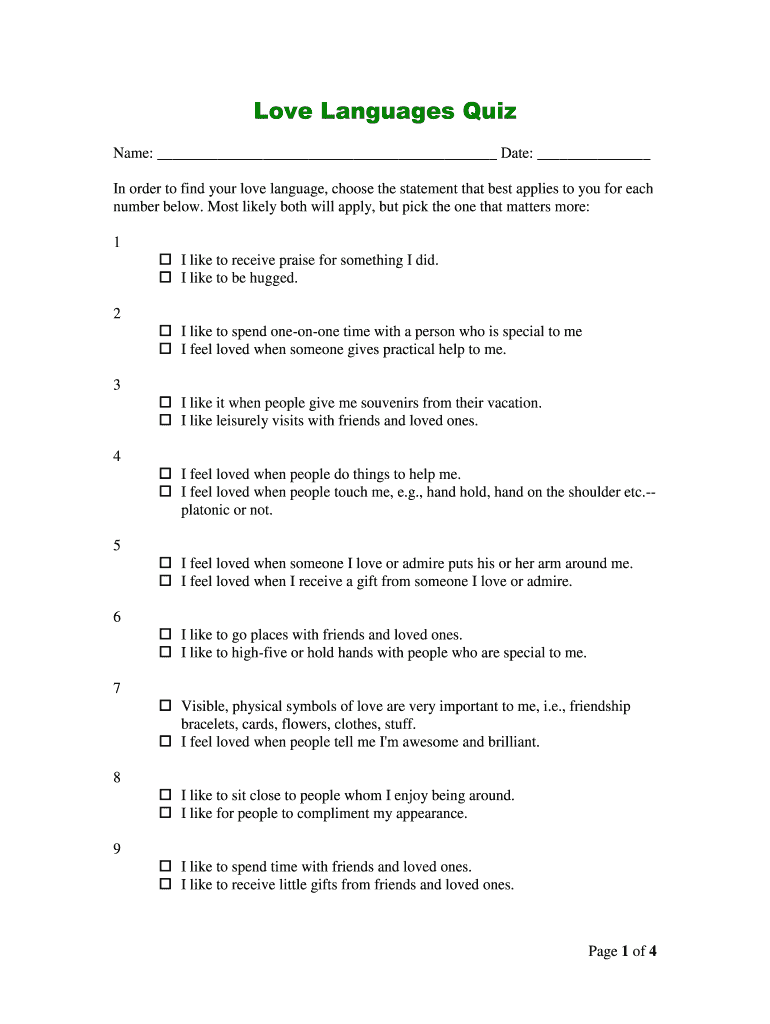







Understanding Love Languages and Their Importance
Identifying your love language can significantly improve your relationships. Love languages refer to the different ways individuals express and receive love. The concept, popularized by Gary Chapman, outlines five distinct love languages: words of affirmation, quality time, receiving gifts, acts of service, and physical touch. A love language test printable allows you to explore your unique preferences and enhance emotional connections with partners, family members, and friends.
How to Use the Love Language Test Printable
Using a love language test printable involves a few simple steps. Begin by downloading the love language quiz from a trusted source. Once you have it printed, read through the statements carefully. You will typically select or rank your preferences based on how you feel about each statement, which relates to the five love languages. Here’s a step-by-step guide on utilizing the printable effectively:
- Identify Your Preferences: As you answer each question, consider your feelings regarding love expression and what resonates with you the most.
- Rank Your Responses: Some printables may allow you to rank your preferences, giving you insights into both your primary and secondary love languages.
- Analyze Your Results: After completing the quiz, reflect on the results. Understanding your love language can guide you in communicating your needs and recognizing loved ones' preferences.
- Discuss Your Findings: Share your results with partners or close friends. This discussion can lead to deeper understanding and stronger relationships.
- Implement Changes: Use insights gained from the test to adjust your communication style in relationships, ensuring you meet each other's needs.
Printable Love Language Test Variants
There are various formats available for the love language test printable, catering to different audiences and settings. These include:
- Family Versions: Designed for families, these quizzes encourage each member to identify their love language, promoting harmonious relationships.
- Teen Versions: Tailored for young adults and teenagers, these quizzes simplify language and examples relevant to that age group.
- Couples Versions: These often include paired questions, facilitating discussion and understanding between partners.
- Educational Formats: Some printable tests are designed as worksheets, complete with spaces for reflection and discussion, ideal for classroom settings or workshops.
The Significance of Knowing Your Love Language
Understanding love languages plays a critical role in fostering healthy relationships by aligning emotional expressions with the needs of partners, friends, or family members. Here are several key benefits of learning about love languages:
- Enhanced Communication: When you know your love language and that of your loved ones, you can communicate your needs effectively. This minimizes misunderstandings and builds trust.
- Increased Empathy: Understanding different love languages fosters empathy towards others' emotional needs. Recognizing that someone may value acts of service over words of affirmation can change the way you approach them.
- Conflict Resolution: Many relationship conflicts arise from unmet needs. Knowing love languages can help partners address these issues proactively, leading to healthier resolutions.
- Stronger Bonds: Meeting emotional needs creates deeper connections. Couples and families who prioritize love languages report greater satisfaction and connection.
Practical Examples of Love Languages in Action
Each love language can manifest in practical, everyday behaviors. Here are a few examples to illustrate each type:
- Words of Affirmation: Compliments, heartfelt letters, or verbal encouragement express this language. For instance, saying, "I appreciate everything you do," can be powerful.
- Quality Time: This can mean prioritizing undivided attention. Scheduling regular date nights or family game nights demonstrates this love language.
- Receiving Gifts: Thoughtful, personalized gifts or surprise tokens of affection can speak volumes. An unexpected bouquet of flowers or a small treat can convey love effectively.
- Acts of Service: Actions often speak louder than words. Making someone breakfast in bed or helping with chores shows care.
- Physical Touch: Hugs, hand-holding, or simple touch can strengthen emotional connections. Regularly initiating physical contact fosters intimacy and support.
Tailoring Relationships Through Love Languages
Once you identify your love language and that of others, the next logical step is to tailor your interactions accordingly. Every relationship is different, and being mindful of differing love languages can enhance compatibility and satisfaction. Here are strategies to reflect on:
- Adapt Communication Styles: If your partner values words of affirmation, practice regularly expressing your feelings verbally or through written notes.
- Create Shared Experiences: For those whose love language is quality time, plan activities that foster connection, such as exploring new hobbies together.
- Celebrate Unique Preferences: Respect and honor practices of each love language, creating a balanced approach that encourages all forms of emotional expression in relationships.
By implementing these strategies, you can create a more fulfilling, connected environment for yourself and your loved ones.




