







Definition & Meaning
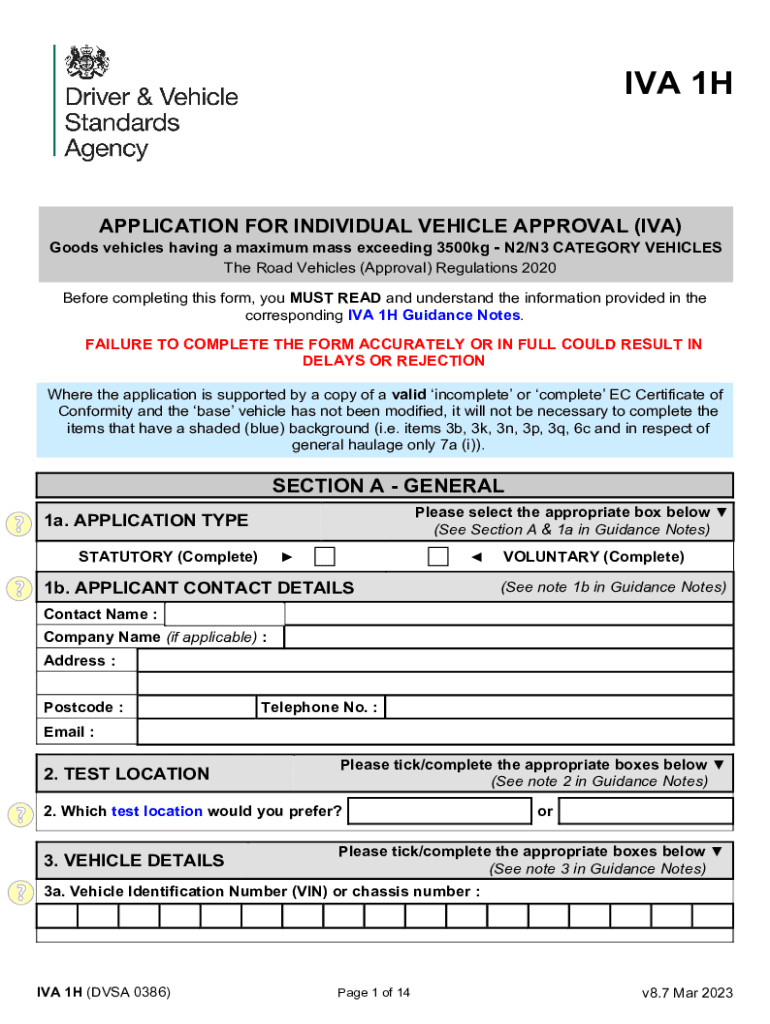
The Individual Vehicle Approval (IVA) application form for lorries or goods vehicles over 3,500 kg is a regulatory document used to certify that such vehicles meet specific safety and environmental standards before being used on the road in the United States. These vehicles, categorized as N2/N3, require thorough checks and compliance verification as stipulated by federal and state regulations. The IVA process ensures that modifications or imports comply with applicable vehicle standards, preventing unsafe vehicles from operating.
The purpose of the IVA form extends beyond compliance; it assures purchasers and operators of the vehicle’s safety and environmental compatibility. Moreover, the form serves as a record of examination that authorities use to monitor transportation safety and environmental impacts.
How to Obtain the IVA Application Form
The IVA application form can be obtained through various channels, ensuring accessibility for applicants across different states. One primary method is through the official transportation department or authority in your state. These departments typically provide downloadable forms via their websites, enabling applicants to fill out and submit forms electronically.
Additionally, you can request the IVA application form by visiting your local Department of Motor Vehicles (DMV) office. Alternatively, some states might offer mail requests for receiving the form, although this can extend the application process duration. Always check with your state’s requirements regarding the availability and format of the application form to ensure compliance with local directives.
Steps to Complete the IVA Application Form
Filling out the IVA application form for lorries or goods vehicles over 3,500 kg requires careful attention to detail and accuracy. Below is a step-by-step guide to assist in the completion:
-
Vehicle Information: Start by entering the vehicle's VIN, make, model, and year. Ensure all details match existing documents.
-
Owner Details: Include the full name, address, and contact information of the vehicle owner. Verify these details to avoid any future discrepancies.
-
Compliance Checks: Document details related to compliance with emission standards and safety protocols. Use manufacturer data sheets where available.
-
Examination Requirements: Identify and address any specific examination needs for your vehicle type. This may include scheduling inspections with certified professionals.
-
Payment of Fees: Include payment information or attach proof of payment for processing fees. Payment methods often include credit/debit cards or electronic transfers, depending on state provisions.
-
Data Protection: Understand how your information will be protected. It is crucial to read and acknowledge data protection policies as part of the form submission.
Ensuring all sections are completed accurately will prevent delays and possible rejection of the application.
Key Elements of the IVA Application Form
The IVA application form comprises several critical elements, each designed to collect specific information necessary for compliance verification:
- Vehicle Specifications: Details about weight, dimensions, and type-critical for technical checks.
- Owner Identification: Verification of the owner’s identity and address part of the legal framework.
- Regulatory Compliance: Evidence of compliance with safety and environmental standards through certificates or test results.
- Inspection and Testing: Information about any pre-approval inspection or testing conducted, ensuring compliance with emission and safety norms.
- Payment Information: Details on the completion and processing fee structures, including acceptable methods and receipts for confirmations.
Each section plays an integral role in assessing the vehicle's fitness for road use and regulatory compliance.
Legal Use of the IVA Application Form
The IVA application form establishes the legal standing of a vehicle concerning compliance with federal and state standards. Approval of this form signifies that a vehicle adheres to the necessary safety and environmental regulations, thus legally permissible for use on roadways across the United States. Failing to secure IVA approval may lead to legal penalties and the prohibition of vehicle use.
The form stands as a pledge by the owner and any associated representatives that all submitted information is accurate and truthful. Misrepresentation can lead to legal action, fines, or revocation of approval, understanding this legal context ensures that applicants remain compliant and vigilant throughout the process.
Who Typically Uses the IVA Application Form
Various parties utilize the IVA application form, primarily those involved with vehicles that exceed the 3,500 kg threshold. Typical applicants include:
- Vehicle Importers: Individuals or companies importing vehicles that may not automatically meet local standards.
- Vehicle Modifiers: Businesses or individuals making modifications to existing vehicles that affect compliance must use the form to certify safety and regulatory adherence.
- Fleet Operators: Companies managing large fleets of goods vehicles and ensuring compliance with evolving regulatory demands frequently use IVA forms.
The diversity of users underscores the form’s importance in upholding transportation safety and environmental standards.


Required Documents
Several key documents accompany the IVA application form to support the approval process:
- Proof of Identity: Identification documentation for the vehicle owner such as a driver’s license or passport.
- Proof of Compliance: Certification documents or test results confirming the vehicle meets necessary regulations.
- Insurance Proof: Documentation of active vehicle insurance, covering the vehicle under your application’s context.
- Payment Receipts: Copies of payment receipts for fees, ensuring processing can proceed without delays.
- Previous Approvals or Certifications: Any earlier approvals or certifications that might support the current application.
Providing these documents as part of your application package can significantly smooth the verification process, cutting down potential setbacks or rejections.
State-Specific Rules for the IVA Application Form
State-specific variations in the IVA application process may exist due to differing regulatory requirements across the United States. Some states might have more stringent emission standards or specific documentation requirements. Examples include:
- Emission Standards: Certain states, such as California, hold vehicles to higher standards due to environmental initiatives. Vehicles may need additional testing or certification.
- Inspection Protocols: Regional differences in required inspections, either pre-approval or as part of periodic checks, can alter the process timeline.
- Fees and Processing Times: Variances in processing fees or methods depending on state-provided services and administrative procedures.
Understanding state-specific regulations and requirements is crucial to ensuring form completion and compliance with local laws.




