
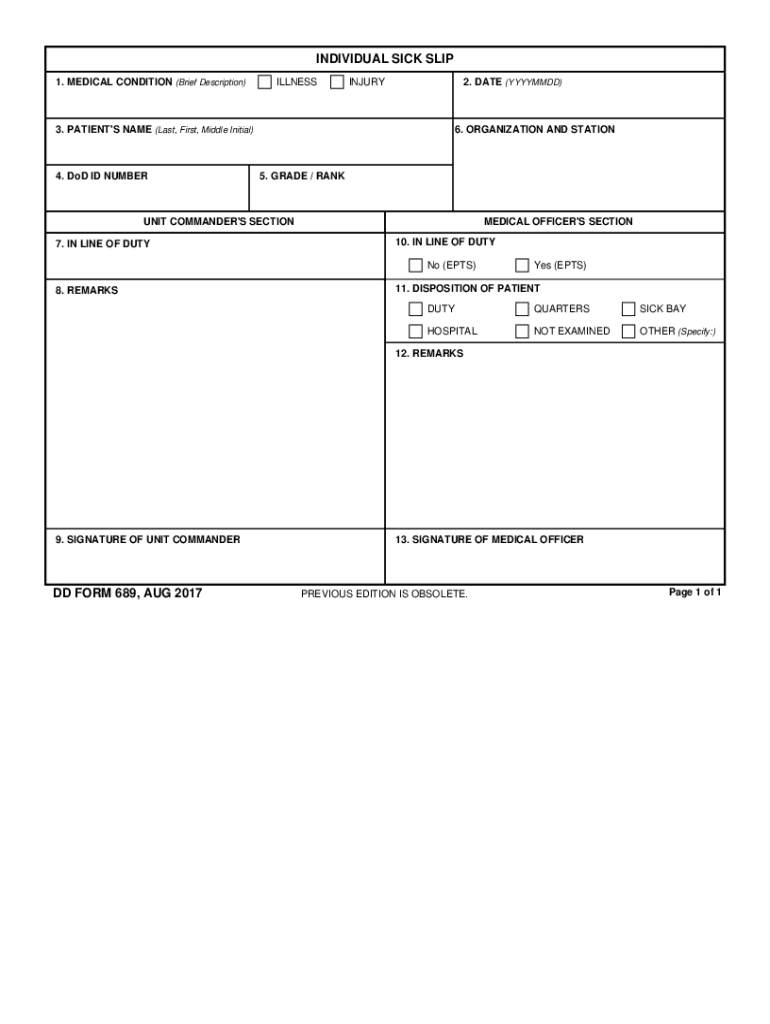







Definition and Meaning of the Form Sick
The form sick, often referred to as an Individual Sick Slip, is a crucial document used to record a patient's medical condition. It typically includes essential details such as the date of reporting, the patient's name, DoD ID number, organization, and rank. The form is primarily used in situations where documenting whether an illness or injury occurred in the line of duty is necessary. This characterization helps in understanding the responsibilities and potential benefits that might be associated with the condition. The document also includes sections for remarks and obligatory signatures from both the unit commander and medical officer, reinforcing the importance of its verification and authorization process.
How to Use the Form Sick
Utilizing the form sick effectively involves a series of straightforward steps. First, an individual must ensure that all personal details, such as name, date, and DoD ID number, are filled in correctly. Accurate information is crucial for processing and maintaining records. Subsequently, one must describe the medical condition or injury comprehensively, including the date of occurrence and specific circumstances. Additional sections allow for remarks from the medical officer and commander, which can include further notes on the condition's impact on duty performance. This form should be submitted following organizational protocols to ensure all parties involved acknowledge and address the medical condition appropriately.
How to Obtain the Form Sick
Acquiring a form sick generally involves contacting military or healthcare administrative offices. It is often distributed by the Human Resources department within military organizations. In some cases, these forms can be found online through official military or healthcare websites. Ensuring access to the latest version is essential, as regulatory updates may affect form requirements and sections. Document management platforms like DocHub can also aid in acquiring and managing these forms efficiently, thanks to their comprehensive document support capabilities.
Steps to Complete the Form Sick
Completing a form sick involves several critical steps to ensure accuracy and compliance with regulatory standards:
- Gather Required Information: Collect all necessary personal and medical details before filling out the form.
- Fill Out Personal Details: Enter personal data such as name, rank, and organization, ensuring that each field is accurate.
- Describe Condition: Provide a detailed account of the illness or injury, including the initial date, symptoms, and any related circumstances.
- Line of Duty Section: Indicate if the condition was incurred or aggravated in the line of duty.
- Remarks Section: Leave space for the medical officer's comments and additional explanations relevant to the condition.
- Signatures and Dates: Ensure that the form includes signatures from both the unit commander and medical officer, as these are integral to its validation.
- Submission: Submit the completed form according to organizational guidelines, either through digital means or hard copy submission.
Key Elements of the Form Sick
The form sick encompasses several vital components that contribute to its efficacy in capturing relevant medical information:
- Patient Information: Captures the basic and indispensable details like name, rank, and identification number that ensure proper documentation and retrieval.
- Medical Condition Description: This section requires a detailed explanation of the illness or injury, essential for evaluating its impact on duty.
- Duty Status: A unique element that determines if the ailment is duty-related, affecting entitlement to benefits and other support.
- Remarks: Allows authorized personnel to provide further context or recommendations related to the condition.
- Authorization Signatures: Secures the document with signatures from a commanding officer and a medical authority, verifying the accuracy and authenticity of the recorded data.
Who Typically Uses the Form Sick
The form sick is predominantly used by military personnel who need to document medical conditions officially. It serves both active duty members and reservists, ensuring that any health-related incidents are properly recorded and addressed. Medical officers and unit commanders are also primary users, as their involvement is necessary for authorizing the form. The document is crucial for service members seeking to establish a record of conditions that occur in line with their duties, impacting service obligations and potential benefits.


Legal Use of the Form Sick
Legally, the form sick is employed to verify occurrences of medical conditions within official duty contexts. It helps establish whether an illness or injury is service-connected, which can determine eligibility for various military medical benefits and compensation. An accurate and thoroughly completed form is essential for legal proceedings and maintaining a valid record within military archives. Its use is governed by specific military regulations that ensure health records are maintained with integrity and confidentiality, benefiting service members and their families.
Digital vs. Paper Version
The form sick is available in both digital and paper formats, each offering specific advantages:
- Digital Version: Offers convenience in terms of submission and storage. Platforms like DocHub provide secure digital management with features like encryption and easy sharing among permitted users. It also allows for fillable forms, streamlining data entry and reducing errors.
- Paper Version: While more traditional, the paper form ensures that those without digital access can still complete their documentation requirements. It can be important in situations where digital security is a concern, though less convenient in terms of storage and retrieval.
Choosing between digital and paper forms often depends on the organization's technological readiness and the user's comfort with electronic systems.
By comprehensively covering the functionalities and requirements of the form sick, individuals and professionals can navigate its use effectively, ensuring accurate documentation and compliance with military protocols.




