







Definition & Meaning
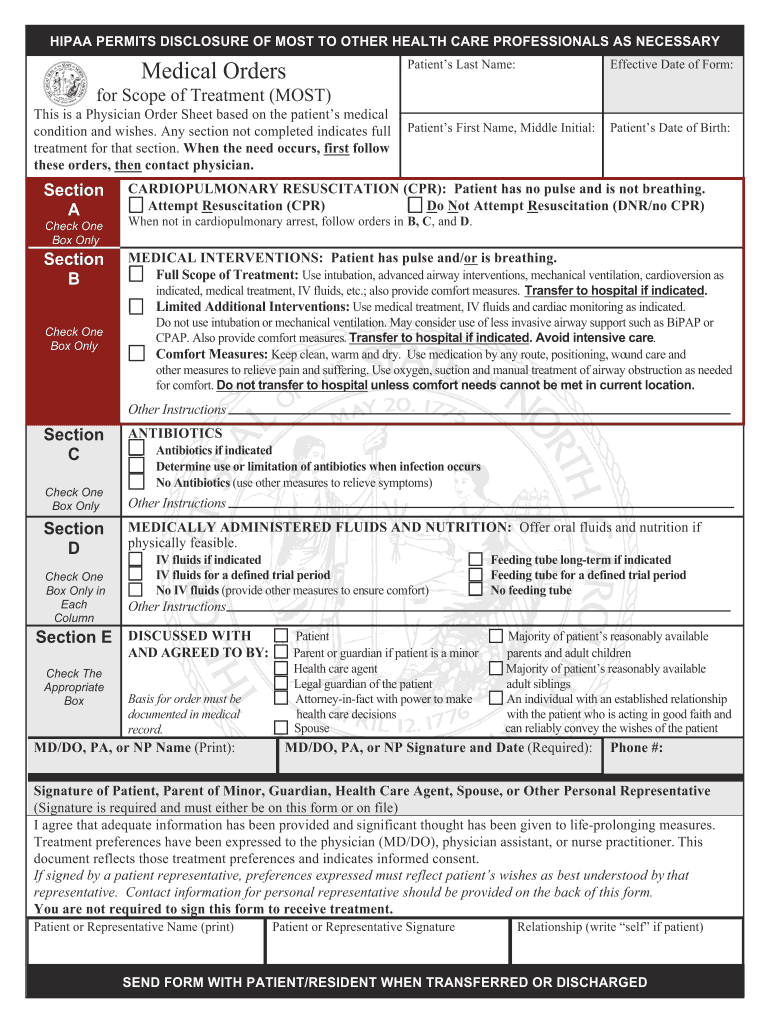
The North Carolina Medical Orders for Scope of Treatment (MOST) form is a crucial document that outlines a patient's medical preferences in critical care situations. It is a physician order sheet that delineates various aspects of treatment, including preferences for cardiopulmonary resuscitation, medical interventions, and the use of antibiotics and fluids. The MOST form serves as a directive to healthcare providers, ensuring that they act according to the patient's wishes when they are unable to communicate. This document plays a vital role in aligning medical care with the patient's personal values and wishes, especially during emergencies.
The form is not merely a legal document; it embodies a communication tool that reflects discussions between healthcare professionals and the patient, or their surrogate. It ensures that the treatment provided is consistent with the patient's treatment goals, thus avoiding unnecessary or undesired interventions. Ultimately, the MOST form is part of a broader category of advance care planning documents aimed at enhancing patient autonomy in healthcare settings.
How to Use the North Carolina MOST Form
To effectively use the North Carolina MOST form, several steps and considerations are essential. The process begins with a conversation between the patient and their healthcare provider or the appointed surrogate decision-maker if the patient is unable to communicate. During this discussion, various treatment scenarios and preferences are evaluated to reflect the patient's healthcare goals and values.
Once the discussions are completed, the healthcare provider completes the form, detailing the patient's choices. Essential sections of the form include preferences for resuscitation attempts, decisions regarding the implementation of life-sustaining treatments, and specific interventions related to medications and feeding. Each segment is carefully reviewed to ensure accuracy and alignment with patient wishes.
After completing the form, both the patient (or their representative) and the healthcare provider must sign it. It is then integrated into the patient's medical record, ensuring accessibility during critical medical situations. Regular reviews are recommended, especially when there is a change in the patient's health status, to ensure the MOST form remains an accurate reflection of current preferences.
How to Obtain the North Carolina MOST Form
Acquiring the North Carolina MOST form is a straightforward process. The form is available through various channels, including healthcare facilities, physician offices, and online platforms associated with the North Carolina Medical Society or Department of Health and Human Services. Patients can request the form directly from healthcare providers during visits.
For individuals who prefer digital access, the form is often available in PDF format for downloading and printing. It is essential, however, to ensure that the version used is current and complies with the latest state regulations. Providing accurate health information and accessing updated resources prevents any legal or medical discrepancies.
Upon receiving the form, it is advisable to consult with a healthcare professional to complete it comprehensively. This approach facilitates a well-documented directive that aligns with the patient's healthcare expectations, ensuring its effectiveness during medical emergencies.
Steps to Complete the North Carolina MOST Form
Completing the North Carolina MOST form involves a precise procedure, ensuring the documentation of accurate and relevant patient care preferences. Below is a step-by-step guide to completing the form:
-
Initial Discussion: Engage in an initial conversation with a healthcare provider to discuss treatment preferences, encompassing life-sustaining treatments and interventions.
-
Review Sections: Familiarize yourself with the form sections, including resuscitation orders, medical interventions, use of antibiotics, and decisions about nutrition and hydration.
-
Document Preferences: In collaboration with the healthcare provider, fill in the form with specific treatment preferences. Ensure clarity and specificity to avoid ambiguity.
-
Signatures: Sign the document in the designated areas, alongside the healthcare provider's signature, to confirm agreement with the directives outlined.
-
Inclusion in Medical Records: Ensure the signed form is included in your medical records. It is also advisable to keep a copy with family members or surrogates for swift access in emergencies.
-
Regular Reviews: Periodically review and update the form, particularly after significant changes in health or treatment preferences.
By meticulously undertaking these steps, the MOST form serves its purpose of guiding medical treatment according to the established desires of the patient, providing peace of mind to both the patient and their family members.
Key Elements of the North Carolina MOST Form
The North Carolina MOST form comprises several critical elements designed to capture the patient's healthcare preferences accurately. Each component focuses on distinct areas of treatment decision-making:
-
Cardiopulmonary Resuscitation (CPR): Specifies whether the patient desires CPR in the event of cardiac or respiratory arrest, outlined as "Do Not Attempt Resuscitation" or "Full Code."
-
Level of Medical Interventions: Allows patients to choose the degree of medical interventions, ranging from comfort measures only to full treatment, which may include intensive care.
-
Antibiotic Use: Determines preferences for the use of antibiotics, addressing different scenarios like comfort, infection control, or full treatment of infections.
-
Medically Administered Nutrition: Addresses choices regarding artificial nutrition and hydration, including feeding tubes, intravenous methods, or opting against such interventions.
Each section of the MOST form is essential for constructing a comprehensive treatment roadmap that mirrors the patient's values and healthcare directives. Completing the form with detailed accuracy ensures the directives align with personal treatment goals, enhancing the quality of end-of-life care.
Legal Use of the North Carolina MOST Form
The legal use of the North Carolina MOST form is governed by specific guidelines to uphold its validity and enforceability. The form is designed to be a legally recognized document reflecting a patient's treatment preferences and is an important part of advance care planning.
-
Completion and Signature Requirements: To be legally valid, the form must be completed by a licensed healthcare provider in consultation with the patient or an authorized representative. Signatures from both the healthcare provider and the patient (or representative) are mandatory.
-
Integration into Medical Records: The MOST form should be incorporated into the patient's medical files to ensure its directives are adhered to during treatment.
-
Review and Amendments: Regular reviews and updates are essential, especially following changes in health conditions or treatment decisions. Amendments should be documented with current dates and necessary signatures.
Using the MOST form appropriately involves understanding its legal weight as an instrument protecting patient autonomy and guiding healthcare providers within a structured framework of patient consent and preference.
State-Specific Rules for the North Carolina MOST Form
North Carolina employs distinct rules overseeing the implementation of the MOST form, ensuring patient-centered care within legal boundaries:
-
Healthcare Provider Involvement: A licensed healthcare provider must engage in meaningful discussions with the patient before completing the form. This ensures patients are well-informed about potential treatments and their implications.
-
Original Document Handling: The MOST form, being a physical, legal document, must be preserved in its original form. Photocopies are acceptable for family members or representatives but must always be accompanied by the original for medical use.
-
Scope of Application: The form is specifically intended for individuals with serious illnesses or those requiring substantial medical intervention. It ensures that decisions are appropriately tailored to their situational needs.
Adhering to these state-specific guidelines underscores the form's role as a facilitator of personalized and legally endorsed care decisions within North Carolina's healthcare settings.
Examples of Using the North Carolina MOST Form
To appreciate the function of the North Carolina MOST form, practical examples provide insight into its application:
-
Elderly Patients with Chronic Illness: Consider an individual diagnosed with advanced-stage cancer. The MOST form allows this patient to decline aggressive treatments while opting for comfort measures, aligning care to their values.
-
Patient with Progressive Neurodegenerative Disease: For individuals diagnosed with conditions like ALS, the MOST form can document decisions against invasive nutrition methods or ventilator support as the disease progresses.
These examples illustrate the MOST form's capacity to cater to varied, personalized healthcare needs, ensuring that medical treatment is delivered according to the individual’s expressed preferences.




