




01. Edit your flu vaccine consent form template online
Type text, add images, blackout confidential details, add comments, highlights and more.

Type text, add images, blackout confidential details, add comments, highlights and more.

Draw your signature, type it, upload its image, or use your mobile device as a signature pad.

Send flu vaccine consent form for employees via email, link, or fax. You can also download it, export it or print it out.
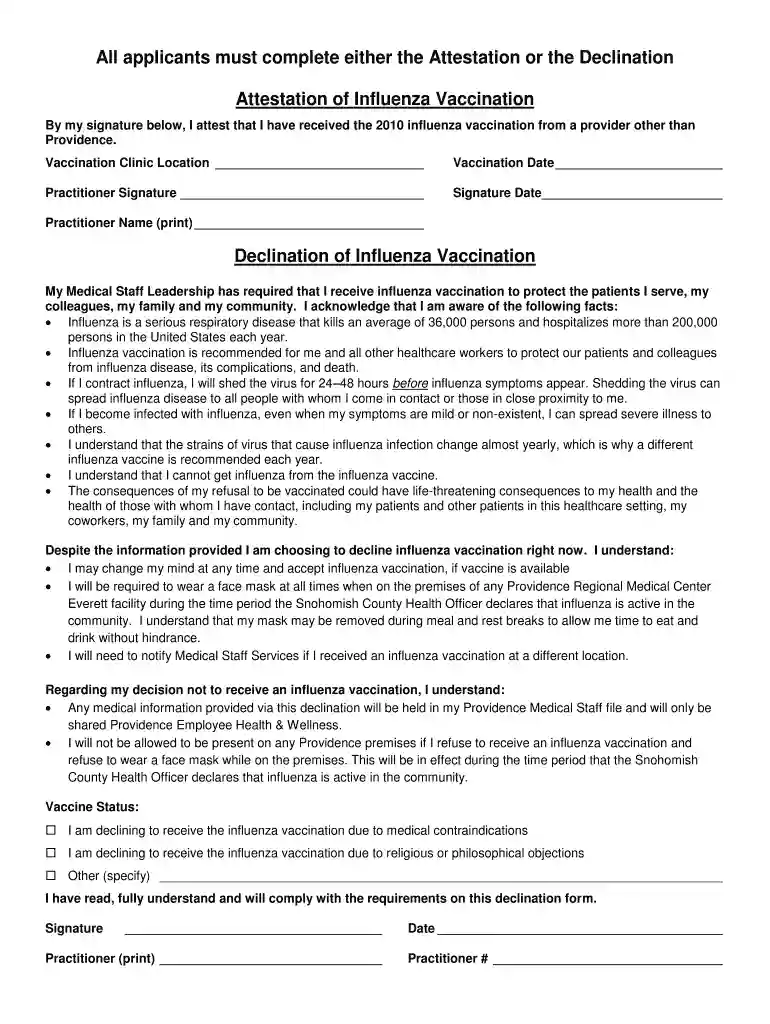
The flu vaccine consent form for employees serves as a critical document that allows organizations to ensure their workforce is protected against influenza. This form typically captures the consent of employees to receive the flu vaccine, highlighting their understanding of the vaccination process, potential side effects, and the significance of getting vaccinated not only for their own health but also for the well-being of their colleagues and clients.
The form outlines the risks associated with the flu, including complications that can arise, especially for individuals with underlying health conditions. It frames the flu vaccination as an essential preventative measure that contributes to community health, especially in workplaces where the spread of illnesses can significantly impact productivity and workforce morale.
In addition to gathering consent, the flu vaccine consent form often includes sections for employees to disclose their vaccination status, which helps organizations monitor vaccination rates within the workforce. This data is invaluable for public health initiatives and workplace health assessments.
When creating or using a flu vaccine consent form for employees, several key components should be included to ensure it meets legal and practical standards:
These elements ensure that the document is comprehensive, compliant with health regulations, and supportive of employees’ rights to make informed health choices.
Completing a flu vaccine consent form for employees can be a straightforward process when following these steps:
By adhering to these steps, employees contribute to a safer workplace while ensuring that their vaccination status is properly documented.
The flu vaccine consent form for employees is primarily used by:
This form provides a mechanism through which protective health measures can be operationalized in various workplace environments, promoting better overall health among the workforce.


Understanding key terminology associated with the flu vaccine consent form for employees can enhance comprehension and ensure effective communication among stakeholders:
A clear understanding of these terms fosters an informed environment where employees can engage in discussions about vaccination and workplace health practices.
We've got more versions of the flu vaccine consent form template form. Select the right flu vaccine consent form template version from the list and start editing it straight away!
| Versions | Form popularity | Fillable & printable |
|---|---|---|
| 2010 | 4.3 Satisfied (34 Votes) |
At DocHub, your data security is our priority. We follow HIPAA, SOC2, GDPR, and other standards, so you can work on your documents with confidence.
Employees dislike going to avian influenza cases because of the suffering the animals often are in, and their disability to really help these animals. ThereRead more
All vaccine recipients need to consent to the vaccines administration and generate a personalized Vaccinatee QR code.Read more
Annual Influenza Vaccine Consent Form-FLU SHOT and NASAL SPRAY. Below are notes about each section on the template consent forms: Section 1. Information aboutRead more


