







Definition & Meaning
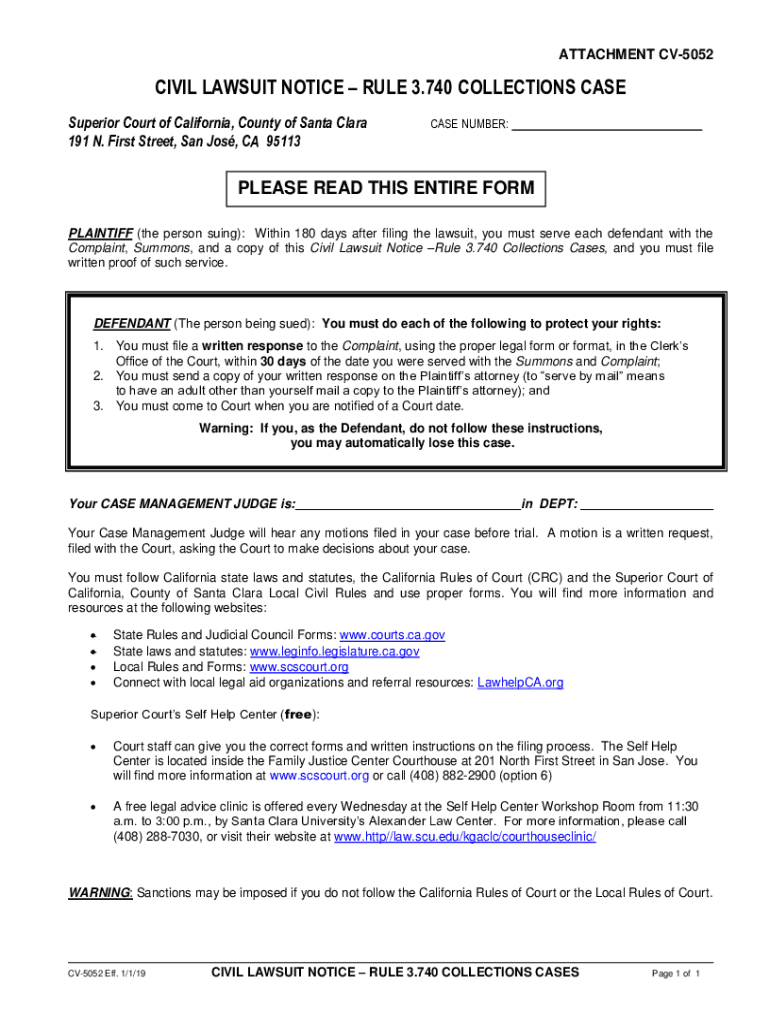
The Fillable County of Santa Clara (The Superior Court of) form is a legal document associated with civil lawsuit processes in Santa Clara County, California. It often relates to Rule 3.740 collections cases, which involve specific requirements and responsibilities for both plaintiffs and defendants in legal proceedings. This form facilitates the formal procedure of filing a civil lawsuit, ensuring proper documentation and communication between involved parties and the court.
Key Elements of the Fillable Form
- Plaintiff and Defendant Information: The form requires detailed information about both the plaintiff and defendant, including names, addresses, and contact information.
- Case Details: This includes the nature of the lawsuit, amounts in dispute, and any previous case numbers.
- Court Scheduling: Key dates for court appearances and deadlines for document submission are included to keep both parties informed.
- Legal Obligations: The form outlines obligations such as serving documents and preparing for hearings.
These elements ensure that the form serves as a comprehensive guide for navigating a lawsuit in the Superior Court of California.
How to Use the Fillable Form
- Download or Access: Obtain the form from the Santa Clara Superior Court’s official website or a trusted legal service provider like DocHub.
- Complete Required Sections: Carefully fill out all necessary fields with accurate information. Include details about the lawsuit, parties involved, and amounts in dispute.
- Review for Accuracy: Before submission, ensure all information is correct and complete to avoid any legal issues or delays.
- Submit to Court: Follow submission guidelines, which may include filing electronically or in person at the court.
This process ensures that all legal protocols are followed, reducing the risk of procedural errors.
Steps to Complete the Fillable Form
- Identify the Correct Form: Confirm that you have the latest version of the form required by the Superior Court of California.
- Gather Necessary Documents: Obtain any supplemental documents, such as previous legal notices or evidence related to the case.
- Provide Supporting Information: Make sure all evidence or additional documents are properly formatted and attached.
- Sign and Date: Ensure all involved parties sign the form where required.
Following these steps helps prevent unnecessary legal delays and complications during court proceedings.
State-Specific Rules for the Form
Santa Clara County follows particular state rules and regulations specific to California’s legal framework. For instance, the state has unique rules regarding service of process, and timelines for document submission that differ from federal guidelines. It’s critical to understand these state-specific nuances to effectively navigate through the legal process.
Legal Use of the Fillable Form
The form is used primarily for legal documentation and procedural compliance in civil lawsuits. It ensures that both plaintiffs and defendants adhere to required protocols, such as serving notices and submitting necessary documentation on time. Misuse of the form, such as providing false information, can result in legal penalties.
Important Terms Related to the Form
- Civil Lawsuit: A legal dispute between parties seeking damages or specific performance rather than criminal sanctions.
- Plaintiff: The individual or entity that initiates the lawsuit.
- Defendant: The individual or entity being sued or charged.
- Rule 3.740: Refers to collections cases under the California Rules of Court, which have specific procedures and timelines.
Understanding these terms is essential for proper completion and interpretation of the form.
Examples of Using the Fillable Form
In a scenario where a creditor sues a debtor for unpaid debts, the creditor would use the Fillable County of Santa Clara form to initiate court proceedings. The form would detail the amount owed, the nature of the debt, and the desired outcome (e.g., repayment or legal penalties). Both parties would be required to follow legal procedures laid out in the form to reach a resolution.
Penalties for Non-Compliance
Failing to adhere to the obligations set by this fillable form can result in various penalties, such as fines or court-imposed sanctions. Non-compliance can also lead to a default judgment against the non-compliant party, which may involve monetary compensation or other legal remedies enforced by the court.




