
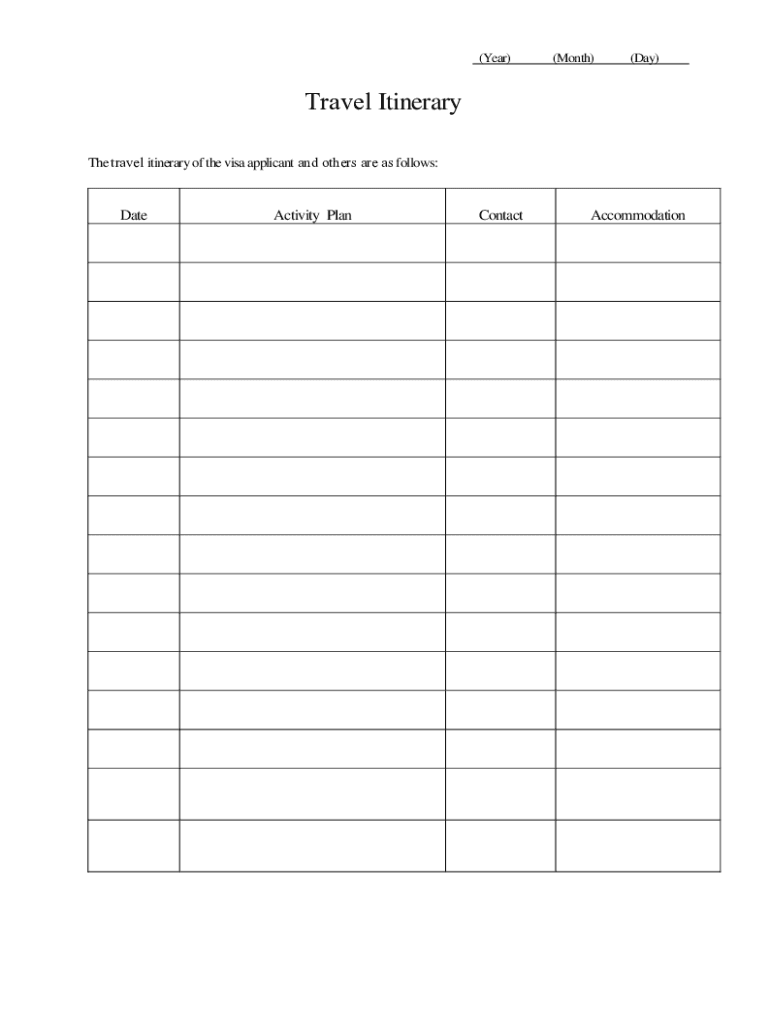







Definition and Importance of a Japan Visa Itinerary
A Japan visa itinerary is a structured document outlining a traveler's planned activities, accommodations, and contacts while in Japan. This document serves as critical evidence for visa applications, demonstrating the traveler's intention to comply with the terms of their visa. Providing a detailed itinerary helps visa authorities assess the legitimacy of travel plans and the applicant’s financial readiness for the trip.
Key Components of a Japan Visa Itinerary
- Travel Dates: Clearly state the arrival and departure dates, as this helps to verify the duration of the stay.
- Accommodation Details: Include the names and addresses of hotels or other lodging options, along with confirmation numbers if available.
- Daily Activities: A day-by-day breakdown of planned activities, landmarks, and events. This showcases an organized travel plan.
- Transportation Information: Outline modes of transportation, including flights, train reservations, or car rentals, along with relevant schedules.
Providing concise and detailed information in these categories reinforces the overall reliability of your visa application and enhances the chances of being granted entry into the country.
How to Create a Japan Visa Itinerary
Creating a comprehensive itinerary for a Japan visa application involves several steps to ensure all necessary information is included.
Step-by-Step Guide to Crafting Your Itinerary
- Research Your Trip: Identify the key places you intend to visit in Japan, including major cities like Tokyo, Kyoto, and Osaka.
- Draft a Daily Schedule: Create a list of planned activities for each day, ensuring a logical flow from one location to another.
- Book Accommodations: Secure your lodging in advance and include the hotel names, addresses, and reservation confirmation numbers in your itinerary.
- Compile Transportation Details: Research how you will travel between locations. Document flight information, train bookings, or rental car agreements.
- Add Contact Information: Include emergency contacts, embassy information, and any relevant local contacts that might aid you during your stay.
Best Practices
- Timeliness: Make sure your itinerary covers the duration of your stay without any gaps.
- Flexibility: Consider including alternative plans or nearby attractions in case of changes in schedule.
An organized itinerary not only facilitates your visa application process but also enhances the overall travel experience, enabling smoother transitions between destinations.
Common Mistakes in Japan Visa Itineraries
Even minor mistakes in a Japan visa itinerary can lead to complications or delays in processing the visa.
Frequent Errors to Avoid
- Incomplete Information: Omitting significant details like accommodation addresses or transport schedules can raise red flags.
- Unrealistic Plans: Creating an itinerary that packs too many activities into a single day can lead to skepticism regarding the validity of the travel plans.
- Inconsistent Dates: Ensure that the travel dates align with your flight and accommodation bookings to avoid confusion.
Tips to Ensure Accuracy
- Cross-Verify Information: Double-check all details against booking confirmations and travel plans.
- Utilize Templates: Using a standardized japan itinerary template can help streamline the process and ensure critical elements are not overlooked.
Taking these precautions helps to solidify the credibility of your application and increases the likelihood of approval.
Required Documents for a Japan Visa Application
When applying for a Japan visa, it is essential to include a well-structured itinerary along with other supporting documents.
Necessary Documentation
- Completed Visa Application Form: Fill out the relevant application form accurately.
- Passport-Sized Photographs: Include recent photographs that meet official specifications.
- Valid Passport: Ensure your passport is valid for at least six months beyond your intended departure date.
- Proof of Financial Stability: Include bank statements or proof of income to demonstrate your ability to support your trip financially.
The inclusion of a detailed itinerary not only supports your visa application but also serves as a demonstration of your planning and preparation for the trip, underscoring your intention to return after visiting Japan.
Examples of Japan Visa Itineraries
Illustrating what constitutes a proper Japan visa itinerary can aid applicants in crafting their own detailed schedules.
Sample Itinerary Structure
Day 1: Arrival in Tokyo
- Flight Details: Arrival at Narita International Airport
- Accommodation: Hotel Shinjuku Granbell, Shinjuku
- Activities: Visit Meiji Shrine and explore Harajuku shopping district
Day 2: Tokyo Sightseeing
- Activities:
- Morning: Tsukiji Outer Market for breakfast
- Afternoon: Asakusa and Senso-ji Temple visit
- Evening: Tokyo Skytree observation deck
Day 3: Day Trip to Nikko
- Transportation: Tobu Railway
- Activities: Explore Toshogu Shrine and Kegon Falls
By following a similar structure, applicants can present a well-rounded travel plan that meets visa requirements while showcasing their intended experiences in Japan.




