
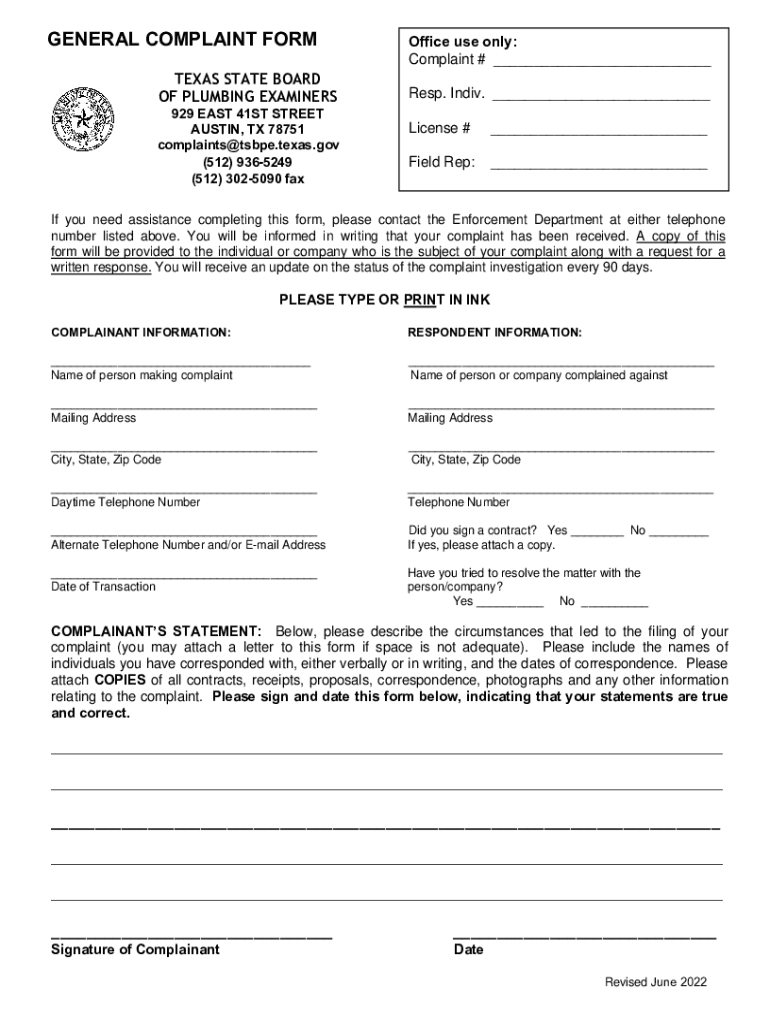







Definition & Purpose of the Complaint Form
The "File a Complaint - Texas State Board of Plumbing Examiners" form serves as a formal mechanism for individuals to report violations or grievances against plumbing professionals or companies. This form is crucial for maintaining the integrity and standards of the plumbing profession within Texas. By providing a structured way to voice concerns, it helps ensure that all complaints are documented and investigated promptly by the Board. This system supports both consumer protection and the enforcement of industry regulations.
How to Use the Complaint Form Effectively
Filing a complaint with the Texas State Board of Plumbing Examiners involves a series of steps designed to capture all relevant information and ensure a fair investigation process. To use the form effectively, individuals should gather all supporting documentation before filling it out, such as contracts, invoices, and correspondence with the plumbing professional or company.
- Contact Information: Accurately provide your contact details and those of the accused party.
- Complaint Details: Clearly describe the nature of the complaint, including dates, locations, and specific incidents.
- Supporting Documentation: Attach relevant evidence to support your claims, enhancing the validity and credibility of your complaint.
Steps to Complete the Complaint Form
Completing the "File a Complaint" form requires careful attention to detail to ensure thoroughness and accuracy. Follow these steps to fill out the form:
- Gather Necessary Information: Before starting, compile all records relating to the incident, including emails and receipts.
- Complete Personal Details: Enter personal details and ensure the information is consistent with any attached documents.
- Describe the Incident: Provide a detailed account of the incident, including any efforts made to resolve the issue prior to filing the complaint.
- Attach Evidence: Ensure that all relevant evidence is attached securely to the form, including witness statements if applicable.
- Submit the Form: Once completed, submit the form using one of the approved methods outlined by the Board.
Why Filing a Complaint is Crucial
Filing a complaint with the Texas State Board of Plumbing Examiners is crucial for several reasons:
- Consumer Protection: It safeguards the rights of consumers by holding plumbing professionals accountable for their actions.
- Industry Standards: It helps maintain and improve the standards within the plumbing industry by identifying areas where practitioners may fall short.
- Public Awareness: Each complaint contributes to statistical data that can inform future regulations and public information campaigns aimed at educating consumers about their rights.
Key Elements to Include in Your Complaint
To ensure a comprehensive submission, the following elements should be included in your complaint:
- Detailed Incident Description: Provide a narrative detailing what transpired, focusing on key facts without embellishment.
- Documentation of Communication: Include copies of all communications with the involved parties to demonstrate efforts made to resolve the issue.
- List of Materials Used: If applicable, detail any materials used in the plumbing work, including whether they met Texas standards.
Important Terms Defined
Several terms are pivotal to understanding the complaint process with the Texas State Board of Plumbing Examiners:
- Complainant: The individual filing the complaint.
- Respondent: The plumbing professional or company against whom the complaint is lodged.
- Investigation: The process undertaken by the Board to assess and validate the claims made in the complaint.
- Resolution: The outcome or decision made by the Board following the investigation.
State-Specific Rules Governing Plumbing Complaints
Texas has specific regulations that guide the filing and investigation of complaints related to plumbing services:
- Licensing Requirements: All plumbing professionals must be licensed by the state, and complaints often pertain to violations of licensing conditions.
- Timelines for Filing: Complaints should be filed within a specific timeframe from the date of the incident to ensure a timely investigation.
- Hearing Rights: Both the complainant and respondent have rights to participate in hearings if the complaint proceeds to that stage.
Submission Methods for the Complaint Form
The completed complaint form can be submitted through various channels, allowing for flexibility based on the complainant's preference:
- Online Submission: The Board supports online submissions, which can streamline the process by avoiding postal delays.
- Mail: Complaints can be mailed directly to the Board's address provided on the form.
- In-Person: For those preferring direct interaction, forms may be submitted in person at the Board's offices.
Legal Implications and Use of the Complaint Form
The "File a Complaint" form has significant legal implications:
- Binding Decisions: Outcomes decided by the Board are often legally binding and can result in penalties for the respondent.
- Confidentiality: Personal information provided in the complaint is handled according to state confidentiality laws, ensuring privacy for the complainant.
- Legal Assistance: While not mandatory, complainants may seek legal advice prior to and during the complaint process, especially in complex cases.


