






Understanding the Vehicle Sale Agreement in South Africa
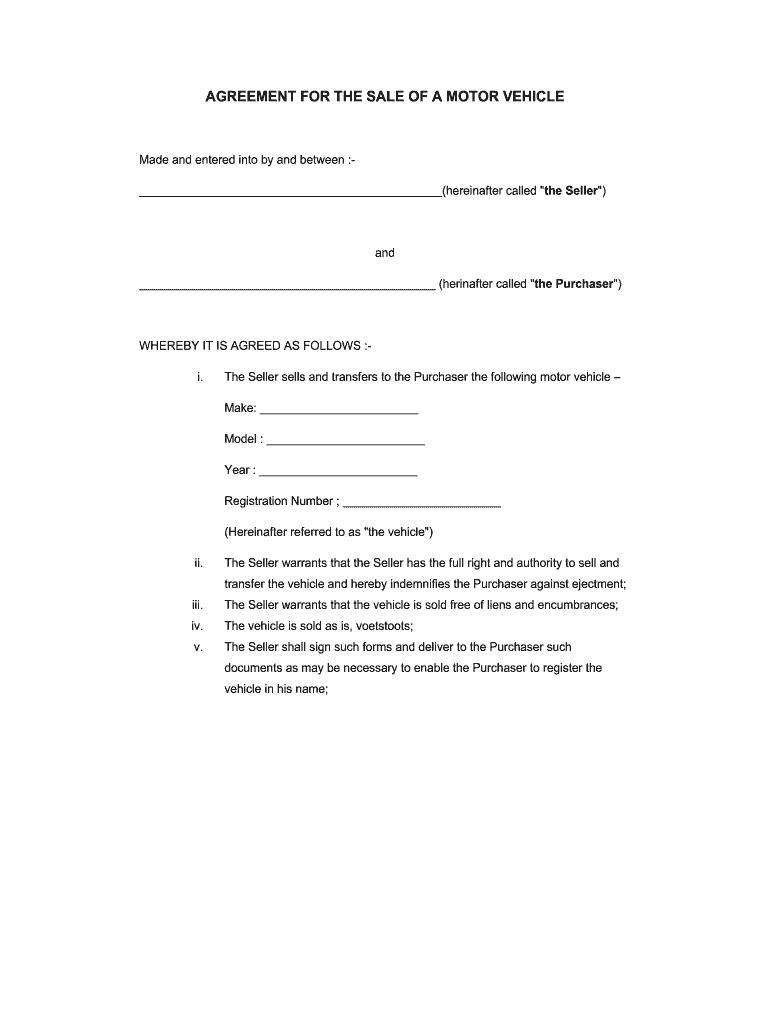
A vehicle sale agreement serves as a legally binding contract between a seller and a purchaser in the context of a car sale. This document outlines essential details about the vehicle and the terms of the sale, providing clarity and protection for both parties involved. The primary elements typically included in a vehicle sale agreement encompass the vehicle's make, model, year, registration number, and the selling price agreed upon by both parties.
Key Components of a Vehicle Sale Agreement
The vehicle sale agreement should contain the following critical details:
- Seller Information: Full name and contact information of the seller.
- Purchaser Information: Full name and contact information of the purchaser.
- Vehicle Details: Comprehensive specifications of the vehicle, including its Vehicle Identification Number (VIN), make, model, year of manufacture, and odometer reading.
- Price Agreement: The total sale price of the vehicle, including payment terms (e.g., cash, installment plans).
- Liability Clause: A statement that the seller guarantees the vehicle is free from any liens or encumbrances.
- Condition of Vehicle: Disclosure that the vehicle is sold 'as is,' which means the seller is not liable for any defects post-sale.
Importance of Legal Compliance
Having a vehicle sale agreement is crucial for legal compliance. This document provides proof of the transfer of ownership and may be required by the relevant authorities during vehicle registration. In South Africa, the sale agreement often includes a voetstoots clause, indicating that the purchaser accepts the vehicle in its current state, except for any undisclosed defects by the seller.
Steps to Create a Vehicle Sale Agreement
Creating a comprehensive vehicle sale agreement involves several steps:
- Gather Required Information: Collect all necessary details about both the vehicle and the parties involved in the sale.
- Draft the Agreement: Using a template or creating a custom document, ensure that all relevant information is included.
- Review the Agreement: Both seller and purchaser should review the terms to ensure accuracy and understanding.
- Sign the Document: Both parties should sign the agreement in the presence of a witness, if required.
- Provide Copies: Distribute copies of the signed agreement to both parties for their records.
Common Usage Scenarios
Various situations necessitate the use of a vehicle sale agreement, including:
- Private Sales: Individual sellers and buyers engaging in casual transactions.
- Dealership Transactions: Formal agreements made through car dealerships where standard terms and conditions apply.
- Family Transfers: Sales between family members where documentation is still essential to prove ownership legally.
Potential Legal Implications
Failure to complete a proper vehicle sale agreement can lead to disputes regarding ownership, misrepresented vehicle condition, or financial liability. A well-structured agreement helps mitigate these risks and ensures both parties have a clear understanding of the sale terms.
Variations and Templates Available
Multiple variations of the vehicle sale agreement exist, tailored to specific needs. Popular options include:
- Voetstoots Car Sale Agreement Template: Focuses on the sale 'as is.'
- Car Sale Agreement Template: General templates available online for customization.
- Free Templates: Access to free downloadable vehicle sale agreement templates, specifically designed for use in South Africa.
Utilizing an Online Document Platform
Platforms like DocHub allow users to create, edit, and manage their vehicle sale agreements online. They provide tools to seamlessly integrate existing files, making document preparation more efficient. Users can take advantage of legally binding electronic signatures, ensuring compliance with local requirements.
Conclusion
A vehicle sale agreement is a critical aspect of any vehicle transaction in South Africa, securing the rights and responsibilities of both the seller and purchaser. By understanding its components, staying compliant with legal standards, and utilizing available resources, individuals can facilitate smooth and legally sound vehicle sales.