Skin tag removal consent form 2026

Get Form
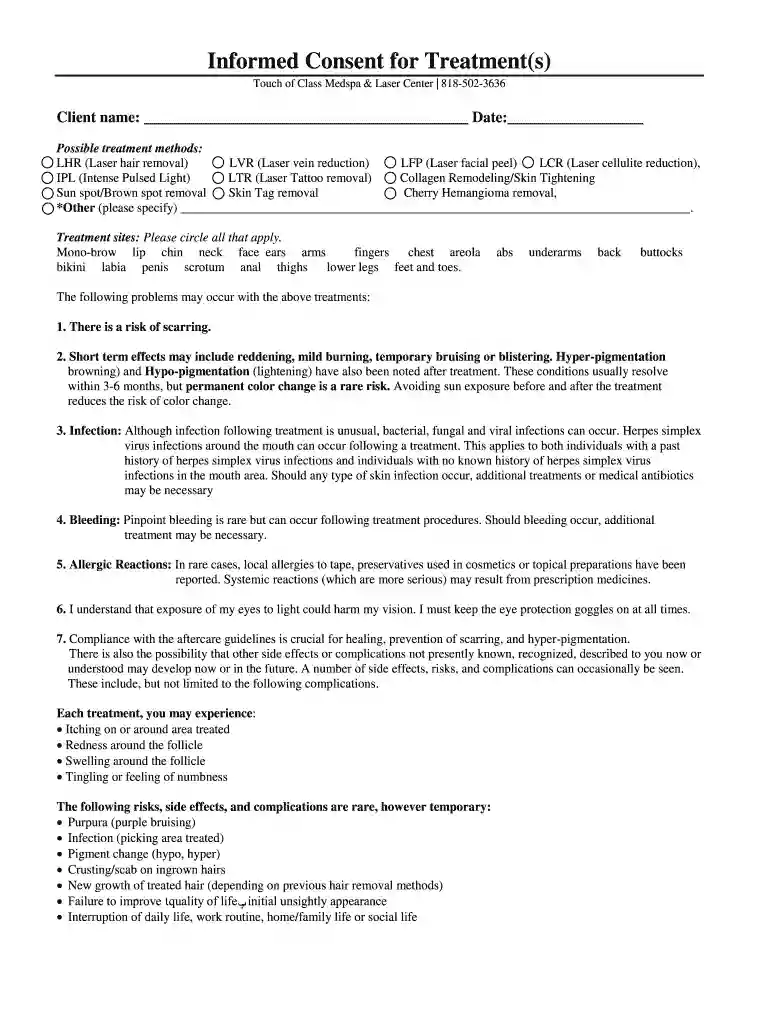
skin tag removal consent form Preview on Page 1

Here's how it works

01. Edit your skin tag removal consent form online
Type text, add images, blackout confidential details, add comments, highlights and more.

02. Sign it in a few clicks
Draw your signature, type it, upload its image, or use your mobile device as a signature pad.

03. Share your form with others
Send skin tag removal consent form pdf via email, link, or fax. You can also download it, export it or print it out.

Key Elements of a Skin Tag Removal Consent Form

The skin tag removal consent form serves as a crucial document in the patient care process. It outlines the procedures involved in skin tag removal, acknowledges the potential risks, and ensures informed consent from the patient. Understanding its components is essential for both patients and healthcare providers.

Understanding the Purpose of the Consent Form

The consent form for skin tag removal is designed to inform patients about the specifics of the procedure. It includes critical information that allows patients to make educated decisions regarding their treatment. The form should outline:

  • Procedure Details: A clear description of the skin tag removal techniques that may be used, such as cryotherapy, excision, or cauterization. Each method should have a brief explanation of how it is performed.
  • Expected Outcomes: Indications of what patients can expect post-procedure, including healing times and appearance of the treated area.

Risks and Side Effects Associated with Skin Tag Removal

Patients should be well-informed about possible risks and side effects before undergoing any skin procedure. The consent form must highlight:

  • Common Risks: This may include infection, scarring, changes in skin pigmentation, and allergic reactions to anesthesia or products used during the procedure.
  • Rare Complications: Though uncommon, complications such as excessive bleeding or adverse reactions to the treatment can occur. The form should guide patients on how to recognize and respond to any concerning symptoms.

Aftercare Instructions and Patient Responsibilities

Post-procedural care is vital to ensure optimal healing and satisfaction with the results. The consent form should provide:

  • Aftercare Guidance: Clear instructions on how to care for the treated area, including cleanliness, moisturizing, and any restrictions on activities.
  • Patient Responsibilities: An outline of what is expected from the patient post-procedure, such as attending follow-up appointments and promptly reporting any unusual symptoms.

Signature Section to Acknowledge Informed Consent

A key section of the skin tag removal consent form is the signature area, where patients formally recognize their understanding and acceptance of the treatment. Important aspects of this section include:

  • Signature Line: Space for the patient to sign and date the form, confirming they have read and understood all the enclosed information.
  • Witness Section: Some practices may include a section for a healthcare provider to sign, indicating they have provided all necessary information and answered all questions.

Digital Format and Accessibility

A modern skin tag removal consent form may be available in a downloadable PDF format, facilitating easy access and retrieval. This enhances the user experience in several ways:

  • Convenience: Patients can fill out the consent form from home, ensuring they have time to understand the information provided.
  • Interactive Features: Digital forms can include fillable fields, allowing patients to complete their consent forms easily online or via mobile devices, which can be vital for reducing paperwork in clinical settings.

Legal Implications and Patient Rights

Understanding the legal ramifications of signing a consent form is crucial for patients. The skin tag removal consent form must acknowledge the patients' rights, including:

  • Right to Withdraw Consent: Patients should be informed that they can withdraw their consent at any time before the procedure.
  • Liability Disclaimers: The form may include disclaimers regarding the limits of liability for unexpected complications that could arise, emphasizing the importance of patient education.

Examples of Skin Tag Removal Scenarios

Providing relatable examples within the consent form can help patients better understand the context of the procedure. Scenarios might include:

  • Successful Case: An example of a patient who underwent skin tag removal with positive outcomes, detailing their experience and health improvements post-treatment.
  • Complication Case: A scenario illustrating what might happen if potential side effects are not managed properly, ensuring patients appreciate the seriousness of following aftercare instructions.

Conclusion

The skin tag removal consent form is a vital document that ensures informed decision-making for patients. Comprehensively detailing the procedure, associated risks, aftercare, and legal aspects not only protects the healthcare provider but also empowers patients. By understanding and acknowledging these components, patients can proceed confidently with their skin tag removal treatment.

See more skin tag removal consent form versions

We've got more versions of the skin tag removal consent form form. Select the right skin tag removal consent form version from the list and start editing it straight away!
Versions Form popularity Fillable & printable
2011 4 Satisfied (26 Votes)
be ready to get more

Complete this form in 5 minutes or less

Get form

Got questions?

We have answers to the most popular questions from our customers. If you can't find an answer to your question, please contact us.
Contact us

With DocHub, you can rapidly sign your mole removal consent form or any other document on iOS, even without setting up extra programs. You can access your DocHub account from any internet-connected browser and fill out and sign your document in any preferred method with just a few clicks.

If you want to edit your consent form for skin tag removal on the internet swiftly, it does not matter what web browser you use. DocHub’s simple editing tools are accessible using any internet browser. Simply open the appropriate tab in the editor, add your document, and fill it out without stress.

Your provider uses one of two techniques to remove a skin tag: Skin tag freezingWe apply liquid nitrogen to the skin tag. This causes the tag to freeze. Skin tag snippingWe use sharp surgical scissors to cut the skin tag. We will pick up the skin tag with tweezers, then quickly cut it at its narrowest point.
A dermatologist is the most qualified to remove skin tags. They have the skills and training to treat delicate problems, like skin tags on your eyelids. They also excel in minimizing scarring, which is important for skin tags on your neck. And dermatologists can accurately diagnose growths that are not skin tags.
The main CPT code for skin tag removal is 11200, which covers the removal of up to 15 skin tags by any method. If more than 15 skin tags are removed, 11201 is used for each additional 10 skin tags. What is the diagnosis code for skin tag removal? The most commonly used ICD-10 diagnosis code for skin tag removal is L91.

Security and compliance

At DocHub, your data security is our priority. We follow HIPAA, SOC2, GDPR, and other standards, so you can work on your documents with confidence.

Learn more
ccpa2
pci-dss
gdpr-compliance
hipaa
soc-compliance

People also ask

Snipping (Excision) The procedure begins with the application of a local anesthetic to ensure you feel no pain during the removal process. Once the area is numb, your doctor at Golden State Dermatology will use sterile surgical scissors or a scalpel to cut the skin tag off at its base.
For removal of skin tags by any method, use codes 11200 and 11201. For the first 15 skin tags removed, use code 11200. For each additional 10 skin tags removed, also report code 11201. For example, if you removed 35 skin tags, then you would submit codes 11200, 11201 and 11201.
Skin tags are growths that hang from your skin your doctor might call them acrochordons. They can be from 1mm to 1cm in size. Skin tags are made of collagen (a type of protein) and blood vessels surrounded by skin.
Skin tags. For removal of skin tags by any method, use codes 11200 and 11201. For the first 15 skin tags removed, use code 11200. For each additional 10 skin tags removed, also report code 11201. For example, if you removed 35 skin tags, then you would submit codes 11200, 11201 and 11201.

skin tag removal clicks