
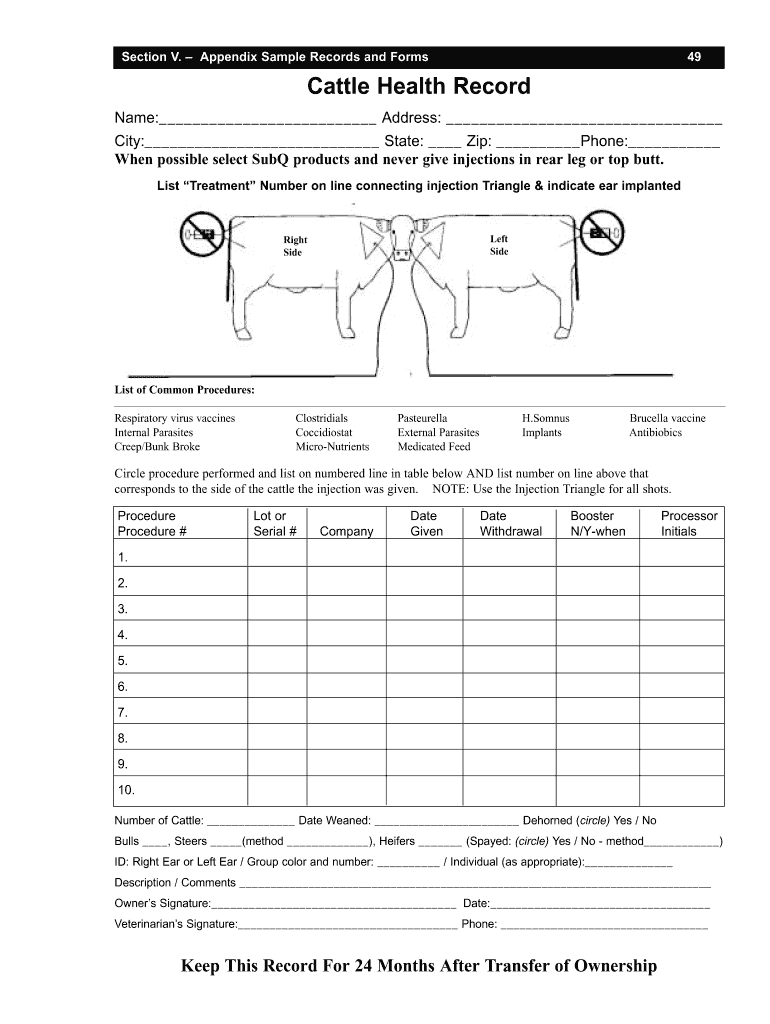







Definition and Purpose of Printable Cattle Record Keeping Forms
Printable cattle record keeping forms are essential tools for livestock farmers and ranchers, providing a structured approach to documenting important information concerning their cattle. These forms allow users to maintain accurate records of various aspects, such as cattle identification, breeding history, health management, vaccination details, and treatment procedures. By organizing this information, farmers can make informed decisions that improve herd management, productivity, and compliance with legal requirements related to animal health and welfare.
Key Functions of Cattle Record Keeping Forms
- Identification Tracking: Each form typically includes sections for recording individual animal identification numbers or tags, helping farmers keep track of each cow's history and current status.
- Health Records: Through these forms, users can log any healthcare activities, such as vaccinations administered, treatment protocols followed, and health assessments conducted by veterinarians.
- Breeding History: Accurate breeding records are vital for managing reproduction within a herd. These forms allow farmers to document mating dates, pregnancy checks, and calving information effectively.
- Compliance Documentation: Maintaining precise records helps meet industry regulations and standards, positioning farmers to respond efficiently during inspections or audits.
How to Use Printable Cattle Record Keeping Forms
Using printable cattle record keeping forms involves several straightforward steps that ensure all relevant data is captured consistently and comprehensively.
- Select the Right Form: Choose the specific form that suits your needs, be it a cattle vaccination record template, health record form, or an individual cow record sheet.
- Fill in Identification Information: Start by entering the identification details for each animal, including their tag number, name, and breed.
- Document Treatment and Vaccination: Record any vaccinations, treatments, or health assessments done on the cows. Note the date, type of vaccine or medication used, and administration methods.
- Update Breeding Records: Continuously log breeding activities, including bull or artificial insemination records, calving dates, and any breeding complications.
- Store Records Safely: After completing the forms, maintain them in a secure location—whether digital or physical—to facilitate easy access and reference.
Tips for Effective Record Keeping
- Use clear, legible handwriting if you're filling out paper forms, or consider typing if you are using digital templates to avoid misinterpretation later.
- Regularly review and update your records to ensure ongoing accuracy, which will aid in herd management decisions.
- Consider utilizing cloud-based storage for digital records, allowing easy access from multiple devices.
How to Obtain Printable Cattle Record Keeping Forms
Obtaining printable cattle record keeping forms can be done through various methods, ensuring that you have access to the necessary documentation tailored to your specific needs.
- Online Resources: Websites that specialize in agricultural documentation often provide free downloadable templates and forms. A simple search for "printable cattle record keeping forms" can lead you to several reputable sources.
- Agricultural Extension Services: Many universities offering agricultural programs have resources available for farmers, including record keeping forms that are designed to meet local needs.
- Industry Associations: Cattle associations and farming organizations frequently offer templates as part of their member benefits, ensuring they are relevant and up to date with current regulations.
- Custom Template Creation: If existing forms do not meet specific requirements, consider creating custom templates using software such as spreadsheets or document editors, which can be tailored to meet individual needs.
Steps to Complete Printable Cattle Record Keeping Forms
Completing a cattle record keeping form accurately involves several sequential steps that lead to comprehensive and reliable document preparation.
- Gather Necessary Information: Before beginning, compile detailed information regarding each animal in your herd, including their identification, health history, and breeding information.
- Select the Right Template: Choose the appropriate form that aligns with your requirements, such as cattle health records or vaccination logs.
- Input Basic Information: Enter general data including the farm name, date, and type of record being kept.
- Detail Animal-Specific Information: For each cow, fill in all necessary sections: identification, treatment history, vaccination dates, and breeding records, ensuring accuracy and detail.
- Review for Completeness: After filling out the form, review it for any errors or missing information before finalizing it.
- Store or Distribute: Save the completed form in an accessible database if digital or file it securely if paper. Share necessary portions with veterinary staff or financial advisors as needed.
Importance of Printable Cattle Record Keeping Forms
Using printable cattle record keeping forms holds great significance for farmers, as they streamline a wide range of essential farming practices while providing numerous benefits.
- Enhanced Decision Making: Accurate and timely records allow farmers to assess their livestock's health and productivity effectively, guiding essential management decisions.
- Regulatory Compliance: Many states require farmers to maintain detailed records related to animal health, ensuring compliance with local and federal regulations.
- Improved Herd Management: By having reliable records, farmers can manage breeding schedules and herd health more proficiently, ultimately increasing productivity and profitability.
- Historical Reference: Detailed records establish a historical background for each animal, benefitting future breeding decisions and health assessments.
Who Typically Uses Printable Cattle Record Keeping Forms
Cattle record keeping forms are utilized by various stakeholders in the agricultural sector, each benefiting from organized documentation related to cattle management.
- Livestock Farmers: The primary users, livestock farmers, rely on these forms to maintain records on herd health and breeding practices, thereby ensuring optimal productivity.
- Veterinarians: Professionals offering health care and management advice for livestock require access to comprehensive records to provide tailored treatments and recommendations.
- Agricultural Researchers: Researchers studying livestock management practices can utilize recorded data for analyses, leading to advancements in the field.
- Regulatory Agencies: These forms assist agencies in assessing compliance with health and safety regulations in the cattle industry.
Key Elements of Printable Cattle Record Keeping Forms
Printable cattle record keeping forms typically feature several key components that contribute to their effectiveness in managing livestock records.
- Cattle Identification Section: Designated areas for listing details such as tag numbers, breed, and birthdates.
- Health Management Tracking: Spaces dedicated to documenting vaccination dates, medications administered, and any health issues observed.
- Breeding Records: Sections for logging breeding activities, including the identification of sires, calving dates, and breeding methods used.
- Data Transfer Methods: Many forms include instructions for converting paper records into electronic formats or integrating with record-keeping software.
By employing the right cattle record keeping forms, farmers can maintain organization and accuracy in their livestock management practices, contributing to the sustainability and success of their operations.