
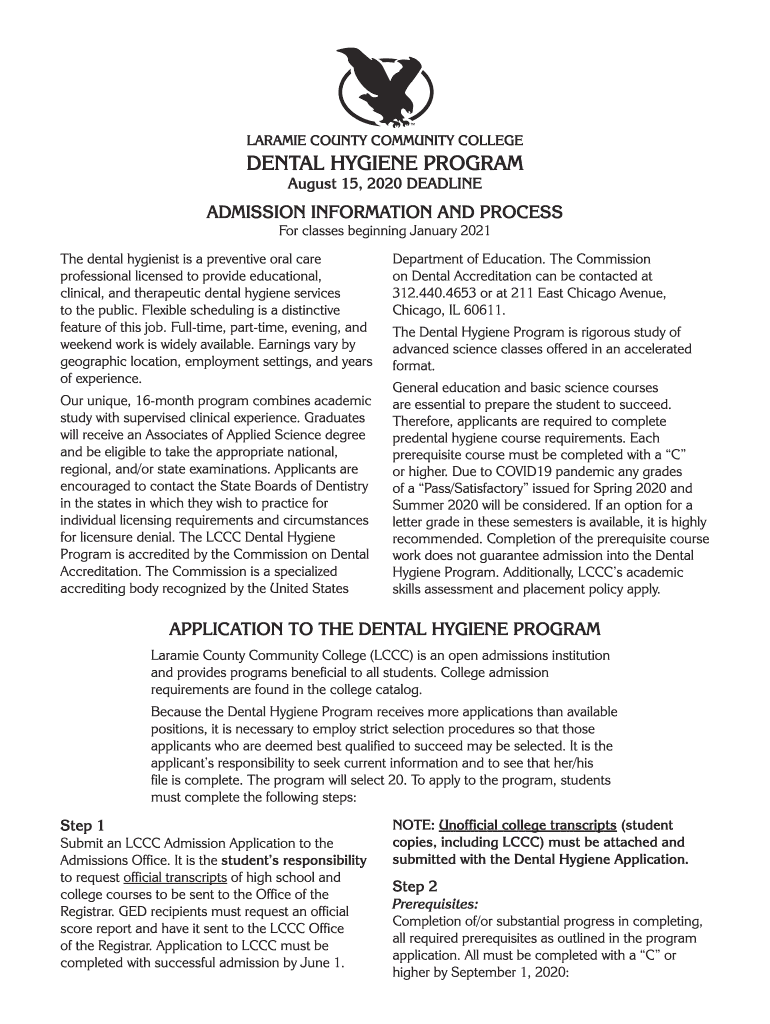







Definition and Meaning of LCCC Hygiene
LCCC Hygiene refers specifically to the hygiene program offered by Laramie County Community College (LCCC). This program is designed to educate and train students in dental hygiene practices, preparing them to enter the professional field as qualified dental hygienists. The emphasis is on gaining practical experience and building a strong foundation in the fundamental aspects of dental care, hygiene, and patient interaction. The curriculum also covers the theoretical knowledge necessary to understand both common and complex dental issues.
Practical Applications
- Professional Training: The program emphasizes hands-on training with dental tools and real-world patient interaction.
- Foundation in Oral Health: Students gain comprehensive knowledge in dental science, including but not limited to, gum and tooth health, oral diseases, and preventive care.
- Accreditation: Accredited by relevant educational and dental hygiene bodies, ensuring that the qualifications gained meet professional standards.
Licensing Preparation
A key component of the program is preparing students for licensure exams, which are mandatory for practice as a dental hygienist in most states. Individuals will be trained to:
- Tackle written and clinical exams.
- Maintain ethical and hygiene standards in practice.
- Manage time effectively during exams and actual practice scenarios.
Steps to Complete the LCCC Hygiene Program
Completing the LCCC Hygiene program involves several structured steps which are crucial for success. Here's a detailed guide:
-
Application and Enrollment
- Submit an application to LCCC with all required documentation.
- Ensure you meet all prerequisite courses before application.
-
Coursework and Training
- Enroll in courses focusing on dental anatomy, radiology, periodontology, and patient care.
- Engage in both theoretical classes and practical sessions.
-
Observation Hours
- Complete designated observation hours under a licensed dental hygienist to acquire practical insights and experience.
-
Exam Preparation
- Participate in review sessions and utilize study resources provided by LCCC.
- Take practice exams to assess readiness.
-
Final Evaluation
- Pass all assessments and evaluations to qualify for graduation and licensure exams.
Important Terms Related to LCCC Hygiene
Understanding the terminology used within the LCCC Hygiene program is essential for successful completion and professional practice:
- Periodontology: The study of supporting structures of teeth and diseases/conditions that affect them.
- Oral Prophylaxis: Preventive treatment involving the cleaning of teeth to inhibit the progress of periodontal disease.
- Radiography: The use of x-rays to view structures within the mouth.
- Dental Anesthetics: Applications used to create loss of sensation in specific areas to perform procedures without discomfort.
Who Typically Uses the LCCC Hygiene
The LCCC Hygiene program is suited to individuals looking to start a career in dental health as well as those looking to enhance their qualifications in the health sector:
- Prospective Dental Hygienists: Those aiming to start their career in the field of dental hygiene.
- Career Changers: Individuals from related fields like nursing or healthcare eager to transition into dental hygiene.
- Healthcare Professionals: Professionals looking to expand their scope of practice or specialize in dental health.


Legal Use of the LCCC Hygiene Program
Upon completion of the program, graduates must follow specific legal parameters to practice dental hygiene:
- Licensure: Graduates must pass state licensure exams to legally practice as dental hygienists.
- Certification Maintenance: Participation in continuing education to maintain and update licensure status is mandatory.
- Compliance with State Regulations: Adhering to state-specific protocols and legal requirements in practice settings.
Key Elements of the LCCC Hygiene Program
The LCCC Hygiene program is designed with specific key components that facilitate learning and professional development:
- Comprehensive Curriculum: Includes core subjects like oral pathology and dental pharmacology.
- Clinical Practice: Opportunities to work in real-world clinical settings under guided supervision.
- Professional Development: Courses focused on patient communication, ethics, and professionalism in the workplace.
State-Specific Rules for LCCC Hygiene Graduates
Each state in the U.S. may have its regulations affecting LCCC Hygiene graduates:
- Licensure Requirements: Different states may have varying examinations and criteria for licensure beyond the national requirements.
- Practice Scope: Some states have specific guidelines on what procedures a dental hygienist can perform without dentist supervision.
- Continuing Education: States often require licensed hygienists to complete a certain number of continuing education hours periodically.
Software Compatibility and LCCC Hygiene
The integration of technology in dental hygiene practice is pivotal, and understanding software compatibility is part of the program:
- Digital Patient Records: Know-how in using software for managing patient records and appointments.
- Radiographic Imaging Software: Training in using digital tools for diagnostic imaging.
- Collaborative Tools: Usage of platforms for patient coordination and interdisciplinary collaboration.
These components reflect the in-depth and practical nature of the LCCC Hygiene program and prepare students for successful careers in dental hygiene, with a focus on fulfilling educational, ethical, and regulatory requirements.




