







Definition and Meaning of CEP-1
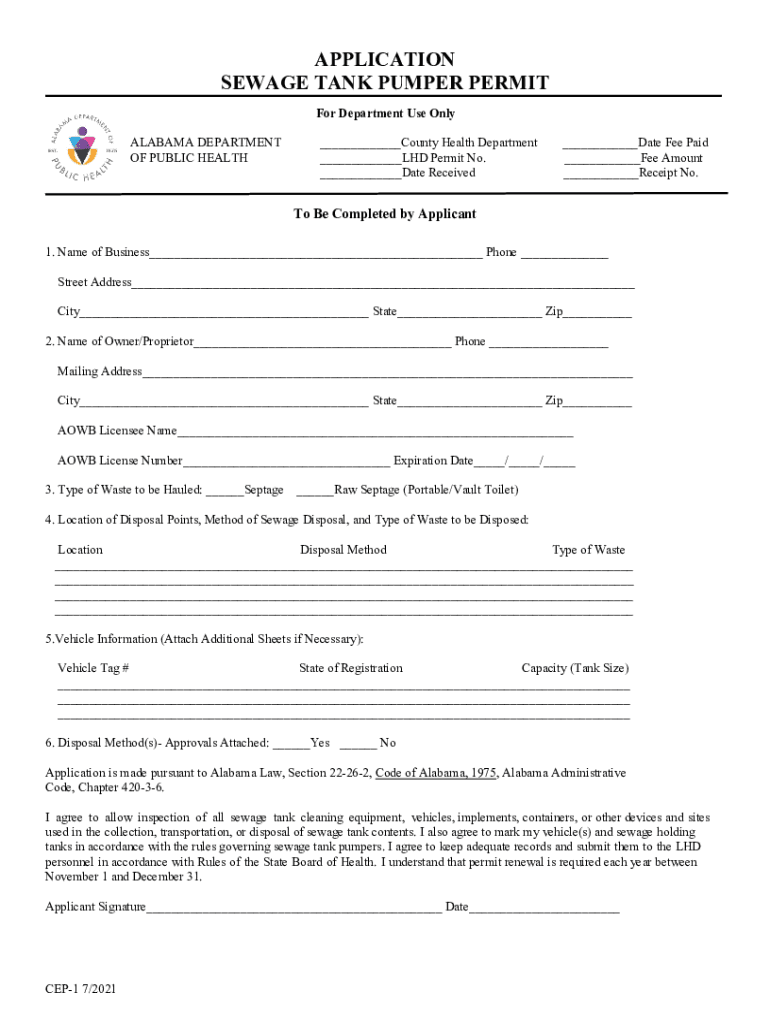
The "CEP-1" is an official application form used for obtaining a Sewage Tank Pumper Permit. This permit is crucial for businesses involved in the collection, transportation, and disposal of sewage waste. The form is issued by the Alabama Department of Public Health and is part of the regulatory procedure to ensure that operators comply with state sanitation laws. The CEP-1 ensures environmental safety by stipulating guidelines on how sewage waste should be managed and disposed of. Familiarity with this form is essential for maintaining compliance and securing authorization for sewage-related operations.
Steps to Complete the CEP-1
Filling out the CEP-1 requires careful attention to detail. Each step ensures that the necessary information is accurately captured, minimizing errors that could delay the approval process.
-
Gather Required Information:
- Business details: name, address, and contact information.
- Owner details: name, contact, and identification information.
-
Specify Waste Types:
- Clearly define the types of waste your business handles.
- Include any specific treatments or processes used.
-
Disposal Methods:
- Detail the methods used for waste disposal.
- Indicate locations and facilities where the waste is processed.
-
Vehicle Information:
- List each vehicle used for sewage collection and transportation.
- Provide registration numbers and vehicle specifications.
-
Compliance Agreement:
- Acknowledge the rules and regulations set by the health department.
- Agree to inspections and maintain records as required.
How to Obtain the CEP-1
Acquiring the CEP-1 involves contacting the Alabama Department of Public Health. Here are the steps to obtain it:
- Visit the department's local office or website to access the form.
- Request a physical form from the health department, if necessary.
- Download the form directly from the department's online portal.
Ensure that you have all prerequisites, such as business licenses and vehicle registration documents, ready before submission. This preparation helps streamline the acquisition process, preventing unnecessary delays.
Key Elements of the CEP-1
Understanding the vital components of the CEP-1 is essential for accurate completion:
- Business Information: Essential for identifying and legitimizing the applicant.
- Waste Types: Detailed descriptions aid in determining appropriate disposal approvals.
- Disposal Methods: Information ensures alignment with environmental regulations.
- Vehicle Details: Certifies that all transport means are compliant and safe.
- Compliance Acknowledgment: Confirms the applicant's agreement with legal requirements.
Each element must be completed accurately to avoid application rejection or compliance issues.
Who Typically Uses the CEP-1
The CEP-1 form is typically used by businesses operating in the sewage and waste management industry. This includes:
- Sewage tank pumping companies.
- Waste disposal and treatment facilities.
- Independent contractors or small business owners involved in waste transportation.
- Municipal bodies outsourcing waste management services.
These entities need to adhere to public health regulations and ensure safe waste handling, making the CEP-1 indispensable for standard operations.


Legal Use of the CEP-1
The CEP-1 is not just a regulatory form but a legal document. It serves as:
- Proof of Compliance: Validates that a business adheres to state sanitation laws.
- Operational Legitimacy: Grants legal operation within specified waste management services.
- Inspection Agreement: Allows health departments to conduct regular assessments.
Failure to utilize the CEP-1 appropriately can result in operational cessation, fines, and other legal repercussions, emphasizing its significance in lawful business conduct.
Penalties for Non-Compliance
Non-compliance with the requirements associated with the CEP-1 can lead to significant penalties, including:
- Fines and financial penalties for violating health and sanitation laws.
- Revocation of the Sewage Tank Pumper Permit, halting business operations.
- Legal action taken by the health department to enforce compliance.
- Mandatory corrective measures and additional inspections.
Maintaining compliance through accurate CEP-1 submissions protects businesses from these repercussions, ensuring uninterrupted operations.
Filing Deadlines and Important Dates
Meeting set deadlines for the CEP-1 is critical for maintaining compliance:
- Initial application deadlines must be adhered to for timely permit issuance.
- Renewal submissions are typically required annually or bi-annually, depending on specific mandates.
- Specific deadlines may vary slightly each year; checking with the Alabama Department of Public Health for updates is prudent.
Late submissions can lead to permit lapses and operational disruptions, highlighting the importance of timely filing and renewal processes.




