







Definition and Purpose of the Ambulatory Services - Susan B. Allen Memorial Hospital
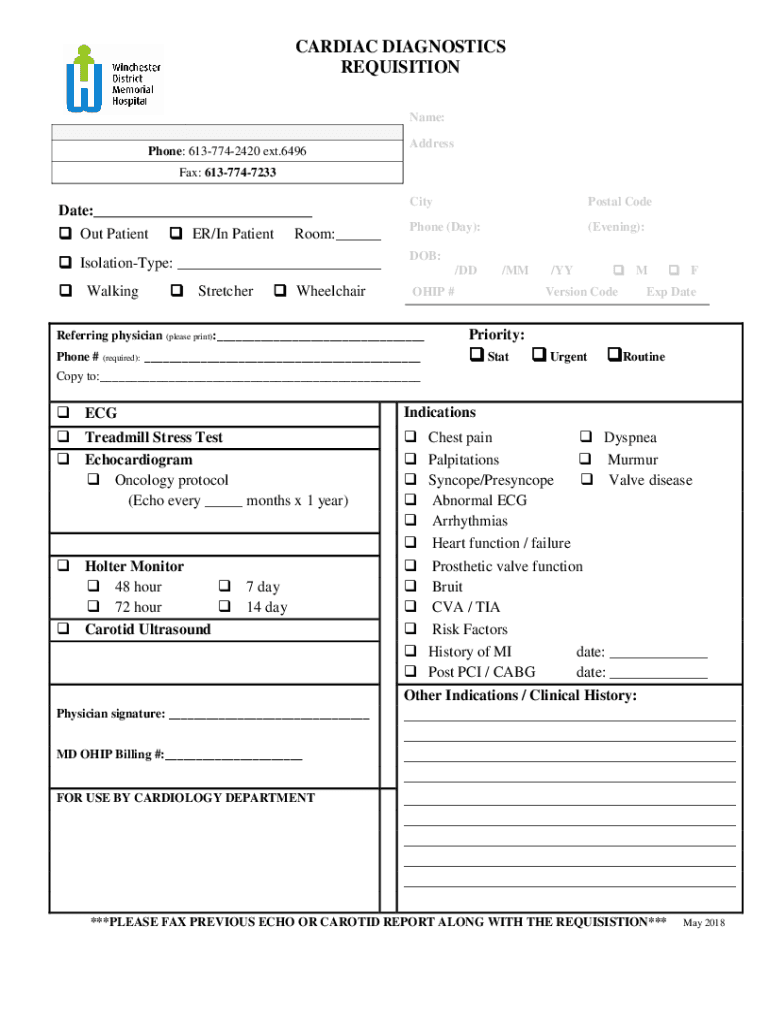
The "Ambulatory Services - Susan B. Allen Memorial Hospital" form is primarily used to request specific outpatient medical tests and diagnostics, including cardiac procedures like ECGs, echocardiograms, and stress tests. As an instrumental document, it collects pertinent patient information, demographic details, and the referring physician's particulars. Additionally, the form outlines the urgency of the requested services. This document ensures organized communication between referring healthcare providers and the hospital's diagnostic team.
Key Information Collected
- Patient Details: Full name, date of birth, contact information, and insurance details.
- Referring Physician: Name, contact number, and medical credentials.
- Test Specifications: Indications for tests, urgency level, and any additional instructions.
- Authorization: Signatures for patient consent and physician authorization.
This form's comprehensive structure ensures that all necessary data is available to facilitate prompt and effective healthcare service delivery.
Steps to Complete the Ambulatory Services Form
Completing the "Ambulatory Services - Susan B. Allen Memorial Hospital" involves several steps to ensure accuracy and comprehensiveness:
-
Patient Information: Fill in the patient's personal details, including name, address, and social security number.
-
Insurance Details: Record the insurance provider's information to facilitate billing processes.
-
Test Requests: Indicate which diagnostic tests are needed, providing any relevant patient symptoms or medical history justifying the tests.
-
Referring Physician Details: Input the physician's contact details for any necessary follow-up communication.
-
Authorization: Obtain and include the necessary signatures from the patient for consent and the referring physician for approval.
Thoroughly review all entered information for accuracy before submitting.
Who Typically Uses the Ambulatory Services Form
A variety of healthcare professionals and stakeholders utilize the "Ambulatory Services - Susan B. Allen Memorial Hospital" form, including:
- Primary Care Physicians: To refer patients for specific outpatient diagnostics.
- Specialists: Cardiologists and internal medicine specialists leverage these forms for further investigation of specific medical conditions.
- Healthcare Administrators: They ensure that all formalities and documentation are complete for seamless patient processing.
- Patients: Individuals seeking diagnostics use this form to facilitate and expedite their medical needs.
These diverse users ensure a comprehensive approach to patient diagnostics and care continuity.


How to Obtain the Ambulatory Services Form
The "Ambulatory Services - Susan B. Allen Memorial Hospital" form can be obtained through multiple channels, providing flexibility for healthcare providers:
-
Online Access: Many hospitals provide downloadable versions from their websites, ensuring healthcare providers can quickly obtain and fill the form digitally.
-
In-Person Collection: Forms are available at the hospital’s outpatient services desks or directly from the referring physician’s office.
-
Request by Mail: Some institutions offer the option to request forms by mail for healthcare providers preferring paper records.
These methods ensure accessibility and convenience for healthcare providers and patients.
Important Terms Related to Ambulatory Services
Familiarity with certain terms is crucial for understanding the "Ambulatory Services - Susan B. Allen Memorial Hospital" form:
- Outpatient: Refers to medical procedures or tests performed without an overnight hospital stay.
- Diagnostic Test: Medical tests performed to diagnose a condition or disease.
- Referring Physician: The medical professional directing a patient to a specialist or for specific tests.
- Echocardiogram: An ultrasound of the heart used in diagnosing heart conditions.
These terms ensure clear communication between healthcare workers and the patients involved.
Legal Use and Compliance of the Form
The "Ambulatory Services - Susan B. Allen Memorial Hospital" form must comply with legal standards set by healthcare regulations:
-
HIPAA Compliance: Ensures that patient information shared through the form is securely handled to protect privacy.
-
Patient Consent: Legal consent is mandatory for all tests, highlighting patient acknowledgment and authorization.
Adhering to these legal requirements is essential to maintain trust and integrity in healthcare practices.
Digital vs. Paper Version: Advantages and Drawbacks
Choosing between digital and paper versions of the form involves understanding their specific benefits and limitations:
-
Digital Version:
- Advantages: Easier to edit, store, and share; integrates seamlessly with electronic medical records.
- Drawbacks: Requires computer access, potential data security concerns.
-
Paper Version:
- Advantages: Tangible record, no need for electronic devices.
- Drawbacks: Prone to physical loss or damage, requires manual storage.
Healthcare facilities often choose based on their infrastructure and patient needs, balancing convenience with security.
State-Specific Rules and Variations
While general structure and usage of the "Ambulatory Services" form remain consistent, there may be state-specific requirements:
-
State Regulations: Each state may dictate the type of consent needed and specific patient rights.
-
Insurance Variations: Insurance processes associated with outpatient services can vary by state guidelines.
Healthcare providers must stay informed about local regulations to ensure compliance and proper patient service.


