







Definition and Meaning
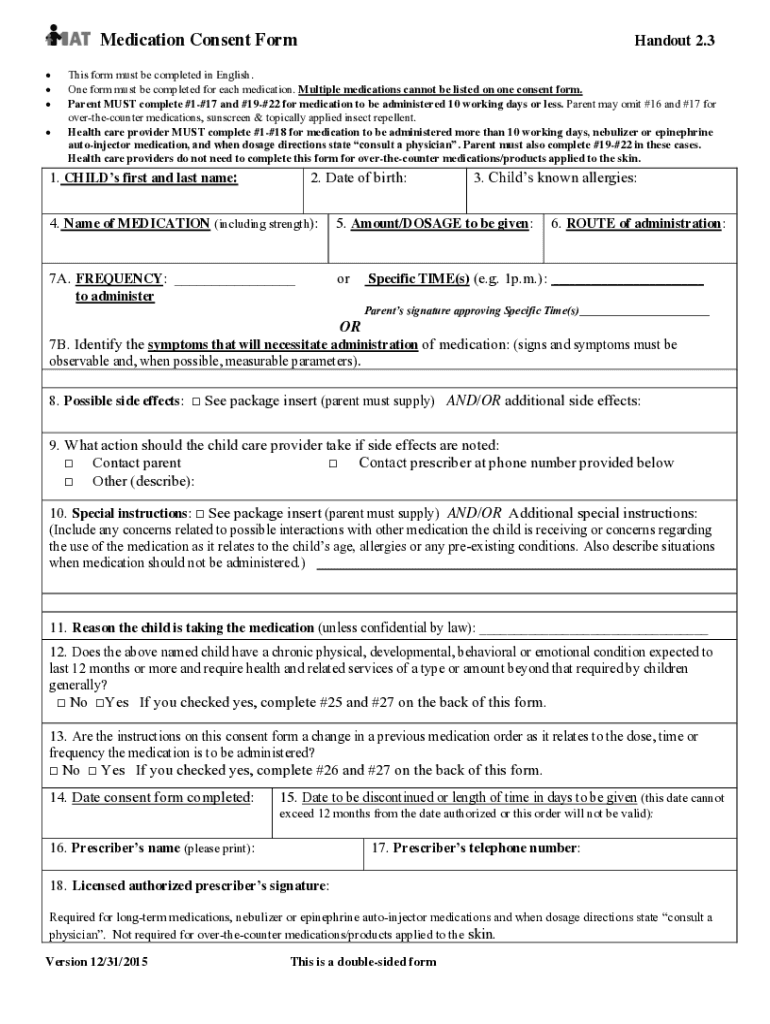
The Virginia medication consent form is a formal document that authorizes caregivers, such as daycare providers or school personnel, to administer medication to a child or dependent in compliance with state regulations. It includes specific details about the medication, dosage, administration times, and any potential side effects. This form ensures that all parties involved are informed and that medication is provided safely and correctly. Parents, guardians, and healthcare professionals use this form to communicate critical information and consent for treatment, facilitating a clear understanding of responsibilities and expectations.
How to Use the Virginia Medication Consent
Using the Virginia medication consent form involves several essential steps to ensure accurate completion and compliance. First, the parent or guardian needs to fill out the child's personal information section, including their full name, date of birth, and relevant health details. Afterward, they must specify the medication to be administered, including the name, dosage, and frequency. Healthcare providers are responsible for reviewing this information and confirming medical instructions. Finally, signatures from both the parent or guardian and the healthcare provider are required to validate consent and authorization.
Common Scenarios
- Daycare Acceptance: Parents often complete this form before enrolling their child in daycare to ensure medications can be administered as needed.
- School Settings: In school environments, these forms are utilized to authorize staff to give prescribed medications during school hours.
Steps to Complete the Virginia Medication Consent
- Gather Information: Collect all necessary details, including the child's medical history, current medications, and healthcare provider's contact information.
- Complete Personal Details: Fill in the child's name, age, and relevant identification information on the form.
- Specify Medication Details: Clearly state the medication name, dosage, administration times, and any specific instructions that must be followed.
- Consult Healthcare Provider: Ensure that a healthcare professional reviews the form and provides their signature to confirm medical instructions.
- Sign the Form: Parents or guardians must sign the form, acknowledging their understanding and agreement with the terms outlined.
Submission Tips
- Double-check all entries for accuracy before submitting.
- Keep a copy of the completed form for personal records and future reference.
Key Elements of the Virginia Medication Consent
The key components of the Virginia medication consent form include detailed sections for medication information, administration guidelines, and necessary signatures. The form typically contains:
- Child's Personal Information: Includes full name, age, and health identifiers.
- Medication Details: Name, dosage, and times of administration.
- Healthcare Provider Approval: Section for provider to review instructions and provide signatures.
- Parent or Guardian Signature: Must be signed to authorize consent and verify information accuracy.
- Potential Side Effects: Documentation of known side effects or warnings.
Example Element Breakdown
- Dosage Instructions: Specify milligram amount and any specific timing requirements.
- Contact Information: Include phone numbers for emergency contact purposes.
Legal Use of the Virginia Medication Consent
The Virginia medication consent form holds legal importance as it authorizes non-parental caregivers to administer medications. Compliance with state regulations is a legal necessity, ensuring safety and liability measures are in place for both caregivers and parents. The form serves as a legal agreement protecting the rights and responsibilities of all involved parties, with documentation of consent, administration guidelines, and liability protection if procedures are followed as consented.
Legal Considerations
- Regulatory Compliance: Ensuring the form meets all state-required information fields.
- Consent Verification: Confirming consent through signatures by both parents and healthcare providers.
Important Terms Related to Virginia Medication Consent
Understanding key terms related to the Virginia medication consent form aids in filling it out correctly and ensures all parties are on the same page:
- Authorized Provider: Healthcare professional responsible for medication oversight and approval.
- Dosage: Specific amount of medication to be administered.
- Administration Schedule: Times and conditions under which medication should be given.
- Side Effects: Potential adverse reactions or warnings associated with the medication.
Glossary
- Signature Authorization: Authorization via signed approval from the responsible parties.
- Liability: Legal responsibility for administering medication accurately and safely.
Who Typically Uses the Virginia Medication Consent
The Virginia medication consent form is used by several key parties, primarily in educational and childcare settings, ensuring the safe and approved administration of medications to minors or dependents.
- Parents and Guardians: Provide the primary authorization needed for medication administration.
- Healthcare Providers: Offer medical instructions and approve the administration process.
- Caregivers and Educators: Responsible for daily administration according to the consented instructions.


Usage Context
- Educational Institutions: Schools frequently handle such forms for medications needed during school hours.
- Childcare Facilities: Daycare centers use these forms to administer medications for enrolled children.
State-Specific Rules for the Virginia Medication Consent
The Virginia medication consent form is subject to state-specific rules designed to protect the health and safety of children receiving medication in non-home settings. Certain regulatory measures dictate the documentation required for approval, the qualifications of administrators, and record-keeping obligations.
- Documentation Requirements: Legal necessity to complete all sections accurately.
- Qualified Administrators: Ensures that only trained professionals administer medications.
- Record Keeping: Maintaining accurate records of medication administration for liability protection and auditing purposes.




