
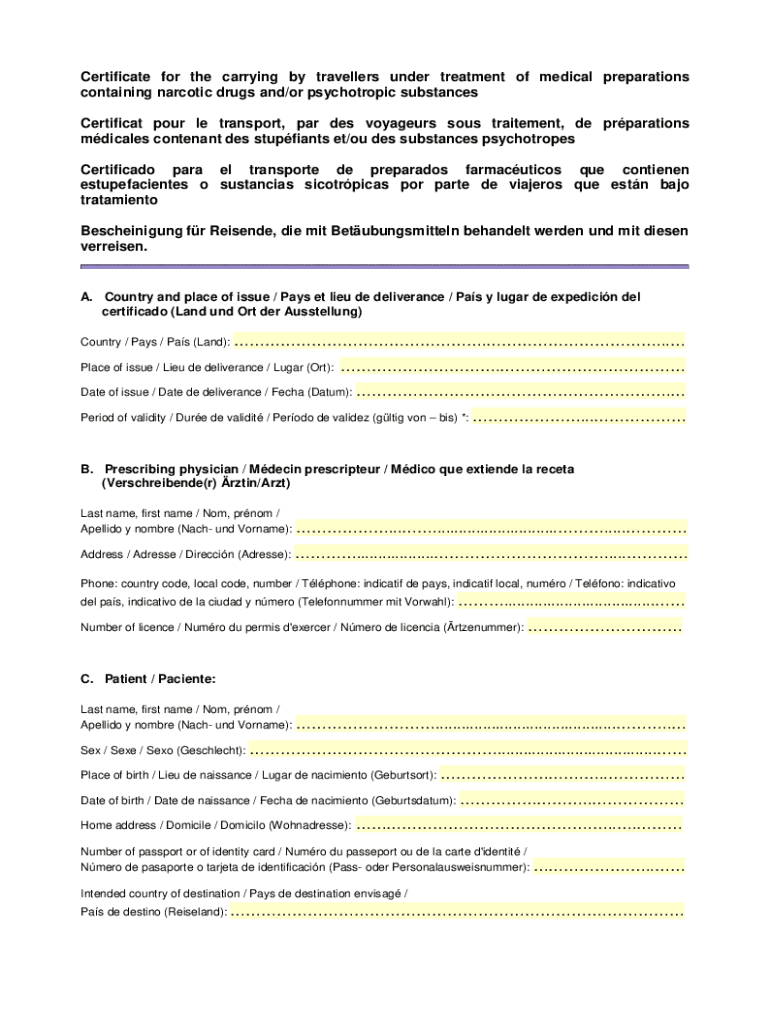







Definition and Meaning of the Certificate for Medication Travel
The Certificate for the carrying by travellers under treatment of medical preparations containing narcotic drugs and/or psychotrop serves as an official document that grants permission for travelers to carry specific medications deemed necessary for their medical treatment. This certificate holds legal authority and is often required when crossing international borders, particularly in regions with strict regulations on controlled substances.
Functionality of the Certificate
- Legal Transport: It facilitates smooth passage through customs by serving as proof that the traveler is permitted to carry narcotic and psychotropic medications for personal use.
- Reflection of Medical Necessity: The certificate typically includes details about the patient, prescribed medications, and the issuing authority, underscoring the medical need for these substances during travel.
How to Use the Certificate for Carrying Medication
Utilizing the certificate involves several key steps to ensure compliance and ease of travel. Following these guidelines can minimize the risk of complications at border controls.
Steps for Effective Use
- Obtain the Certificate: Ensure the certificate is issued by a licensed medical professional or relevant medical authority.
- Keep on Hand: Always have the document readily accessible during travel, especially when entering or exiting countries known for stringent drug policies.
- Translation When Necessary: If traveling to non-English-speaking countries, consider having the certificate translated, particularly in regions that may have specific requirements regarding documentation.
- Security Screening: Present the certificate at security checkpoints alongside your medications, especially if they are in original packaging, to avoid potential misunderstandings.
Important Considerations
- Check Destination Regulations: Different countries have varying laws regarding the transport of controlled substances. Always confirm the regulations for your destination beforehand.
- Document Updates: If there are changes to your treatment plan or medications, ensure that the certificate is updated to reflect those changes.
How to Obtain the Certificate for Medication Travel
Acquiring the certificate involves a straightforward process, though it requires coordination with healthcare providers to ensure all necessary information is obtained. Here are the steps involved:
Steps to Acquire the Certificate
- Consult a Healthcare Provider: Schedule an appointment with your prescribing physician to discuss your travel plans and the need for a certificate.
- Complete Necessary Documentation: Your physician may need to fill out a formal request or specific form that details your medical condition and the prescribed medications.
- Request Official Issuance: Ask your physician to issue the certificate, including vital information such as:
- Patient name and details
- Description of medications, including dosage and quantity
- Physician's contact information and signature
- Review Local Requirements: Inquire about any additional steps specific to your travel route, such as other required forms or approvals.
Timely Preparation
It is advisable to start this process well in advance of your travel date to avoid any last-minute issues.
Key Elements of the Certificate for Medication Travel
Understanding the essential components of the certificate can help travelers ensure they have the necessary information documented. Each element serves a specific purpose in validating the user's rights to carry their medications.
Critical Components
- Traveler Details: Full name, date of birth, and contact information.
- Physician Information: Name, qualifications, contact details, and signature.
- Medication Details: Comprehensive list of medications, including:
- Generic and brand names
- Dosage instructions
- Quantity authorized for travel
- Issuing Authority: Information about the medical entity or authority responsible for that issuance.
Importance of Accuracy
All details must be accurate to prevent complications during customs checks. Discrepancies can lead to seizures of medications or potential legal actions.
Legal Use of the Certificate for Medication Travel
The legal implications of possessing this certificate are significant. It is vital for travelers to understand their rights and responsibilities concerning its use.
Compliance with Laws
- Adherence to Prescription Laws: The certificate's main purpose is to comply with both issuing authority regulations and destination country laws regarding the possession of narcotic and psychotropic drugs.
- Potential Consequences: Non-compliance or failure to present this certificate can result in confiscation of medications, fines, or legal action in some jurisdictions.
Trust in Documentation
Travelers should regard the certificate as a pivotal document that legitimizes their medical needs while traveling, reinforcing treatment continuity regardless of geographical boundaries.
Examples of Using the Certificate for Medication Travel
Real-world scenarios illustrate the certificate's practical application, enhancing the understanding of its vital role during travel.
Scenario Illustrations
- International Travel: A traveler diagnosed with chronic pain requires specific narcotic medications. Carrying the certificate issued by their physician ensures they can board an international flight without issues at customs.
- Emergency Situations: In a situation where an urgent need for medication arises while abroad, having the certificate allows for quicker access to local pharmacies and the legal transport of acquired medications back home.
Benefits Highlighted
These scenarios emphasize how critical the certificate is for travelers needing continuous medication management, reducing the likelihood of legal and logistical hurdles during transit.
This structured content provides in-depth insights into the Certificate for the carrying by travelers under treatment of medical preparations containing narcotic drugs and/or psychotrop, presenting useful information tailored to assist users in understanding, obtaining, and effectively using this legal document.




