







Definition and Meaning
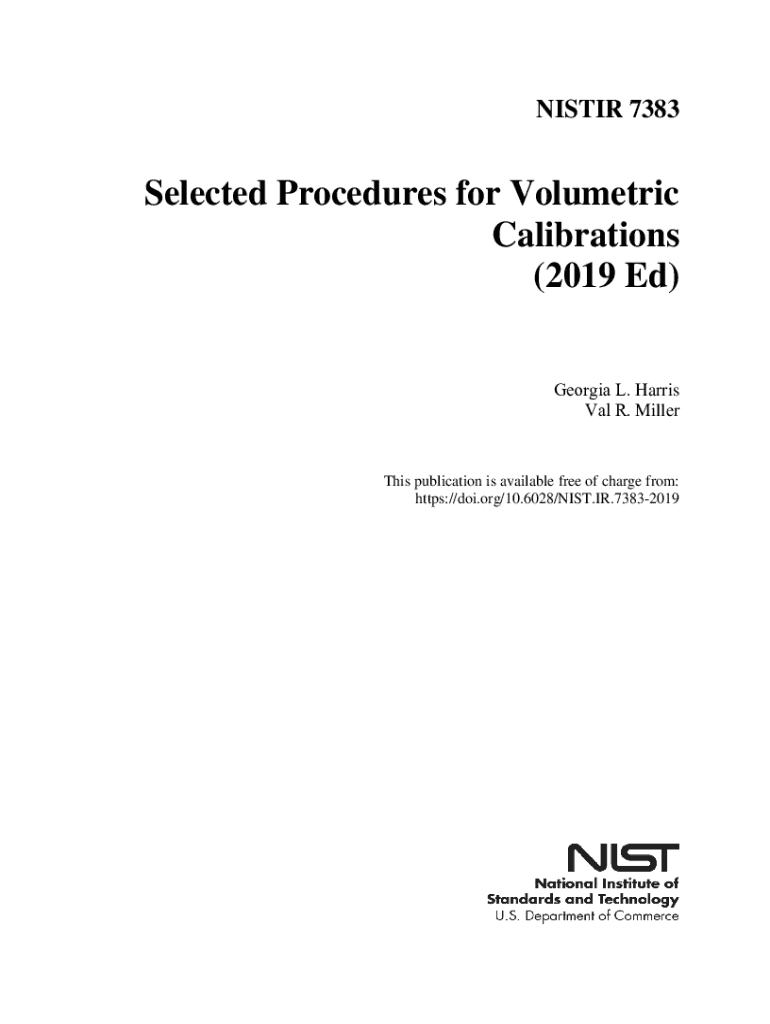
Selected Procedures for Volumetric Calibration Metrology refers to a set of standardized methods and best practices crucial for the accurate and precise calibration of volumetric measuring instruments. This documentation, notably governed by guidelines such as NISTIR 7383, outlines the principles and procedures necessary to ensure that volumetric measurements are traceable to international standards, which are essential for ensuring the consistency, reliability, and credibility of measurements used in various scientific and industrial applications.
Components of the Definition
- Volumetric Calibration: The process of verifying and adjusting the accuracy of instruments that measure volume. This could include beakers, burettes, pipettes, and other related apparatus.
- Metrology: The science of measurement, encompassing the theoretical and practical aspects of measurements' accuracy, precision, and traceability.
Importance
- Ensures compliance with international standards.
- Enhances reliability and accuracy in measurement.
- Essential for industries like pharmaceuticals, food processing, and chemicals where precise measurements are crucial.
How to Use the Selected Procedures
Using the selected procedures for volumetric calibration involves adhering to defined standards for carrying out calibration tasks effectively. This ensures correctness and quality in measurement practices.
Step-by-Step Instructions
- Identify Instruments: List all volumetric instruments requiring calibration.
- Review Standards: Familiarize with relevant standards outlined in the NISTIR 7383 or other pertinent documentation.
- Prepare Environment: Ensure calibration is conducted in a controlled environment to maintain accuracy.
- Follow Calibration Procedures: Adhere to the specific calibration techniques such as gravimetric or volume transfer methods.
- Record Data: Diligently document the calibration findings for each instrument.
- Analyze Results: Compare the measured values against standard references to identify adjustments needed.
Considerations
- Water Purity: The quality of water used in some tests can significantly affect results, thus must meet specific purity criteria.
- Temperature: Control environmental temperature to eliminate its impact on measurement accuracy.
Steps to Complete the Procedures
Completing these procedures requires a meticulous approach and attention to detail, ensuring that each step aligns with the best practices.
Execution Process
- Initial Instrument Check: Examine instruments for wear or damage.
- Calibration Setup: Arrange equipment according to setup guidelines.
- Conduct Calibration: Proceed with calibration using precise measurement techniques.
Verification
- After completing calibrations, verify results through cross-checking with secondary standards to ensure consistency and accuracy.
Documentation
- Record all findings and modifications implemented during the calibration process for traceable reference.
Key Elements of the Procedures
The procedures entail several key elements necessary for the accurate execution of volumetric calibration.
Core Elements
- Accuracy and Precision: Fundamental to achieve reliable measurement results.
- Standard Operating Procedures (SOPs): Essential guidelines detailing the specific steps and checks to perform.
- Good Laboratory Practices (GLP): Emphasizes maintaining cleanliness, organization, and documentation.
Supporting Elements
- Compliance: Ensuring alignment with national and international measurement standards.
- Uncertainty Assessment: Evaluating the extent of potential deviation in measurements to ensure correct interpretations.
Who Typically Uses These Procedures
Professionals across various fields employ these procedures for diverse applications, ensuring accurate and reliable measurements.


Common Users
- Laboratory Technicians: Responsible for instrument calibration and maintenance.
- Quality Assurance Professionals: Verify that measurements meet necessary quality standards.
- Research Scientists: Ensure the integrity of experimental data.

Industries Impacted
- Pharmaceutical and medical industries.
- Chemical manufacturing and processing.
- Academic research institutions.
Examples of Using These Procedures
Utilizing selected procedures can involve various real-world applications across different sectors.
Practical Examples
- Pharmaceuticals: Ensuring that liquid formulations meet precise volume specifications to maintain therapeutic effectiveness.
- Food Industry: Verifying measurement accuracy for additive contents to ensure safety and compliance.
- Environmental Testing: Calibrating equipment used for measuring pollutants in water samples, ensuring correct environmental assessments.
Case Studies
- Laboratory Calibration: An academic lab conducting volume calibration on pipettes before research experiments to ensure accurate data collection.
Legal Use of the Procedures
Employing these procedures involves adhering to legal guidelines to ensure measurement compliance in regulated environments.
Legal Aspects
- Regulatory Compliance: Ensures that volumetric calibration meets legal standards as part of quality control processes.
- Documented Processes: Maintain records as a legal requirement, demonstrating adherence to established standards and practices.
Compliance Framework
- Follow industry-specific regulations such as those governed by the Food and Drug Administration (FDA) or Environmental Protection Agency (EPA) where applicable.
State-Specific Rules
Understanding the geographical regulations is critical as state-specific rules may influence the application of these procedures.
Regional Variations
- Each state may impose additional credentials for practitioners conducting volumetric calibrations, based on their regulatory frameworks.
- Some states might require certification from a recognized body or adherence to additional testing criteria.
Considerations
- Check for regional compliance requirements before initiating calibration processes to prevent legal discrepancies.
- Stay updated with changing local regulations that could impact calibration procedures for adherence to more stringent state laws.
By exploring these aspects, one can effectively implement the selected procedures for volumetric calibration metrology, ensuring precise, reliable, and compliant measurement practices across applications.


