




01. Edit your nhs recommendation letter example online
Type text, add images, blackout confidential details, add comments, highlights and more.

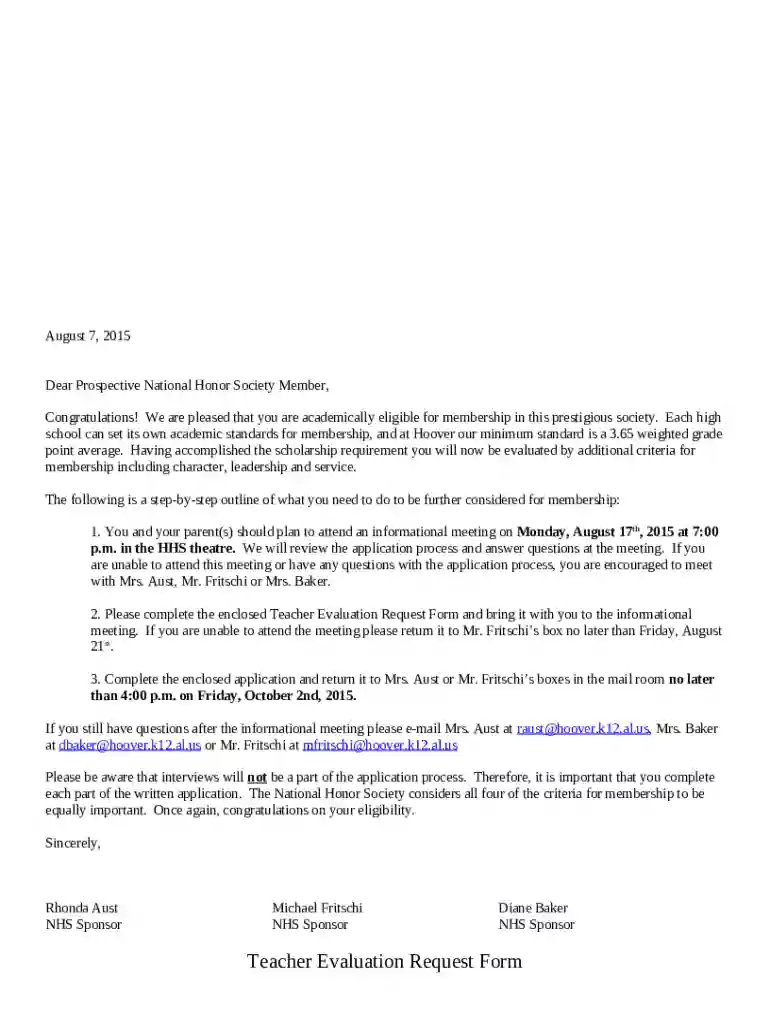
Type text, add images, blackout confidential details, add comments, highlights and more.

Draw your signature, type it, upload its image, or use your mobile device as a signature pad.

Send national honor society recommendation letter example via email, link, or fax. You can also download it, export it or print it out.
A character reference letter for the National Honor Society (NHS) plays a pivotal role in the application process for prospective members. This document serves as a testament to the character, leadership, and academic achievements of a student. It is typically written by someone who knows the student well, such as a teacher, mentor, or family friend, and provides detailed insights into the student's qualifications and suitability for NHS membership.
Purpose: The primary aim is to support the student's application by offering a personal account of their character traits, achievements, and contributions to the community. This letter emphasizes the qualities that the NHS values, such as scholarship, leadership, service, and character.
Audience: The letter is directed toward the selection committee of the NHS, who evaluates candidates based on academic and personal criteria.
Impact: A well-written character reference letter can significantly enhance a student’s application by providing specific examples of the student's virtues, making a compelling case for their acceptance into the honor society.
When composing a character reference letter for the National Honor Society, it is essential to include several key elements to ensure the letter is effective and impactful.
Introduction: Begin with a brief introduction of the writer, including their relationship to the student and the duration of that relationship. This establishes credibility and context.
Academic Achievements: Mention the student’s academic accomplishments, including GPA and subjects where they have excelled. Detail any honors, awards, or recognitions to highlight their scholarship.
Character Traits: Discuss the character traits that make the student an ideal candidate for the NHS. Examples might include integrity, responsibility, empathy, and resilience.
Leadership Skills: Provide examples of the student's leadership abilities. This can include positions held in school clubs, sports teams, or community organizations, as well as specific instances where they demonstrated initiative or mentored others.
Service Contributions: Highlight any volunteer work or community service the student has participated in. This underscores their commitment to service, a key component of the NHS mission.
Conclusion: End with a strong endorsement of the student’s candidacy, reiterating their qualifications and the potential positive impact they will have in the NHS.
Writing a character reference letter for the National Honor Society involves a systematic approach to ensure all relevant information is included and organized coherently.
Gather Information: Collect pertinent information about the student’s academic history, extracurricular activities, and community service involvements. Understanding the NHS criteria can help tailor the letter to highlight relevant qualities.
Draft an Outline: Structure the letter into clear sections: introduction, body (academic achievements, character traits, leadership skills, service contributions), and conclusion. This outline will help maintain focus while writing.
Write the Introduction: Introduce yourself and explain your relationship to the student, along with the length of your acquaintance. Establish the letter’s purpose clearly.
Detail Achievements and Qualities: In the body, use specific examples that illustrate the student’s qualities. Instead of general statements, provide anecdotes that demonstrate their character and contributions.
Conclude with a Strong Endorsement: Summarize your support and restate your confidence in the student's capabilities and suitability for membership in the NHS. A positive closing statement can reinforce your endorsement.
Edit and Proofread: Review the letter for clarity, grammar, and spelling errors. A polished letter reflects professionalism and care.
Character reference letters for the National Honor Society are typically written by individuals who have a strong understanding of the student’s character, achievements, and community involvement. Ideal candidates for providing these letters include:
Teachers: Educators who can attest to the student's academic performance and character in a school setting. They often have firsthand experience with the student’s work ethic and contributions to classroom discussions.
Mentors or Coaches: Individuals who have worked closely with the student in extracurricular activities or sports, where they have observed the student’s leadership and teamwork abilities.
Community Leaders: Leaders from local organizations where the student has volunteered, as they can provide insights into the student’s commitment to serving others and their impact on the community.
Family Friends: Adults who know the student personally and can vouch for their character in various contexts, offering a holistic view of their personality and values.
Guidance Counselors: School counselors familiar with the student's overall academic and personal journey may provide a comprehensive perspective on their qualifications and character.
Submitting a character reference letter for the National Honor Society can provide significant advantages for students seeking membership. Key reasons for its importance include:
Supporting Documentation: The letter serves as a vital piece of evidence that supplements a student’s application, offering personal insights that grades and test scores alone cannot convey.
Highlighting Unique Qualities: A character reference letter allows the writer to emphasize the student's specific attributes and contributions, showcasing what makes them stand out from other candidates.
Demonstrating Community Engagement: The letter can illustrate the student’s involvement in community service and initiatives, aligning their efforts with the NHS's commitment to service.
Personal Recommendations: A strong endorsement from a respected individual can enhance the credibility of the application, making it more likely to resonate with the selection committee.
Clarifying the Student’s Journey: The letter can provide context to the student’s academic and personal challenges, explaining how they have overcome adversity, thus depicting resilience and determination.
By integrating these elements, the character reference letter becomes a critical tool in helping students achieve their goal of joining the National Honor Society. Its impact lies not just in the information presented but in the personal endorsements and specific examples demonstrating the student's qualifications and character.
We've got more versions of the nhs recommendation letter example form. Select the right nhs recommendation letter example version from the list and start editing it straight away!
| Versions | Form popularity | Fillable & printable |
|---|---|---|
| 2021 | 4.6 Satisfied (30 Votes) |
At DocHub, your data security is our priority. We follow HIPAA, SOC2, GDPR, and other standards, so you can work on your documents with confidence.
RECOMMENDATION FROM FAMILY. FRIEND. NATIONAL HONOR SOCIETY LETTER character reference NHS. NHS recommendation from Professionals can reference National
by PA Schrodt 2012 Cited by 1 Different generic codes are used to differentiate between various kinds of international and transnational actors.
A letter of recommendation for the National Honor Society aims to: 1. Highlight the. Students Qualifications: It should emphasize the students achievements inRead more


