
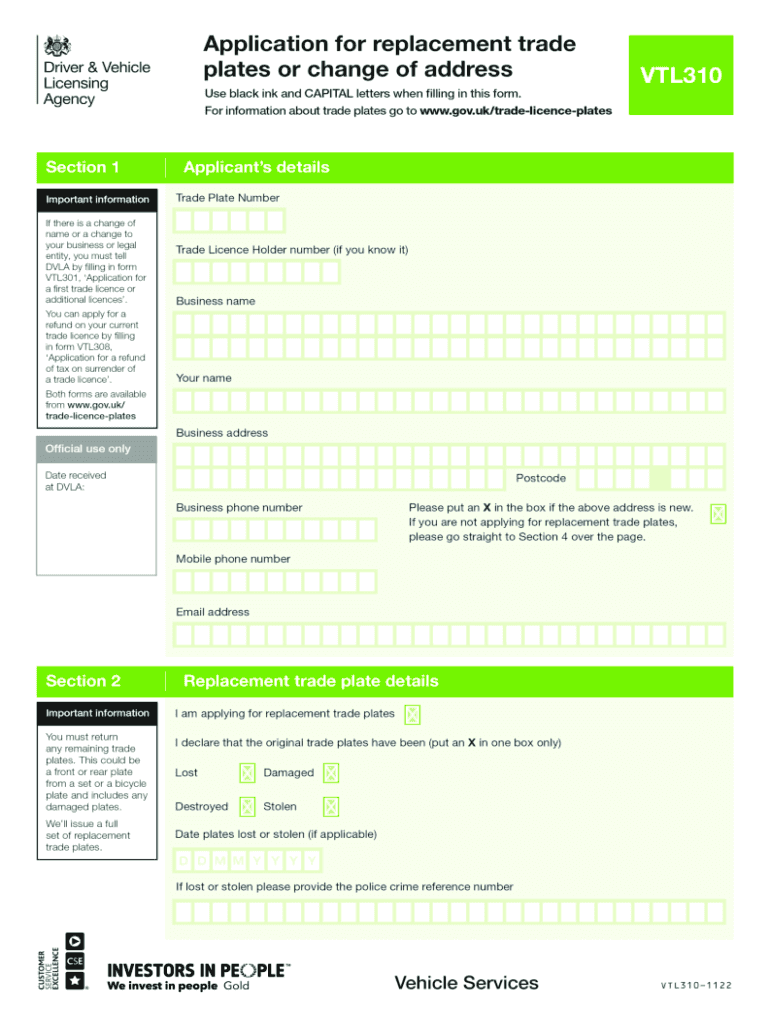







Definition and Meaning of the VTL310
The VTL310 form is specifically designed for the administrative processing of vehicle registration and title transactions. This form is typically utilized to facilitate the documentation of vehicle ownership transfers, including but not limited to sales, gifting, or inheritance of vehicles. It can also serve in the updating of essential vehicular details in state databases, ensuring accurate records for state compliance. Understanding the precise function and application of the VTL310 form is crucial for anyone involved in the buying, selling, or managing of automobiles.
How to Use the VTL310 Form
Filling out the VTL310 involves several steps, starting with gathering relevant personal and vehicle information. You'll need to enter details such as the vehicle identification number (VIN), make, model, and year of manufacture, alongside personal identification data of the involved parties. It's essential to ensure all sections of the form are completed accurately to avoid processing delays. Any mistakes in the information could result in the rejection of the form and subsequent complications in completing the transaction.
Obtaining the VTL310 Form
To obtain a VTL310 form, you can visit the motor vehicle department's official website in your respective state, where it’s usually available for download in PDF format. Certain locations may offer paper copies available for pickup at local DMV offices. When downloading the form online, ensure it is sourced directly from an official state site to guarantee you're using the correct and most up-to-date version.
Steps to Complete the VTL310
- Gather Necessary Information: Collect personal and vehicle-specific data. This includes driver's license numbers, VINs, and vehicle purchase details.
- Complete Vehicle Details Section: Accurately fill out the vehicle's make, model, year, and VIN.
- Enter Transaction Information: Specify the nature of the transaction, whether it's a sale, gift, or other transfer types.
- Personal Information: Enter the names, addresses, and identification details of the buyer and seller.
- Signatures: Ensure both the seller and buyer provide signatures where necessary to authenticate the transaction.
- Submit the Form: Follow the guidelines for submitting the form either online, by mail, or in person at a DMV office.
Why You Should Use the VTL310
The VTL310 form is crucial for legal compliance and helps protect both buyers and sellers in vehicle transactions. By officially recording the transfer of ownership, both parties ensure that all legal responsibilities and liabilities are appropriately assigned. This can prevent future disputes over matters like traffic violations, insurance, or vehicle taxation, which might arise from not properly updating title and registration records.
Typical Users of the VTL310
Those who frequently use the VTL310 form include vehicle sellers and purchasers, auto dealerships, and individuals involved in gifting vehicles. The form is also useful for estate executors managing the transfer of ownership for inherited vehicles. Ultimately, anyone involved in the transfer of car ownership will find themselves needing to use this form to ensure that transactions are documented legally and efficiently.
Important Terms Related to the VTL310
- VIN (Vehicle Identification Number): A unique code used to identify individual motor vehicles.
- Title: A legal document that establishes a person or business as the legal owner of the vehicle.
- Registration: The process of entering a vehicle into a state’s official record system, associating it with an owner.
- Lienholder: A lender who has a legal right to a vehicle until a debt owed by the vehicle owner is satisfied.
State-Specific Rules for the VTL310
While the general use of the VTL310 is consistent, specific rules can vary by state, affecting how form submissions are processed. For example, some states may require additional documentation or specific notarizations, while others might have unique filing fees or deadlines. It's crucial to check with your state's DMV for any particular requirements that may apply to you, ensuring a seamless processing experience.
Required Documents When Submitting the VTL310
When submitting the VTL310 form, you should also provide supporting documents, such as:
- Proof of Identification: Driver’s license or state-issued ID.
- Bill of Sale: Details the terms of the sale, including price and condition.
- Vehicle Title: Indicating you have the right to transfer ownership.
- Insurance Information: Showing proof of valid coverage.
Form Submission Methods for the VTL310
Forms like the VTL310 can often be submitted via multiple methods depending on the state's regulations:
- Online Submission: Some states offer a digital path for form submission.
- In-Person Drop-Off: Delivery at local DMV offices allows for direct confirmation of receipt.
- Mail: Traditional postal submission for those who prefer sending physical forms. Always include all necessary documents and ensure you have the correct mailing address for your state’s DMV office.




