
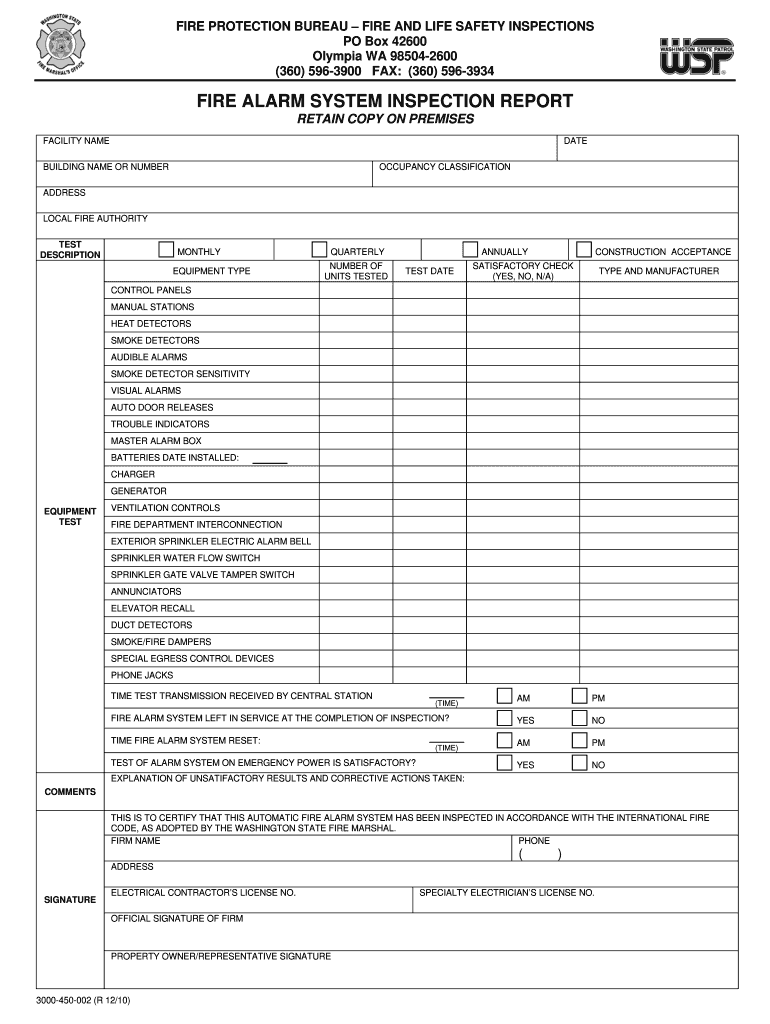







Definition & Meaning of Fire Alarm Report Sample
A fire alarm report sample serves as a template or guideline for documenting the inspection, testing, and maintenance of fire alarm systems within a facility. It typically includes essential information such as the facility’s address, the date of inspection, types of equipment checked, testing procedures performed, and the results of those tests. The report is critical for ensuring compliance with local fire safety regulations and codes, as well as for maintaining accurate records of fire protection measures.
The primary purpose of such a report is to provide evidence that the fire alarm system functions correctly and meets the required safety standards. This can prove essential in emergency situations and during audits by fire marshals or other regulatory agencies.
Key Elements of the Fire Alarm Report Sample
A comprehensive fire alarm report sample typically encompasses the following key elements:
- Facility Information: The name and address of the facility, including any identifying numbers or codes.
- Inspection Dates: Specific dates when the inspection and testing took place.
- Types of Equipment: Details regarding the fire alarm devices tested, such as smoke detectors, heat detectors, and control panels.
- Test Results: Clear documentation of inspection findings, including functional tests of alarms, detection systems, and control equipment.
- Compliance Status: A section that identifies whether the system meets the applicable fire safety codes, such as the National Fire Protection Association (NFPA) standards and any state-specific regulations.
- Recommendations: Any necessary repairs or upgrades needed to bring the system up to code.
- Signatures: Certification by the individual or company that performed the inspection and, where appropriate, a representative of the facility.
Steps to Complete the Fire Alarm Report Sample
Completing a fire alarm report sample involves several systematic steps to ensure that it is accurate and meets legal and safety standards:
- Gather Information: Collect all relevant facility details, including location, contact person, and existing fire alarm system specifications.
- Prepare for Inspection: Schedule a date and time for the fire alarm system inspection. Ensure that qualified personnel are available to conduct the tests.
- Conduct Tests: Perform thorough checks on all fire alarm components, including initiating devices (like smoke detectors) and notification devices (like alarms and strobe lights).
- Document Findings: Record test results, noting any malfunctions or compliance issues encountered during the inspection. It is essential to detail which tests were completed and their outcomes.
- Complete Report: Use the prepared fire alarm report sample to organize documented findings. Fill in all sections accurately and ensure compliance notes are clear.
- Review and Finalize: Have the report reviewed by a qualified supervisor or system technician. Ensure that the document is signed by authorized personnel before submission to necessary parties or for record-keeping.
Important Terms Related to Fire Alarm Report Sample
Understanding the terminology related to fire alarm report samples is crucial for thorough documentation and communication:
- NFPA: The National Fire Protection Association sets standards for the installation and maintenance of fire alarm systems.
- Inspection: A systematic examination of the fire alarm system to ensure efficacy and compliance.
- Testing: The act of verifying that all components of the fire alarm system function as intended.
- Maintenance: Regular servicing of fire alarm systems to ensure longevity and reliability.
- Compliance: The adherence to established fire safety standards and local regulations.
Who Typically Uses the Fire Alarm Report Sample
The fire alarm report sample is utilized by a variety of stakeholders in the safety and fire prevention landscape:
- Fire Safety Inspectors: Professionals responsible for evaluating the effectiveness of fire safety systems in compliance with state and local codes.
- Facility Managers: Individuals overseeing the operation and safety of facilities, ensuring that fire alarms function appropriately to protect occupants.
- Fire Safety Technicians: Technicians who carry out the inspection and testing of fire alarm systems and complete necessary documentation.
- Regulatory Authorities: Agencies conducting audits may request these reports to verify compliance with established fire safety laws.


Legal Use of the Fire Alarm Report Sample
Adhering to legal requirements when using a fire alarm report sample is essential for accountability and safety:
- Documentation Compliance: The report must accurately reflect the condition and functionality of the fire alarm system at the time of testing.
- Retention: Facilities are typically required to retain inspection reports for a specified period, usually between three to five years, depending on local laws or regulations.
- Liability: Proper documentation can mitigate legal liability in case of fire incidents; it can serve as proof that the facility took necessary preventative measures.
By understanding and utilizing the fire alarm report sample correctly, facilities can enhance their safety protocols and ensure compliance with both local and national fire safety standards.




