
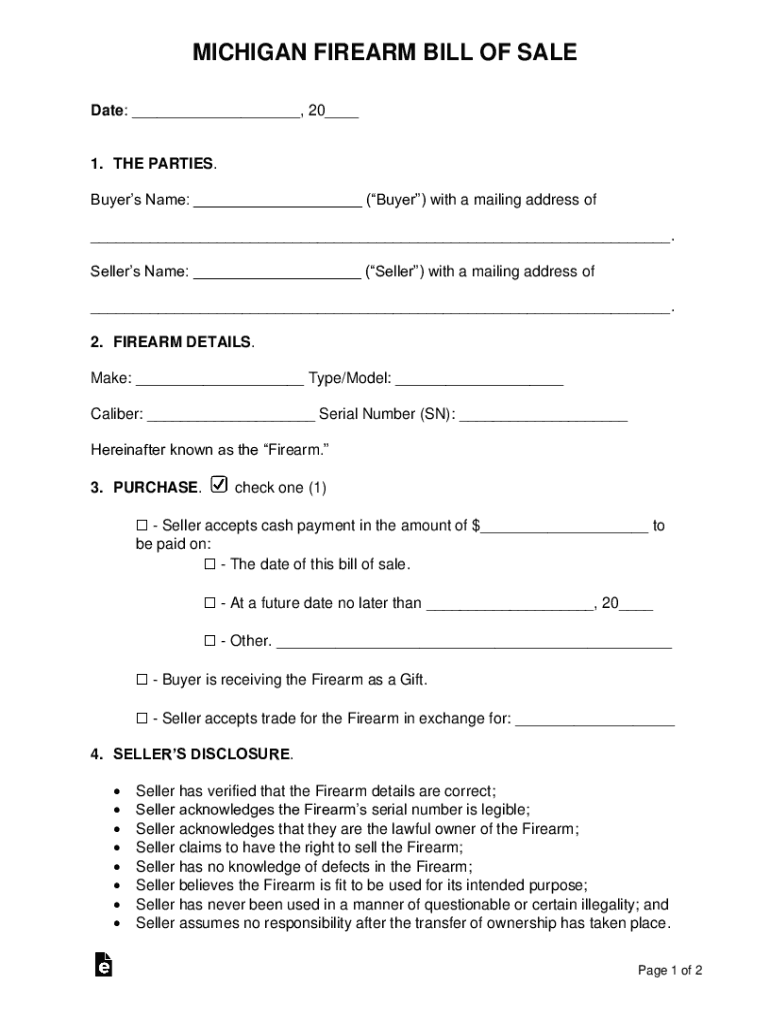







Definition & Meaning
The "Caliber: Serial Number (SN):" form is a documentation tool used in conjunction with firearm transactions, specifically in sales involving firearms. It records crucial details about the firearm being sold, such as the caliber and the serial number. This information is pivotal in identifying the specific firearm involved in the transaction, thereby ensuring traceability and accountability. The caliber refers to the internal diameter of the gun barrel and influences the bullet size used, whereas the serial number is a unique identifier assigned by the manufacturer. This form is essential to uphold regulatory compliance and to ensure that both parties in the transaction are clear about the specific firearm being transferred.
How to Use the Caliber: Serial Number (SN):
Utilizing the "Caliber: Serial Number (SN):" form requires attention to detail, as the information captured on it must be precise. Begin by locating the caliber engraved on the firearm, which is typically on the barrel, frame, or accompanying documentation. Similarly, find the serial number, usually marked on the receiver. Both of these details must be accurately transcribed onto the form. This step is crucial to avoid any confusion or legal discrepancies arising from incorrect information. Verification of this data by both buyer and seller ensures that the record matches the actual firearm, streamlining future reference needs or legal checks.
How to Obtain the Caliber: Serial Number (SN):
To obtain the caliber and serial number for a firearm, check the manufacturer's specifications, often listed in the manual accompanying the purchase or directly on the firearm itself. The caliber is usually indicated near the chamber or barrel, whereas the serial number is often located on the frame or receiver. For additional guidance, inspecting any legal documentation obtained during purchase or consulting the manufacturer can provide further confirmation. It is paramount to ensure these identifiers are clearly visible and unaltered to maintain the integrity of the firearm's history and any pending transactions or legal proceedings.
Steps to Complete the Caliber: Serial Number (SN):
- Identify the Firearm: Confirm the make, model, and any visible markings that designate the firearm's specifications.
- Locate the Information: On the firearm, find the areas where the caliber and serial number are displayed.
- Verify Details: Check the accuracy of the caliber and serial number against available documentation or ask for manufacturer verification if necessary.
- Record Accurately: Place this information carefully on the provided form, ensuring there are no mistakes.
- Double-Check Entries: Both parties should verify entries on the form to prevent future disputes or compliance issues.
- Signatures: Require signatures from both seller and buyer to signify agreement on the recorded details.
- Store Safely: Keep a copy of this completed form with both parties in a secure location for future reference or legal demonstration.
Who Typically Uses the Caliber: Serial Number (SN):
The primary users of the "Caliber: Serial Number (SN):" form include firearms dealers, buyers, collectors, and law enforcement agencies. Firearm dealers and private sellers use it to ensure all firearm transactions comply with legal standards, safeguarding against the transfer of stolen or misappropriated firearms. Buyers use this form to ensure they are aware of the specific firearm's identity and legality. In certain circumstances, law enforcement may utilize this information during investigations involving firearm ownership or misuse, making this form a critical component of responsible firearm management.


Key Elements of the Caliber: Serial Number (SN):
- Caliber Information: Denotes the size of ammunition the firearm is designed to fire, crucial for both functionality and compliance.
- Serial Number: Provides unique identification, helping track the firearm's history and legal status.
- Manufacturer Details: Frequently included to link the firearm with its initial point of production.
- Transaction Parties: Identifies both the seller and buyer, ensuring both agree to the terms of the transaction.
- Date of Sale: Specifies the timing of the transaction, essential for legality in terms of registration and ownership.
- Condition Clause: Often outlines the condition of the firearm sold "as is," minimizing future liability for the seller.
Legal Use of the Caliber: Serial Number (SN):
In the United States, maintaining an accurate record such as the "Caliber: Serial Number (SN):" form is legally required in several states when selling firearms. The form supports compliance with federal laws, including background checks and mandatory waiting periods. It effectively forms part of the official legal record, proving that the involved parties adhered to all necessary legal steps during the transaction. Proper execution of this form helps prevent illegal sales and trace issues related to firearms, reinforcing legal ownership and responsible usage.
State-Specific Rules for the Caliber: Serial Number (SN):
Given the U.S.-centric focus, it is important to note that regulations involving firearms, including the completion and submission of the "Caliber: Serial Number (SN):" form, can vary significantly by state. Some states may require additional documentation or verification methods, while others might necessitate reporting to local authorities or registries. Understanding the specific requirements within a state ensures compliance and reduces legal risks. Consulting state firearm laws and possibly engaging legal advice is recommended for navigating these varying regulatory landscapes effectively.




