







Definition and Purpose of the Animal Blastomycosis Case Report Form
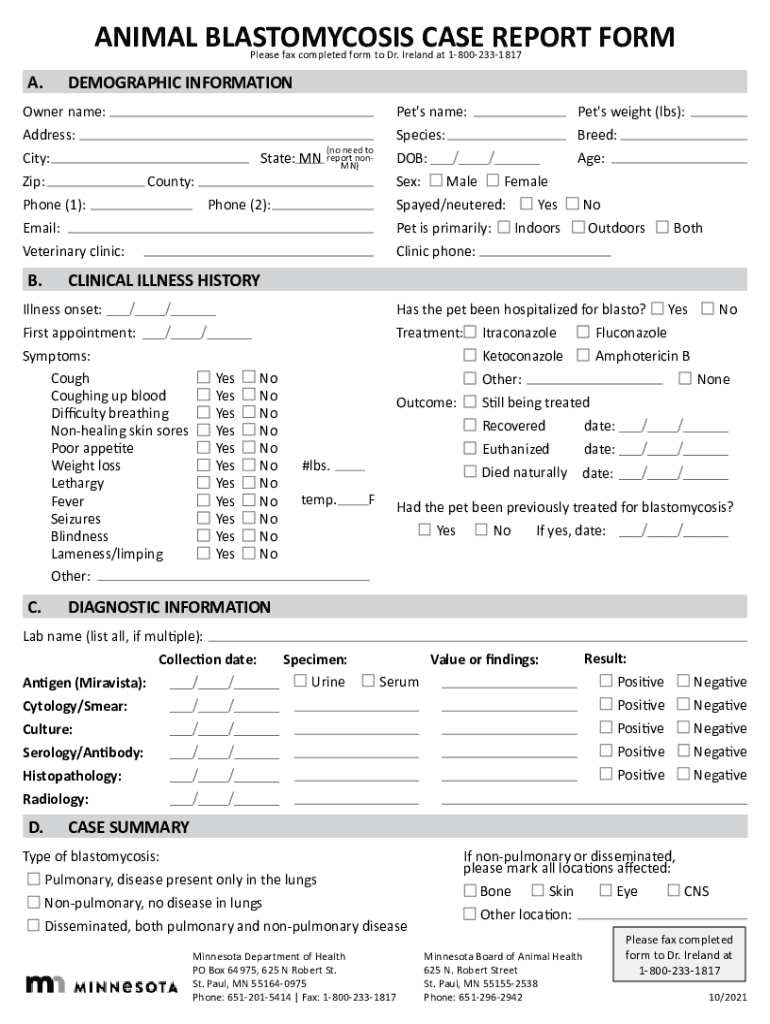
The Animal Blastomycosis Case Report Form is an essential document used by veterinarians to detail cases of blastomycosis in pets. This fillable online form allows for the systematic collection of critical information required for diagnosing and understanding the scope of the disease. Blastomycosis is a fungal infection that can affect both animals and humans, making it crucial to identify and document cases efficiently. This form helps track demographic details, clinical history, and treatment outcomes, providing a comprehensive overview of each case to aid in research and control efforts.
Key Elements of the Form
The form has several critical sections that ensure all necessary information is captured:
- Demographic Information: Details such as the animal’s species, breed, age, and sex.
- Clinical Illness History: Documentation of symptoms, duration, and progression of the illness.
- Diagnostic Information: Tests conducted, their results, and confirmation of blastomycosis diagnosis.
- Case Summary and Treatment Outcomes: Final remarks on the animal’s condition, the treatment provided, and the response to the treatment.
Each section is designed to guide the veterinarian in recording specific details that contribute to a comprehensive case report.
How to Use the Fillable Online Form
Using the online version of the form is straightforward and offers several advantages over traditional paper methods. Veterinarians can access the form directly from a web browser on any device, making it convenient to fill out the form at the clinic or remotely. The form is structured to prompt users through each section, ensuring no critical information is overlooked. Users can save their progress, return to complete the form at a later time, and submit it instantly once finalized. This streamlined process supports efficient case management and timely data submission.
Steps to Complete the Form
- Access the Form: Navigate to the platform hosting the form. Ensure an active internet connection for uninterrupted access.
- Fill in Demographic Information: Start with the basic information about the animal.
- Document Clinical History: Record the symptoms observed, along with their duration and any treatments already administered.
- Input Diagnostic Details: Add information on tests performed and results obtained to confirm the diagnosis.
- Summarize and Complete the Case: Provide a comprehensive treatment summary and any additional observations.
- Review and Submit: Double-check all entries for accuracy, then save and submit the form electronically.
Completing these steps ensures a thorough and accurate report.
Importance of Using the Form
The standardized format of the Animal Blastomycosis Case Report Form aids in maintaining consistency across reports, making it easier to compile and analyze data from multiple cases. This consistency is vital for researchers and public health officials tracking disease patterns and devising control strategies. The form not only improves individual patient management by keeping detailed records but also contributes to broader epidemiological studies and surveillance.
Who Typically Uses the Form
Veterinarians are the primary users of this form, as they are responsible for diagnosing and managing cases of blastomycosis in animals. Veterinary researchers and institutions studying infectious diseases may also utilize the data collected through these forms in their studies. It is a valuable tool for any professional involved in the care, study, or management of animal health and infectious diseases.


Software Compatibility and Integration
The form is designed to be compatible with numerous platforms and integrates seamlessly with popular document editors and management tools like Google Workspace. This compatibility ensures that veterinarians can easily download, edit, and store the form in their preferred digital format, enhancing their workflow efficiency. It is also compatible with major operating systems, allowing access from different devices without compatibility issues.
Legal and Ethical Considerations
There is a legal obligation to accurately record and report cases of communicable diseases like blastomycosis. The information collected in these forms must be handled with confidentiality, and veterinarians must ensure that they comply with data protection laws, safeguarding sensitive information about both the animals and their owners. The completion of this form contributes to public health efforts and legal compliance, fulfilling both ethical and legal responsibilities in veterinary practice.




