







Definition & Meaning
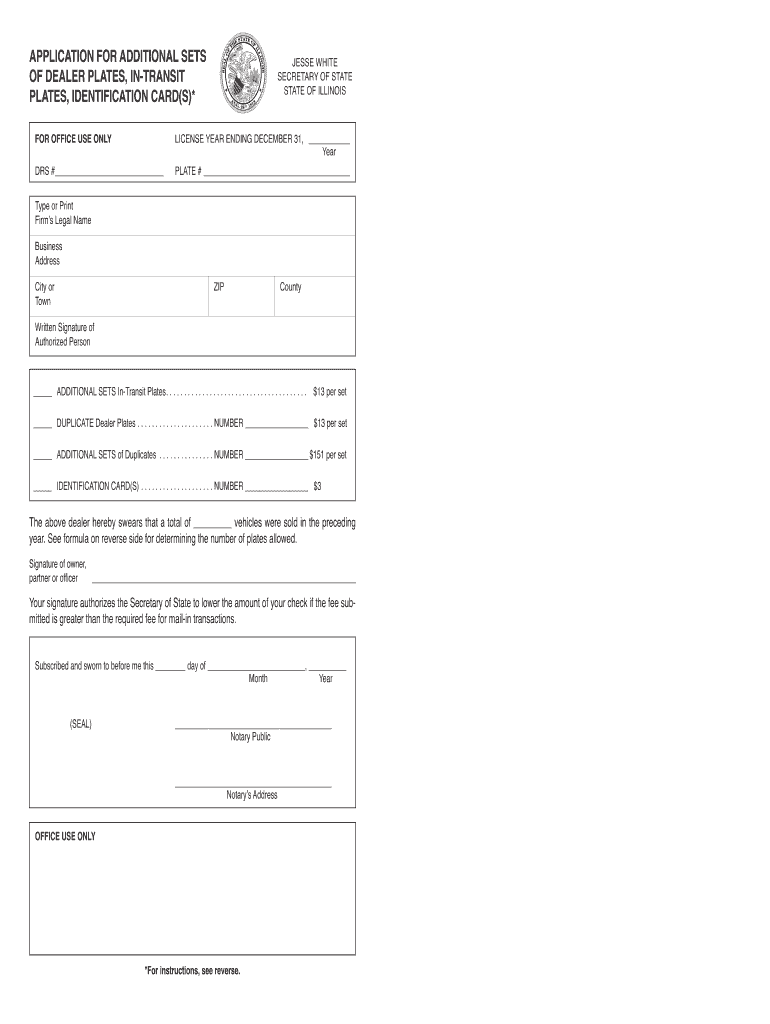
The "IL in transit identification card" is a document utilized primarily by vehicle dealers in Illinois. Its purpose is to facilitate the temporary movement of vehicles that have not yet been registered with permanent plates. This card serves as a temporary identification for vehicles in transit, ensuring they comply with state regulations for vehicle transportation between locations. The card is crucial in scenarios where vehicles are newly acquired by dealers and need to be transported to a showroom or another dealership before completing registration procedures. This component of the vehicle transportation process helps streamline dealer operations and maintains compliance with state transportation laws.
How to Obtain the IL in Transit Identification Card
To acquire the IL in transit identification card, dealers must follow specific application procedures set forth by the Illinois Secretary of State's office. The application process typically involves submitting a formal request that proof of the dealership's status and any necessary fees associated with card issuance accompanies. Dealers need to ensure they meet all eligibility criteria, such as having a valid dealer's license and being in good standing with regulatory obligations. After submitting the required documentation, dealers can expect processing times to vary depending on the volume of applications and the thoroughness of their submission.
Steps to Complete the Application
- Gather Necessary Documents: Ensure you have all required documents, including proof of dealership status and vehicle information.
- Fill Out the Application Form: Carefully provide all requested information on the form, ensuring accuracy to prevent delays.
- Submit Fees: Attach the appropriate fee payment as specified by the Illinois Secretary of State.
- Submit the Application: Applications can be submitted via mail or in-person at designated offices, depending on the option the state provides.
- Await Approval: Processing times can vary, so plan accordingly to avoid disruption in vehicle transportation operations.
Key Elements of the IL in Transit Identification Card
The IL in transit identification card must contain specific elements to be deemed valid. These elements include the dealership's name and address, a unique identification number, the vehicle's make, model, and VIN, and the card's valid dates. These details ensure that both law enforcement and regulatory bodies can quickly verify the legitimacy of any vehicle in transit. Dealers must also maintain a log of all in-transit cards issued to keep track of vehicle movements and comply with audit procedures if necessary.
Important Terms Related to the Card
- Dealer Plates: Plates that allow dealers to operate vehicles for test drives or transit purposes.
- VIN (Vehicle Identification Number): A unique code used to identify individual motor vehicles.
- Temporary Registration: A short-term registration used until the vehicle receives permanent registration.
State-Specific Rules for the IL in Transit Identification Card
Illinois imposes particular rules regarding the issuance and use of in-transit identification cards. These rules include strict guidelines on the duration for which cards are valid, typically not exceeding a limited number of days. Additionally, there are regulations on where and how these cards can be displayed on vehicles to ensure visibility. Dealers must adhere to these state-specific regulations to avoid penalties, such as fines or revocation of dealer privileges. Familiarity with these rules is critical for dealerships operating within Illinois, ensuring compliance and avoiding legal complications.
Legal Use of the IL in Transit Identification Card
The IL in transit identification card is used legally to transport vehicles without permanent plates within Illinois and to other states that recognize this documentation. The card temporarily authorizes vehicle movements specifically for dealership-related activities, such as transport between showrooms, delivery to buyers, or transit for maintenance purposes. Legal use mandates that the card be displayed prominently on the vehicle throughout the transit journey. Misuse of the card, such as using it beyond its expiration or for non-dealership vehicles, can result in penalties and legal action from regulatory authorities.
Penalties for Non-Compliance
Failing to comply with Illinois regulations regarding the in transit identification card can result in severe penalties. Non-compliance may include failing to display the card properly, using an expired card, or providing false information during the application process. Penalties can range from fines to the suspension of dealership privileges or more severe legal action in cases of fraud. Ensuring every card is used correctly and for its intended purpose helps dealers avoid these penalties and maintain good standing with Illinois motor vehicle authorities.
Examples of Using the IL in Transit Identification Card
Consider a dealership in Chicago that has just acquired a fleet of new vehicles. This dealership must transport these vehicles to an associated showroom in Springfield. By obtaining and displaying the IL in transit identification card, the dealership ensures these vehicles are legally compliant during the journey. Another example includes a dealership using the card to move cars to a trade show or exhibition, further demonstrating the card's versatility and importance in various dealership operations. Compliance and proper intent in using the card reflect positively on the dealership's standing and operational efficiency.




