
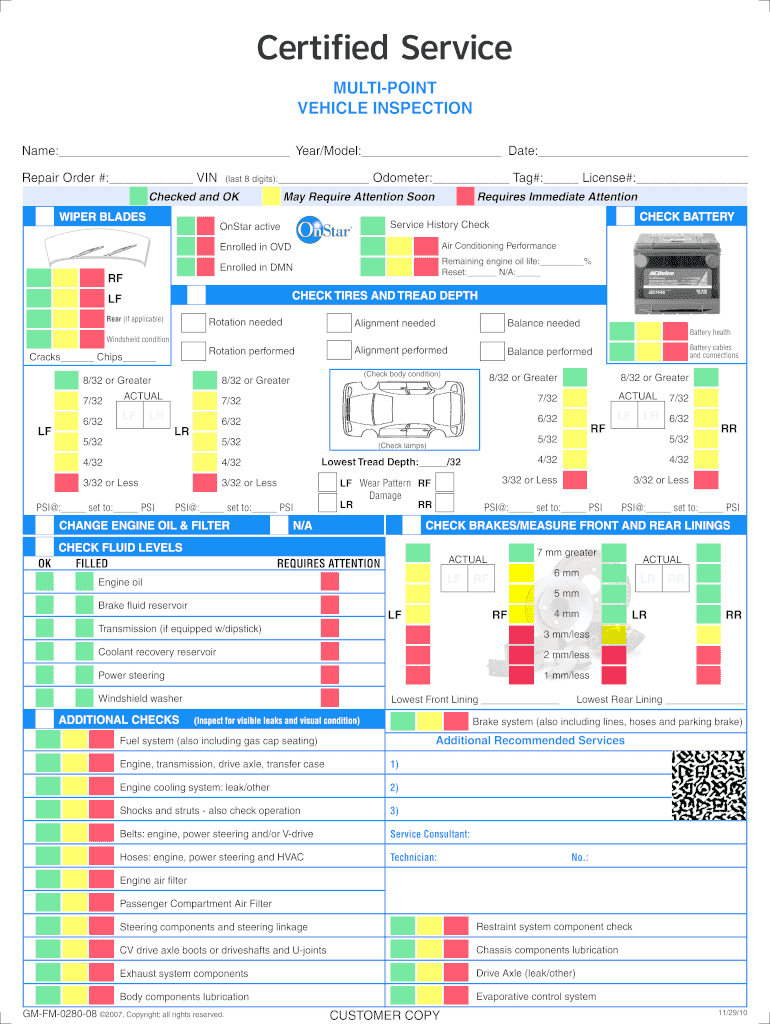







Definition and Meaning of the 100 Point Vehicle Inspection Checklist PDF
The 100 point vehicle inspection checklist PDF is a comprehensive document used to evaluate various components of a vehicle to ensure its operational safety and maintenance requirements. This checklist categorizes multiple aspects of the vehicle into three segments: 'Checked and OK', 'May Require Attention Soon', and 'Requires Immediate Attention'. Typically, this document is utilized by automotive technicians, dealerships, and vehicle owners. The intention is to enhance the safety, reliability, and longevity of the vehicle through diligent monitoring of its condition.
Components of the Checklist
- Exterior Inspection: This includes checking the body condition for rust and dents, inspecting windows and mirrors for damage, and ensuring proper functioning of lights.
- Tires and Wheels: Evaluation of tire tread depth, correct inflation, and visible wear patterns.
- Under the Hood: An inspection of the battery, fluid levels (oil, coolant, brake), and the condition of hoses and belts.
- Interior Checks: This regards the operation of the dashboard systems, seat belts, and air conditioning.
- Brakes and Suspension: Assessment of brake pads, discs, and suspension systems for proper functioning.
This guide serves as a vital tool for vehicle health checks, particularly for those looking to maintain, buy, or sell a vehicle.
How to Use the 100 Point Vehicle Inspection Checklist PDF
Using the 100 point vehicle inspection checklist PDF involves a systematic approach to ensure thorough examination of the vehicle. It is recommended to follow a step-by-step method, covering each aspect as outlined in the checklist.
- Preparation: Gather the necessary tools and ensure that the vehicle is parked on a level surface. It may be helpful to have a digital or printed version of the checklist readily available.
- Systematic Inspection: Start with the exterior, then progress towards under the hood, followed by interior components, and conclude with the brakes and suspension. Each section should be checked in detail.
- Documentation: As you go through the checklist, note your findings in the appropriate categories. This helps in identifying which components are functioning normally and which ones need attention.
- Recommendations: Based on your inspection, if issues are identified, make a note of recommended actions or repairs. This can assist in prioritizing maintenance tasks or communicating needs to a mechanic.
Using the checklist in a structured manner allows for a comprehensive evaluation of the vehicle, ensuring no aspect is overlooked.
Steps to Complete the 100 Point Vehicle Inspection Checklist PDF
Completing the 100 point vehicle inspection checklist involves carefully following the outlined steps to conduct a thorough review of the vehicle. The methodology ensures that all important components are assessed.
- Initial Setup: Ensure that the vehicle is parked in a safe, well-lit area. Have the checklist accessible either digitally or in printed form.
- Conduct the Inspection:
- Exterior Checks: Inspect body panels, windows, mirrors, and lighting systems.
- Tire Evaluation: Check tread depth, identify wear, and ensure tire pressures are optimal.
- Fluid Levels: Gauge the fuel, oil, coolant, brake, and windshield washer fluid levels.
- Interior Features: Test all interior controls, including the dashboard warning lights, climate control, and safety features like airbags and seat belts.
- Under the Hood: Examine battery condition, belts, and hoses for wear and potential leaks.
- Braking and Suspension: Assess brake function, listen for unusual sounds when the brakes are applied, and check suspension components for wear.
- Record Findings: Document all observations directly on the checklist under appropriate categories.
- Review Action Items: Based on findings, review any items that require immediate attention or routine maintenance. Prioritize these for subsequent action.
This structured approach guarantees that the inspection is comprehensive, identifying both immediate and future maintenance needs.
Important Terms Related to the 100 Point Vehicle Inspection Checklist PDF
Understanding the terminology related to the 100 point vehicle inspection checklist is beneficial for effective utilization and discussion of vehicle safety.
- Maintenance: Refers to regular upkeep required to ensure a vehicle operates at optimal performance and safety.
- Inspection Points: Specific items or areas of a vehicle that are evaluated during the inspection process.
- Fluid Levels: The various fluids required for vehicle operation, including engine oil, coolant, brake fluid, and transmission fluid.
- Wear and Tear: The gradual reduction in functionality or physical condition of vehicle components due to regular use.
- Safety Check: An inspection focused on ensuring that a vehicle meets safety standards as mandated by state or federal regulations.
Familiarity with these terms can enhance communication and understanding in discussions about vehicle inspections and maintenance.
Key Elements of the 100 Point Vehicle Inspection Checklist PDF
The key elements of a 100 point vehicle inspection checklist PDF are fundamental in evaluating the overall condition and safety of a vehicle. Attention to these elements is critical for effective and thorough inspections.
- Safety Features: Includes checking airbags, seat belts, and emergency brakes to ensure compliance with safety standards.
- Engine Condition: Examination of the engine for leaks, battery health, and belt integrity.
- Transmission and Drivetrain: Evaluating the operation of the transmission and drivetrain components for smooth performance.
- Electrical Systems: Checking the functionality of all electrical components, including lights, signals, and dashboard indicators.
- Exhaust System: Inspecting the exhaust system for leaks and ensuring compliance with environmental standards.
- Brakes: Thorough checking of disc and drum brakes, including pad wear and overall braking performance.
A detailed attention to these elements can help in forecasting future maintenance needs or potential issues that could cause safety concerns.
Examples of Using the 100 Point Vehicle Inspection Checklist PDF
Utilizing the 100 point vehicle inspection checklist can be tailored to various circumstances and needs. Below are examples illustrating its application.
- Before Purchasing Used Vehicles: Prospective buyers can utilize the checklist to gauge the condition of a used vehicle before making a purchase. This ensures informed decision-making based on a thorough understanding of the vehicle's condition.
- Regular Maintenance Inspections: Vehicle owners can use the checklist as part of a routine maintenance schedule. Conducting inspections every few months can help in identifying issues before they escalate into larger, more costly repairs.
- Preparation for Road Trips: Prior to embarking on long journeys, drivers can perform a vehicle health check using the checklist to ensure the vehicle is roadworthy, thus enhancing safety.
- Professional Inspections: Automotive technicians often utilize the checklist as a standard practice during vehicle inspections, helping ensure thoroughness and consistency in evaluating vehicles.
Each scenario illustrates the versatility of the checklist, making it an invaluable tool for varied purposes in vehicle management.




