




Here's how it works
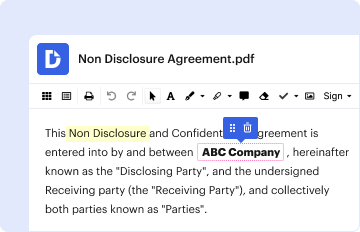
01. Edit your form online
Type text, add images, blackout confidential details, add comments, highlights and more.
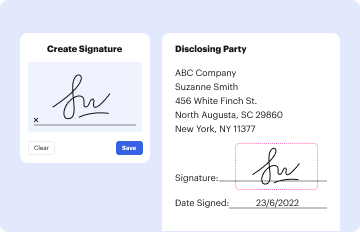
02. Sign it in a few clicks
Draw your signature, type it, upload its image, or use your mobile device as a signature pad.
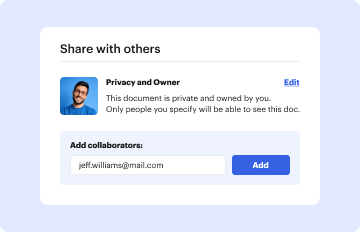
03. Share your form with others
Send it via email, link, or fax. You can also download it, export it or print it out.
How to Use or Fill Out Funding Opportunities for Ports and Near-Port Communities with Our Platform

- Click ‘Get Form’ to open it in the editor.
- Begin by entering your business information, including the applicant name, business address, and contact details. Ensure accuracy as this information is crucial for processing your application.
- In the eligibility section, confirm that you meet all requirements such as being located within the CRA District and having the necessary licenses. Attach proof of these documents directly in the editor.
- Complete the financial assistance request by detailing your monthly rent and lease terms. Make sure to provide a clear description of your business operations and how they align with CRA objectives.
- Review all sections thoroughly before submitting. Utilize our platform’s features to check for any missing information or required attachments.
Start filling out your application today using our platform for free!
Fill out Funding Opportunities for Ports and Near-Port CommunitiesFunding Opportunities for Ports and Near-Port CommunitiesFunding Opportunities for Ports and Near-Port CommunitiesFunding Opportunities for Ports and Near-Port Communities online
It's free
It's free
See more Funding Opportunities for Ports and Near-Port CommunitiesFunding Opportunities for Ports and Near-Port CommunitiesFunding Opportunities for Ports and Near-Port CommunitiesFunding Opportunities for Ports and Near-Port Communities versions
We've got more versions of the Funding Opportunities for Ports and Near-Port CommunitiesFunding Opportunities for Ports and Near-Port CommunitiesFunding Opportunities for Ports and Near-Port CommunitiesFunding Opportunities for Ports and Near-Port Communities form. Select the right Funding Opportunities for Ports and Near-Port CommunitiesFunding Opportunities for Ports and Near-Port CommunitiesFunding Opportunities for Ports and Near-Port CommunitiesFunding Opportunities for Ports and Near-Port Communities version from the list and start editing it straight away!
Got questions?
We have answers to the most popular questions from our customers. If you can't find an answer to your question, please contact us.
Contact us
What is the baba waiver for clean ports?
The waiver allows Clean Ports Program grantees to purchase certain types of zero-emissions mobile port equipment that does not meet the 55% domestic content BABA requirement. This equipment must still be manufactured in the United States.
What is the Clean Air Act waiver provision?
The Clean Air Act waiver is a provision under CAA Sections 209(b) and 209(e) that allows the State of California to request a waiver or authorization20 from federal preemption of state-level regulatory programs for emissions from new motor vehicles or their engines or new nonroad vehicles or their engines.
What is the de minimis waiver for Build America Buy America?
The De Minimis Waiver allows a project to incorporate products of foreign or unknown origin up to 5% of the cost of materials subject to BABAA, with a cap of $1 million. The De Minimis percentage allowance will be based on the final materials costs subject to BABAA.
What is the baba waiver?
This waiver will cover all iron and steel, manufactured products, and construction materials used in infrastructure projects required by the Build America, Buy America Act.
How to get a government green grant?
Green grants typically require a very high level of expertise from the individual or company requesting funding. Some of the contributions to the program descriptions can include engineering drawings and budgets, cost profiles and projections, marketability, and competitor analysis.
Security and compliance
At DocHub, your data security is our priority. We follow HIPAA, SOC2, GDPR, and other standards, so you can work on your documents with confidence.
Learn more


Related forms

Dse risk assessment example
The document is a DSE Workstation and User Risk Assessment form designed to evaluate the ergonomic setup of a workstatio ...

Form online
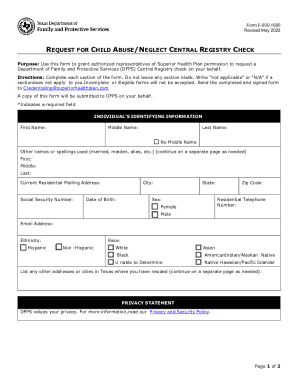
Texas Child Abuse Neglect Central Registry Check Form
The document is Form F-500-1600, a request for a child abuse/neglect Central Registry check by authorized representative ...

Starry night and the astronauts
The document provides an overview of Alma Woodsey Thomas, an influential African-American artist known for her contribut ...
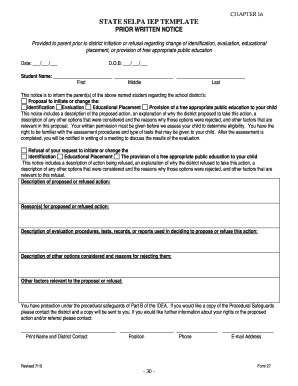
STATE SELPA TEMPLATE - San Mateo County Office of Education - smcoe
The document is a template for a Prior Written Notice provided to parents regarding changes in their child's identificat ...

CITIZEN COMPLAINT FORM - Mesa County
The document is a Citizen Complaint Form from the Mesa County Department of Planning and Economic Development, specifica ...
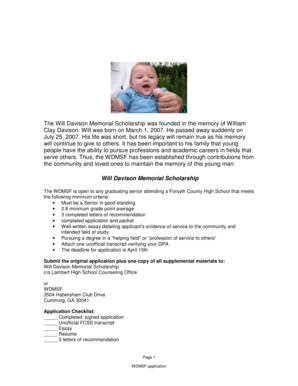
Will davison memorial scholarship
The Will Davison Memorial Scholarship (WDMSF) was established in memory of William Clay Davison to support graduating se ...

Howard college online application
The document is a housing application and contract for Howard College, detailing the application process, required infor ...
People also ask
Who funds the ports?
The Port Infrastructure Development Program (PIDP) is a discretionary grant program administered by the Maritime Administration. Funds for the PIDP are awarded on a competitive basis to projects that improve the safety, efficiency, or reliability of the movement of goods into, out of, around, or within a port.