Self defense instruction 2026

Get Form
5 elements of self defense Preview on Page 1

Here's how it works

01. Edit your 5 elements of self defense online
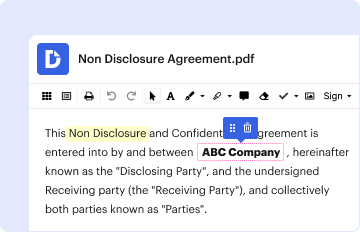
Type text, add images, blackout confidential details, add comments, highlights and more.

02. Sign it in a few clicks
Draw your signature, type it, upload its image, or use your mobile device as a signature pad.

03. Share your form with others
Send self defense techniques with pictures pdf via email, link, or fax. You can also download it, export it or print it out.

How to use or fill out self defense instruction with our platform

Form edit decoration
9.5
Ease of Setup
DocHub User Ratings on G2
9.0
Ease of Use
DocHub User Ratings on G2
  1. Click ‘Get Form’ to open the self defense instruction document in the editor.
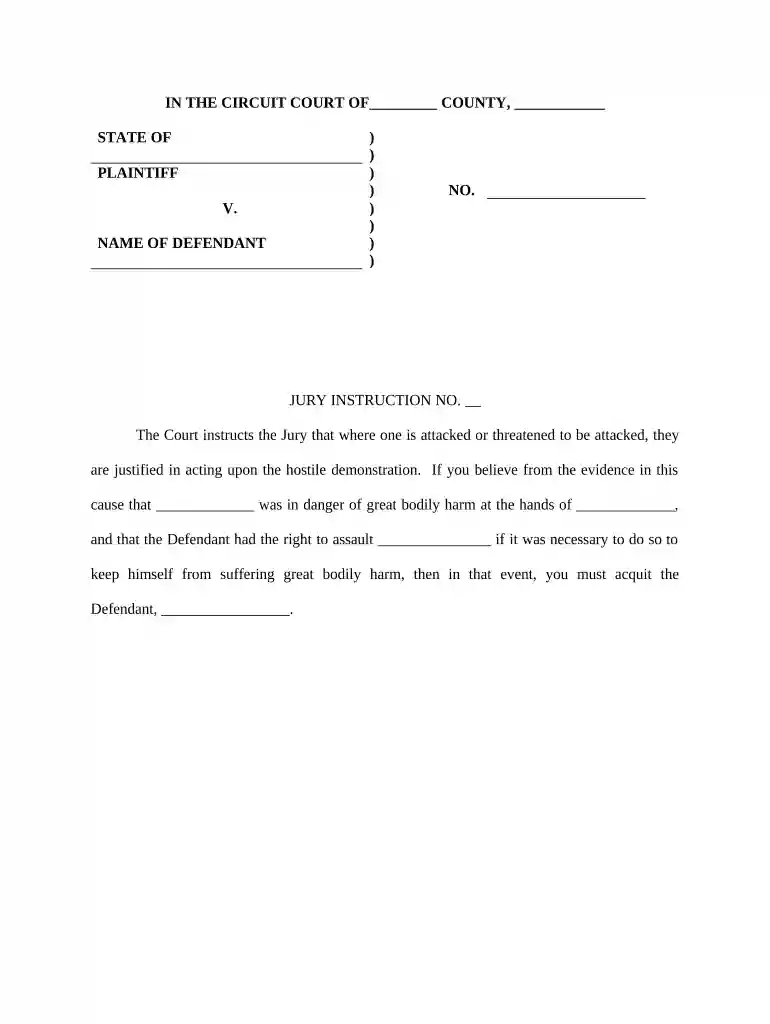
  2. Begin by filling in the 'County' and 'State' fields at the top of the form. This information is crucial for identifying the jurisdiction of the case.
  3. Next, enter the names of both the Plaintiff and Defendant in their respective sections. Ensure accuracy as these names are vital for legal clarity.
  4. In the 'Jury Instruction No.' section, you may need to reference specific jury instructions relevant to your case. This can be customized based on your legal strategy.
  5. Fill in any details regarding the evidence presented, particularly focusing on whether there was a perceived threat of great bodily harm. This section is essential for justifying actions taken.
  6. Finally, review all entries for accuracy before saving or exporting your completed document. Our platform allows you to easily modify any part if needed.

Start using our platform today to streamline your self defense instruction process for free!

be ready to get more

Complete this form in 5 minutes or less

Get form

Got questions?

We have answers to the most popular questions from our customers. If you can't find an answer to your question, please contact us.
Contact us
The Five Principles of Self-Defense Laws Principle 1: Innocence. Principle 2: Imminence. Principle 3: Proportionality. Principle 4: Avoidance. Principle 5: Reasonableness.
Role-playing and assertiveness exercises are used to empower participants, and encourage them to participate in their own safety. Co-instructors participate as padded attackers to aid participants in a hands-on practice of newly learned physical self defense techniques, including strikes, kicks and floor techniques.
Self-Defense as an Instruction for a Jury at Trial Instead of denying the criminal act charged, you offer evidence justifying your actions.
Self-defense is incorporated in statutory laws in countries like the USA, the UK, Belgium, and Japan, but its justification is subject to three main elements or rules: imminent threat, reasonable fear of harm, and proportionate response.
What are the five key principles of self-defense? The five As of self-defense are Awareness, Alertness, Avoidance, Anticipation, and Action. These principles are crucial for developing effective safety habits, especially in potentially dangerous situations.

Security and compliance

At DocHub, your data security is our priority. We follow HIPAA, SOC2, GDPR, and other standards, so you can work on your documents with confidence.

Learn more
ccpa2
pci-dss
gdpr-compliance
hipaa
soc-compliance

People also ask

In-Depth Breakdown of the Five Elements Innocence. You must not be the aggressor. Imminence. The threat must be happening now. Avoidance. If your state imposes a duty to retreat, and its safe to do so, you must try. Proportionality. Your use of force must match the level of threat. Reasonableness.

Related links