




01. Edit your b1 b2 visa invitation letter sample pdf online
Type text, add images, blackout confidential details, add comments, highlights and more.

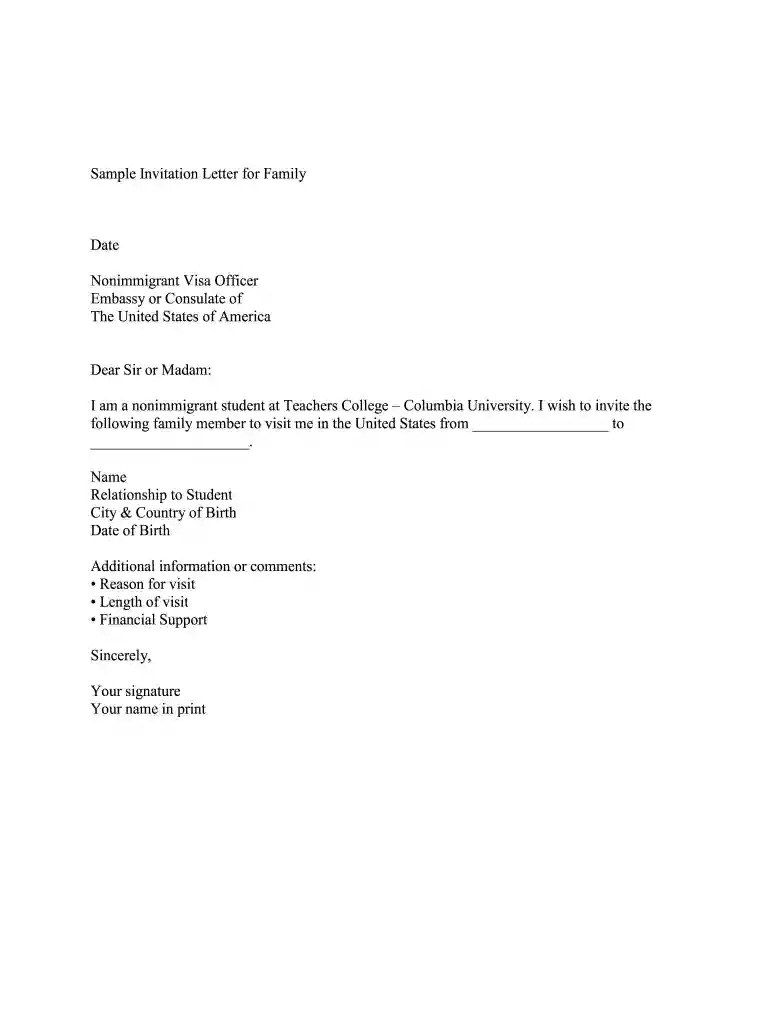
Type text, add images, blackout confidential details, add comments, highlights and more.

Draw your signature, type it, upload its image, or use your mobile device as a signature pad.

Send invitation letter for u s visa pdf via email, link, or fax. You can also download it, export it or print it out.
An invitation letter for U.S. visa acts as a formal request from the inviting individual or organization to a foreign visitor, permitting them to enter the United States for a specified purpose. This letter typically includes essential details such as:
The invitation letter can significantly facilitate the visa application process by providing concrete evidence of the traveler’s intent and purpose, often aiding in demonstrating ties to their home country, which is a critical consideration for visa officers.
When crafting an invitation letter for a U.S. visa, certain elements must be included to ensure the letter serves its purpose effectively. These components include:
Including these elements not only demonstrates genuine intent but also reassures the visa officer of the planned trip's legitimacy.
Creating an invitation letter involves several important steps to ensure the document is complete and effective. Here are the recommended steps:
Gather Required Information: Collect all pertinent details about both the inviter and the invitee. This includes full names, addresses, relationship, and the specifics regarding the visit.
Choose a Professional Format: Use a formal business letter format. This includes margins, fonts, and alignment that convey professionalism.
Write the Letter:
Review for Accuracy: Double-check all information for accuracy to avoid any discrepancies that could arise during the visa application process.
Get the Letter Notarized (if required): Some visa applications may benefit from a notarized letter. Confirm the specific requirements based on the invitee's home country.
Send the Invitation Letter: Provide the invitee with either a physical or digital copy of the signed letter to submit with their visa application.
Following these steps helps ensure the integrity of the document, providing clarity and assurance to both the inviter and the visa officer.
Various individuals and entities may require an invitation letter for U.S. visa applications. Common users include:
Family Members: Individuals wishing to invite relatives for family gatherings or special occasions, such as weddings or holidays.
Friends: Friends residing in the U.S. seeking to invite acquaintances from abroad for visits or vacations.
Business Entities: Companies inviting foreign clients, partners, or employees for meetings, conferences, training, or business negotiations.
Educational Institutions: Schools or universities inviting students or speakers for academic purposes, such as workshops or seminars.
The invitation letter serves as an essential document, confirming the intention and purpose behind the visit, regardless of the inviter's relationship to the invitee.
Here are example scenarios illustrating how invitation letters can vary based on different purposes:
Dear [Consulate General/Embassy Name],
I, [Inviter’s Name], a resident of [Inviter's Address], hereby invite my [relation, e.g., cousin], [Invitee’s Name], to visit me in the United States from [start date] to [end date]. The purpose of this visit is to spend time with family and celebrate [specific occasion]. I will ensure that all expenses related to his/her stay, including travel and accommodation, are covered.
Sincerely,
[Inviter’s Name]
Dear [Consulate General/Embassy Name],
I, [Inviter’s Name] representing [Company Name], located at [Company Address], would like to formally invite [Invitee’s Name] to visit our offices in the United States from [start date] to [end date]. The purpose of this visit is to discuss potential collaboration on [specific project or business matter]. We will cover all accommodations and related travel expenses during their stay.
Best regards,
[Inviter’s Name]
[Position at Company]
These examples can be modified as per specific requirements, ensuring clarity and relevance to the recipient's visa application.
While drafting and sending an invitation letter, consider the following to maximize its effectiveness:
Cultural Sensitivity: Ensure language and content align with both the invitee’s and U.S. cultural norms.
Timeliness: Prepare the letter well in advance to allow the invitee ample time for visa processing.
Accuracy of Details: Any discrepancies in dates or personal information may lead to application delays or denials.
Legal Compliance: Be aware of any potential legal implications, including ensuring the inviter's status permits inviting foreign nationals.
By keeping these considerations in mind, the invitation letter will better serve its purpose, providing a solid foundation for the visa application process.
We've got more versions of the b1 b2 visa invitation letter sample pdf form. Select the right b1 b2 visa invitation letter sample pdf version from the list and start editing it straight away!
At DocHub, your data security is our priority. We follow HIPAA, SOC2, GDPR, and other standards, so you can work on your documents with confidence.
U.S. family and friends. A letter of invitation or Affidavit of Support is not needed to apply for a visitor visa. If you choose to bring a letter of invitationRead more
Note: This letter should be sent to the person who will be applying for the visa, and that person should present it to the U.S. consulate along with theRead more


