




Overview of the ICS 214 Unit Log
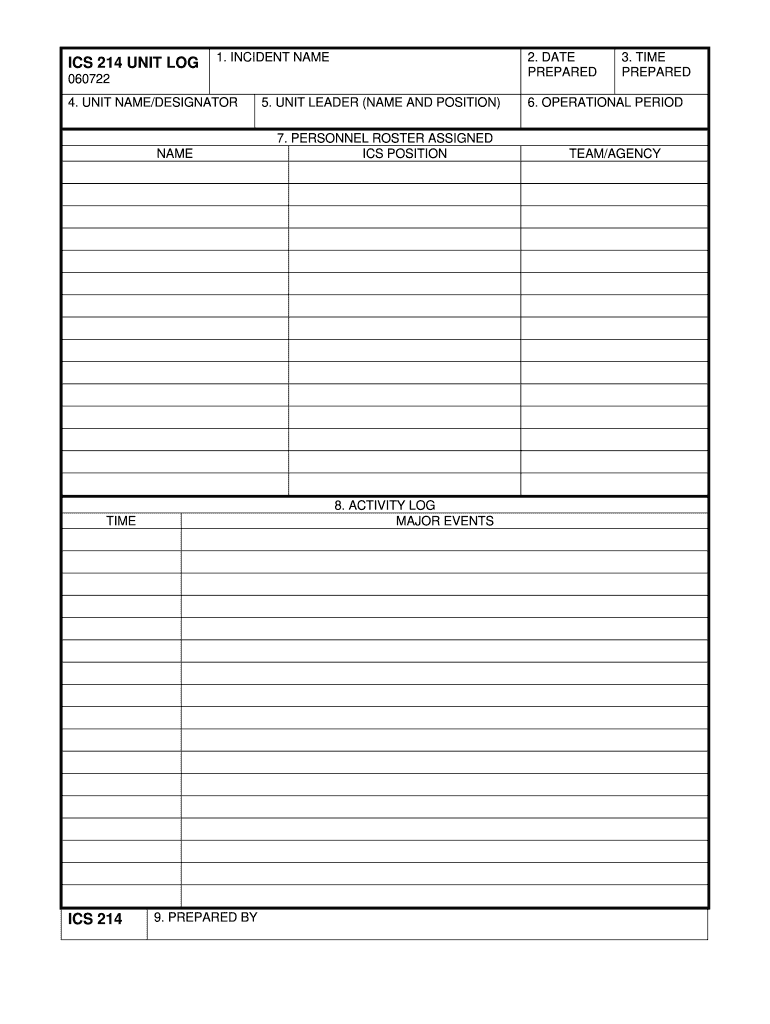
The ICS 214 Unit Log is essential for disaster response personnel, providing a structured format to document operational activities and decisions during incidents. This log is critical for maintaining records that ensure effective communication and coordination among team members. It includes vital sections such as incident details, personnel rosters, and chronological logs of activities.
Key Elements of the ICS 214 Unit Log
The ICS 214 Unit Log integrates several sections designed to provide comprehensive data during an incident response. Key components include:
- Incident Details: Captures the specifics of the incident, including location, time, and nature of the emergency.
- Personnel Roster: Lists all individuals involved in the operations, their roles, and contact information.
- Chronological Activity Log: Provides a timeline of significant events and actions taken, offering clear insights for future reference.
These elements create a document that can be vital for after-action reports and future planning.
Completing the ICS 214 Unit Log
Filling out the ICS 214 Unit Log involves several steps to ensure all necessary information is accurately captured. Users can complete the log in multiple ways, including:
- Filling out a Paper Form: Print the form and manually enter data.
- Using a Fillable PDF: Download and complete the ICS 214 fillable PDF online for easier edits.
- Utilizing Digital Applications: Some platforms provide electronic ICS 214 forms that can streamline the logging process further.
By standardizing the collection of information, the ICS 214 reinforces efficiency and accuracy in documentation.
Examples of Using the ICS 214 Unit Log
Situations where the ICS 214 Unit Log is invaluable include:
- Natural Disasters: During events such as hurricanes or wildfires, responders document actions taken, resources utilized, and communication exchanges.
- Emergency Medical Responses: In medical emergencies, teams can log patient interactions, treatment provided, and inter-agency communications.
- Special Events: For large gatherings or protests, logs help track deployments and responses to incidents that might arise.
These examples illustrate the log's adaptability across different contexts, making it a vital resource for varied operational scenarios.
Best Practices for Maintaining the ICS 214 Unit Log
To maximize the utility of the ICS 214 Unit Log, adhere to several best practices:
- Timeliness: Record entries as events occur. This practice minimizes the chance of forgetting critical details.
- Clarity: Use clear and concise language to avoid misinterpretations. Ensure all abbreviations or specialized terms are well-known to team members.
- Regular Updates: Review and update sections, especially the activity log, frequently to ensure accuracy.
Such practices enhance the document's effectiveness, providing a reliable reference for team members and stakeholders.
Importance of Legal Compliance with the ICS 214 Unit Log
Adhering to legal standards when using the ICS 214 is essential for several reasons:
- Documentation for Accountability: Accurate logs provide a traceable account of actions taken, which is vital for any legal inquiries post-incident.
- Federal Compliance: Agencies like FEMA require proper documentation, ensuring compliance with federal guidelines.
- Protection in Liability Cases: Comprehensive logs can serve as evidence to protect personnel or agencies from liability claims arising from incident management.
Maintaining meticulous records serves both operational efficacy and legal protection.
Conclusion
The ICS 214 Unit Log is not only a tool for documenting incidents but also serves a broader role in ensuring accountability, compliance, and operational efficiency. By understanding its key components, best practices, and legal implications, personnel involved in incident management can utilize this form effectively, contributing to better outcomes during disaster response efforts.