




01. Edit your form online
Type text, add images, blackout confidential details, add comments, highlights and more.

Type text, add images, blackout confidential details, add comments, highlights and more.

Draw your signature, type it, upload its image, or use your mobile device as a signature pad.

Send it via email, link, or fax. You can also download it, export it or print it out.
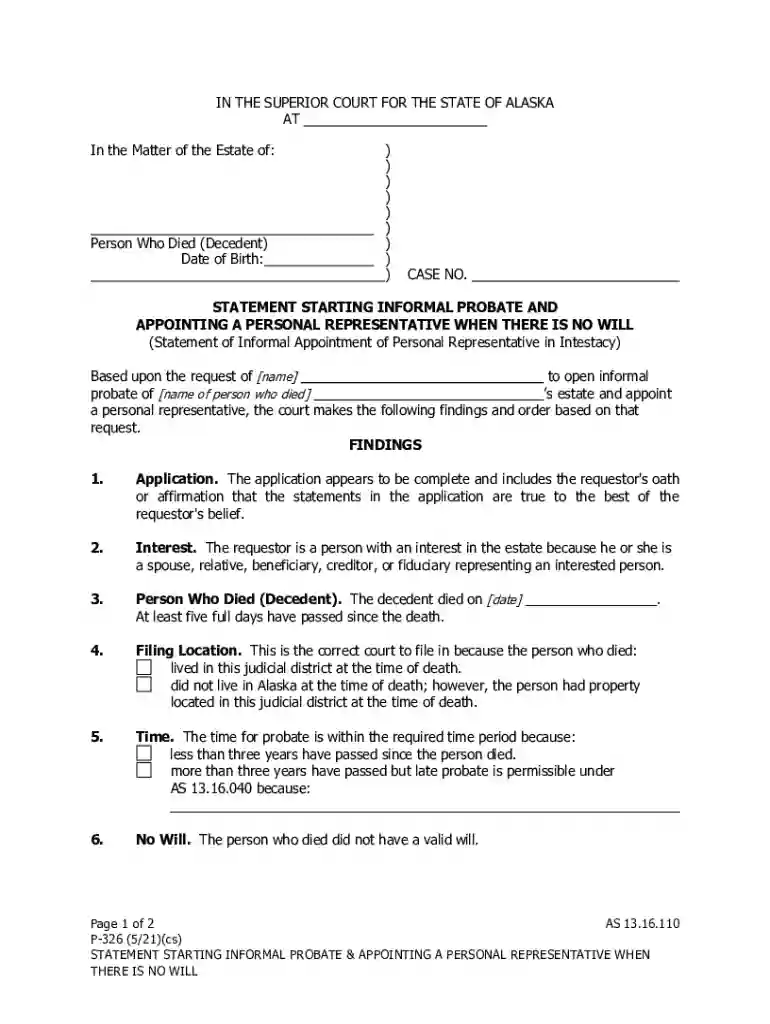
The "AT In the Matter of the Estate of: ) - Alaska Court System" form is a legal document used within the Alaska Court System to initiate informal probate proceedings for estates when a decedent has died intestate—that is, without a will. This form is crucial in establishing legal processes for the distribution of the deceased person's assets and addressing claims against the estate. It includes essential information such as the details of the deceased, the requestor's interest, and the court's appointment of a personal representative.
Using this form involves understanding the specific purpose it serves in the probate process. It begins with completing the document by entering relevant information about the decedent, including their identity and last known residence. The individual submitting the form must also provide their details and explain their interest in the estate. The form is then submitted to the Superior Court of Alaska as part of the formal request to begin probate proceedings.
Completing the "AT In the Matter of the Estate of: ) - Alaska Court System" requires detailed attention to the fields provided:
Several crucial elements define this form's role and requirements:
To complete the form effectively, understanding these key terms is vital:
Legally, this form serves to officially open probate proceedings under the specific jurisdiction of the Alaska Court System. It operates within a structured legal framework to address the distribution of the decedent's estate, appointment of representatives, and resolution of any debts or claims against the estate. It must comply with both state-specific regulations and overarching legal standards.
Specific to Alaska, the form must adhere to legal standards set by state courts:
The form is often used in scenarios such as:
These blocks provide comprehensive insights into the form, ensuring clarity for those involved in probate processes within the Alaska Court System.
We've got more versions of the AT In the Matter of the Estate of: ) - Alaska Court System form. Select the right AT In the Matter of the Estate of: ) - Alaska Court System version from the list and start editing it straight away!
At DocHub, your data security is our priority. We follow HIPAA, SOC2, GDPR, and other standards, so you can work on your documents with confidence.


