
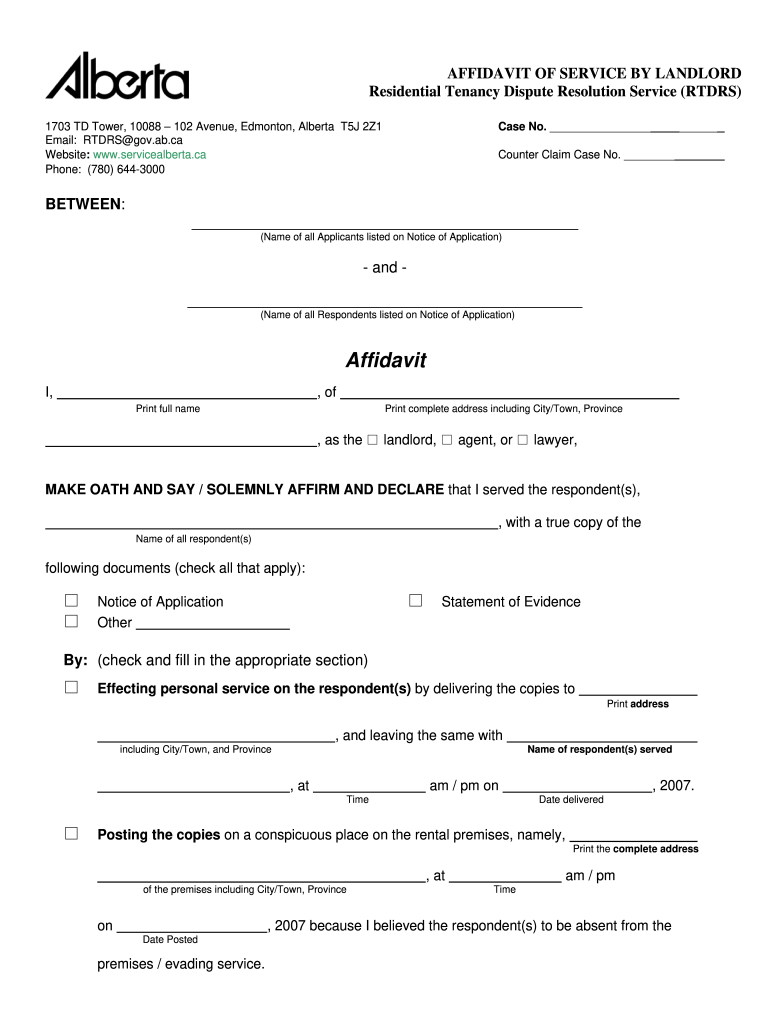







Definition and Meaning of the Affidavit of Service by Email
An affidavit of service by email is a legal document used in Alberta to formally confirm that a party has served court documents or legal notices to another party via email. This affidavit serves as proof that the intended recipient has received the documents, which may include critical legal information related to court proceedings or other legal actions. It provides a comprehensive verification process that outlines the details of the service, including the names of the parties involved, the date and method of service, and the content of the documents served.
This method of service is significant in the digital age, where communication often occurs electronically. The affidavit is sworn to before a Commissioner for Oaths in Alberta, making it a legally binding statement. It must adhere to specific legal requirements and can often streamline proceedings by providing a quick and verifiable method of serving documents, especially useful for parties who need to maintain communication without physical delivery.
How to Use the Affidavit of Service by Email Form
The affidavit of service by email form is a vital tool when you need to prove that legal documents have been served electronically. To effectively use this form, follow these guidelines:
- Identify the Recipient: Clearly state the full name and email address of the recipient to ensure that the documents are correctly addressed.
- Document Details: Include specifics of the documents served, such as titles or case numbers, to provide context and clarity about what was sent.
- Date and Time of Service: Record the exact date and time the email was sent to substantiate the service.
- Confirmation of Receipt: Obtain a confirmation of receipt from the recipient's email system, if available, to strengthen the affidavit's credibility.
- Filing the Affidavit: After preparing the affidavit, submit it as required by the Alberta court system provided it is part of your formal case documentation.
By adhering to these steps, the affidavit will meet the necessary legal standards, ensuring it is valid and enforceable.
Steps to Complete the Affidavit of Service by Email Form
Completing the affidavit of service by email form involves several detailed steps to ensure it meets legal requirements:
- Download the Form: Obtain a copy of the affidavit of service form specific to Alberta; this may be available in PDF or Word format from authorized legal sites or court resources.
- Fill in Basic Information: Enter your name, contact information, and the names and addresses of the parties involved.
- Specify Email Details: Clearly mark the email address used to send the served documents and the date the email was sent.
- List the Served Documents: Enumerate all documents sent in the email. Examples may include court petitions, notices, and other legal papers.
- Provide an Affidavit Statement: Include a statement confirming that the documents were sent via email and that you are swearing under oath that the information provided is accurate.
- Sign in Presence of Official: Sign the affidavit in front of a Commissioner for Oaths, who will verify your identity and the affidavit's authenticity.
Each of these steps contributes to creating a complete and legally sound affidavit of service by email.
Important Terms Related to the Affidavit of Service by Email
Understanding key terms associated with the affidavit of service by email is crucial for its proper application:
- Affidavit: A written statement confirmed by oath or affirmation, which can be used as evidence in court.
- Commissioner for Oaths: An official authorized to administer oaths and affirmations, crucial for validating the claims made in the affidavit.
- Service of Documents: The legal procedure of delivering documents to a party involved in a legal proceeding.
- Email Communication: The method of sharing documents electronically, which requires adherence to specific legal standards for proof of receipt.
- Verification: The process of confirming the authenticity of the service, often supported by electronic receipts or acknowledgment from the recipient.
By familiarizing yourself with these terms, you can navigate the requirements and procedures of the affidavit of service more effectively.
Legal Use of the Affidavit of Service by Email
The legal use of the affidavit of service by email is defined by Alberta's regulations regarding the electronic service of documents. In many cases, the court may permit service by email, especially when traditional methods (like personal delivery or registered mail) are impractical. However, there are specific considerations to keep in mind:
- Court Approval: Always check whether the court has accepted email service in your specific case, as some documents may require traditional service methods.
- Recipient's Consent: Verify that the recipient has consented to accept service via email if required by the court or relevant rules.
- Record Keeping: Maintain copies of all emails sent and any responses received to substantiate your compliance with service obligations.
- Timeliness: Ensure emails are sent to comply with court timelines, noting that the date sent is crucial for meeting filing deadlines.
Utilizing email for service can enhance efficiency, but adherence to legal standards is paramount for the affidavit to be valid.
Examples of Using the Affidavit of Service by Email Form
There are numerous scenarios in which the affidavit of service by email can be utilized effectively. Consider the following examples:
- Residential Tenancy Disputes: A landlord serving eviction notices or lease termination letters to tenants can use this affidavit to confirm they’ve communicated critical information electronically.
- Filed Court Documents: In civil litigation, attorneys might serve pleadings or motions to opposing counsel and use the affidavit to document that the service was completed per court requirements.
- Family Law Cases: In divorce or custody matters, legal notices regarding hearings and applications can be served via email to ensure that all parties are informed without delay.
Each scenario illustrates how the affidavit serves as an essential tool to confirm service, thereby facilitating the smooth operation of legal processes.




