
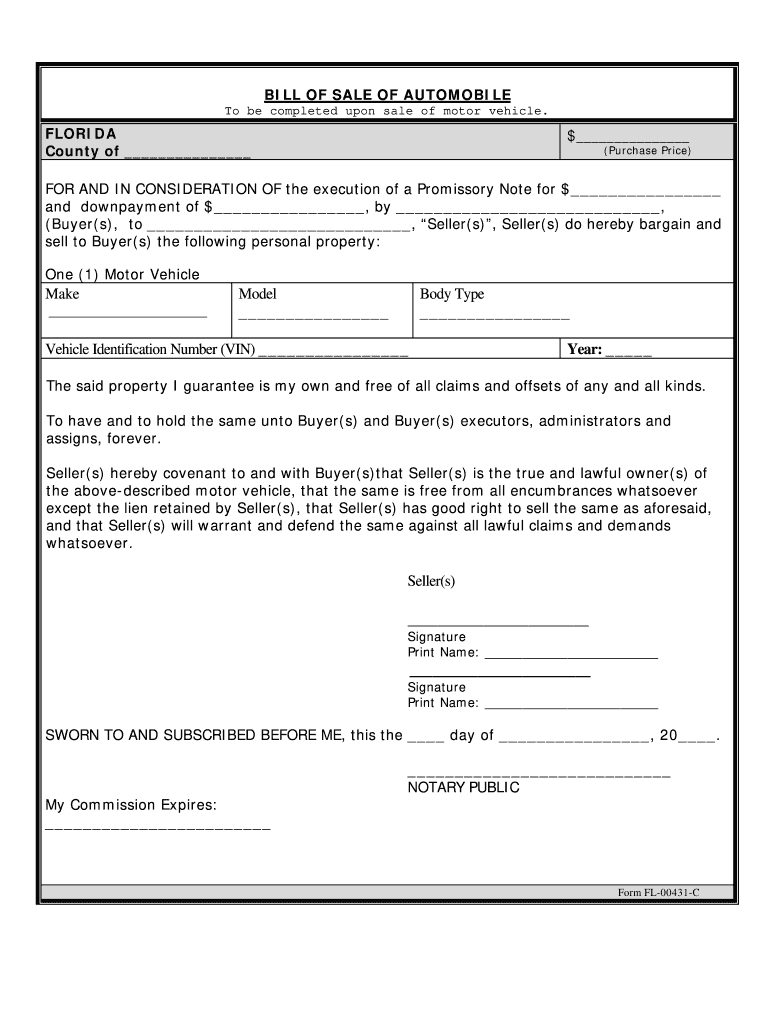







Definition and Importance of a Car Bill of Sale in Florida
A car bill of sale in Florida is a legal document that represents the sale transaction between a buyer and a seller regarding a vehicle. It is important as it provides proof of ownership transfer and outlines the terms agreed upon by both parties. This document includes several vital components, which are not only essential for legal protection but also necessary for registering the vehicle with the Florida Department of Highway Safety and Motor Vehicles (DHSMV).
Key Components of a Florida Car Bill of Sale
- Vehicle Information: This includes details such as the make, model, year, and Vehicle Identification Number (VIN).
- Seller and Buyer Information: Full names, addresses, phone numbers, and driver’s license numbers of both parties.
- Purchase Price: The agreed-upon amount for the vehicle.
- Odometer Disclosure: This is a requirement in Florida to confirm the vehicle's mileage at the time of sale.
- Date of Sale: The exact date when the transaction occurs.
These components ensure that the bill of sale serves as a comprehensive record for future reference, especially in case of disputes regarding ownership or vehicle condition.
Steps to Create a Car Bill of Sale in Florida
Creating a bill of sale in Florida involves several clear steps to ensure all necessary information is captured accurately.
-
Gather Required Information:
- Obtain the vehicle’s make, model, year, and VIN.
- Collect personal information from both the buyer and seller, including contact details.
- Determine the purchase price to be documented.
-
Draft the Document:
- Use a template or create a new document with sections for vehicle details, buyer/seller information, and terms of sale.
- Ensure to include an odometer reading and any disclosures needed.
-
Sign and Date the Document:
- Both the seller and buyer should sign to confirm agreement on the content within the bill of sale.
- Consider having the document notarized for added legal security, although notarization is not mandatory.
-
Provide Copies:
- Both parties should retain a signed copy of the bill of sale for their records.
-
Use for Registration:
- The buyer must present the bill of sale to the DHSMV when registering the vehicle in their name.
By following these steps, both parties can ensure a smooth transaction and protect their rights as needed.
Legal Implications of a Florida Car Bill of Sale
The car bill of sale in Florida serves as a legal contract between the buyer and seller, detailing important trade aspects.
Importance of Legal Documentation
- Transfer of Ownership: The bill of sale establishes that the seller is relinquishing ownership rights to the vehicle, and it becomes an important document during any future disputes or inquiries.
- Proof of Purchase: A bill of sale can serve as evidence for tax purposes, should either party be required to confirm the financial aspects of the transaction.
- Protection Against Fraud: Proper completion of the bill of sale can protect buyers from scams, ensuring they have proof of the terms agreed upon.
Notarization Requirements
While the bill of sale does not need to be notarized in Florida, having it notarized can provide additional protection for both parties in the case of disputes. A notary public verifies the identities of both the seller and buyer, confirming that both parties are in agreement, which enhances the document's credibility.
Format and Accessibility of a Florida Car Bill of Sale
Florida car bills of sale can be found in various formats, with the PDF format being widely used for its ease of accessibility and sharing capabilities.
Downloadable Formats
- PDF Bill of Sale for Car: This format is commonly available for download from various legal document websites, making it easy to fill out and print.
- Printable Templates: Many platforms offer templates that can be printed out for immediate use, simplifying the creation process.
Accessibility
DocHub is one platform that offers tools to create, edit, and manage car bills of sale in Florida with an option for digital signatures, securing the entire process online. This makes it easy for both parties to work from anywhere, reducing delays and promoting timely transactions.
Disclosures and Odometer Requirements
Florida law mandates specific disclosures regarding vehicle condition and odometer readings to ensure buyers are aware of what they are purchasing.
Odometer Disclosure Statement
- The seller must provide the exact mileage of the vehicle at the time of sale.
- This requirement helps prevent fraud related to false odometer readings and establishes a clear record for the vehicle's history.
Condition of the Vehicle
- Sellers should disclose any known issues with the vehicle, such as existing repairs or damages.
- Buyers may seek warranties or representations about the vehicle’s condition, ideally outlined in the bill of sale to avoid potential legal challenges later.
Conclusion and Additional Considerations for Vehicle Sales in Florida
Understanding the requirements and legal implications of a car bill of sale in Florida is essential for both buyers and sellers. It not only facilitates a smooth transaction but also ensures that both parties have the necessary documentation to protect their interests. Properly handled, a car bill of sale is a straightforward and vital element of the vehicle buying and selling process in Florida.




