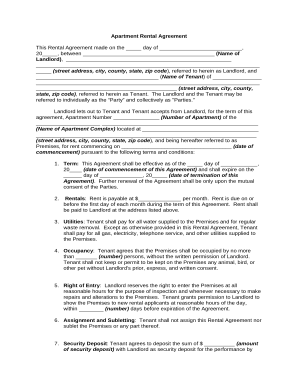
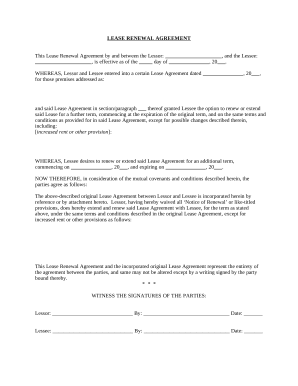
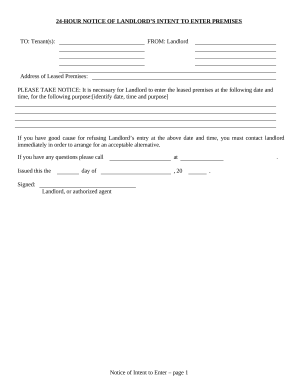
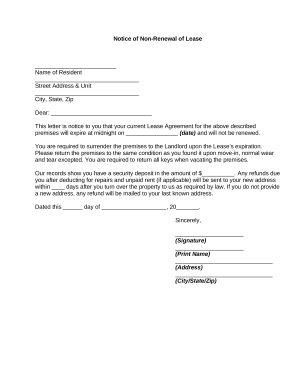
Boost your production with Tenancy Agreements

Record management takes up to half of your business hours. With DocHub, it is possible to reclaim your time and increase your team's efficiency. Access Tenancy Agreements category and discover all form templates related to your day-to-day workflows.

Effortlessly use Tenancy Agreements:

  1. Open Tenancy Agreements and use Preview to get the relevant form.
  2. Click Get Form to start working on it.
  3. Wait for your form to upload in the online editor and begin modifying it.
  4. Add new fillable fields, icons, and pictures, modify pages order, and many more.
  5. Complete your file or set it for other contributors.
  6. Download or share the form by link, email attachment, or invite.

Improve your day-to-day file management with our Tenancy Agreements. Get your free DocHub profile today to discover all forms.


Commonly Asked Questions about Tenancy Agreements

If you have been living in your home for over a year, your landlord must give at least 60 days notice. If you have been living in your home for more than 2 years, your landlord must give at least 90 days notice. rent as a security deposit. When you move out, they must return the security deposit within 14 days.
Before they can raise your rent (by 5% or more), the landlord must give you: 90 days notice if you have lived in your apartment two years or more. 60 days notice if you have lived in your apartment for more than one year. 30 days notice if you have lived in your apartment for less than one year.
You need a tenancy agreement for every other residential letting situation. The most common type is an assured shorthold tenancy or AST agreement.
In New York 5 Page 9 City, 30 days notice is required, rather than one month. Landlords do not need to explain why the tenancy is being terminated, they only need to provide notice that it is, and that refusal to vacate will lead to eviction proceedings.
In New York State, an eviction of a tenant is lawful only if an owner has brought a court proceeding and obtained a judgment of possession from the court. A sheriff, marshal or constable can carry out a court ordered eviction. An owner may not evict a tenant by use of force or unlawful means.
The tenancy agreement is a contract between you and your landlord. It may be written or verbal. The tenancy agreement gives certain rights to both you and your landlord. For example, your right to occupy the accommodation and your landlords right to receive rent for letting the accommodation.
While it is not required, it is recommended to include the rent amount, rent due date, and lease length, along with other information in the lease agreement. To break a lease or change its terms, such as increasing rent, a landlord must provide a 60-day written notice for leases of a year but less than two.
Tenants Rights and Responsibilities. In New York City, tenants have many rights relating to the safety and quality of their housing. Tenants should expect to live in safe, well-maintained buildings that are free from vermin, leaks, and hazardous conditions. Laws protect tenants from harassment and discrimination.