
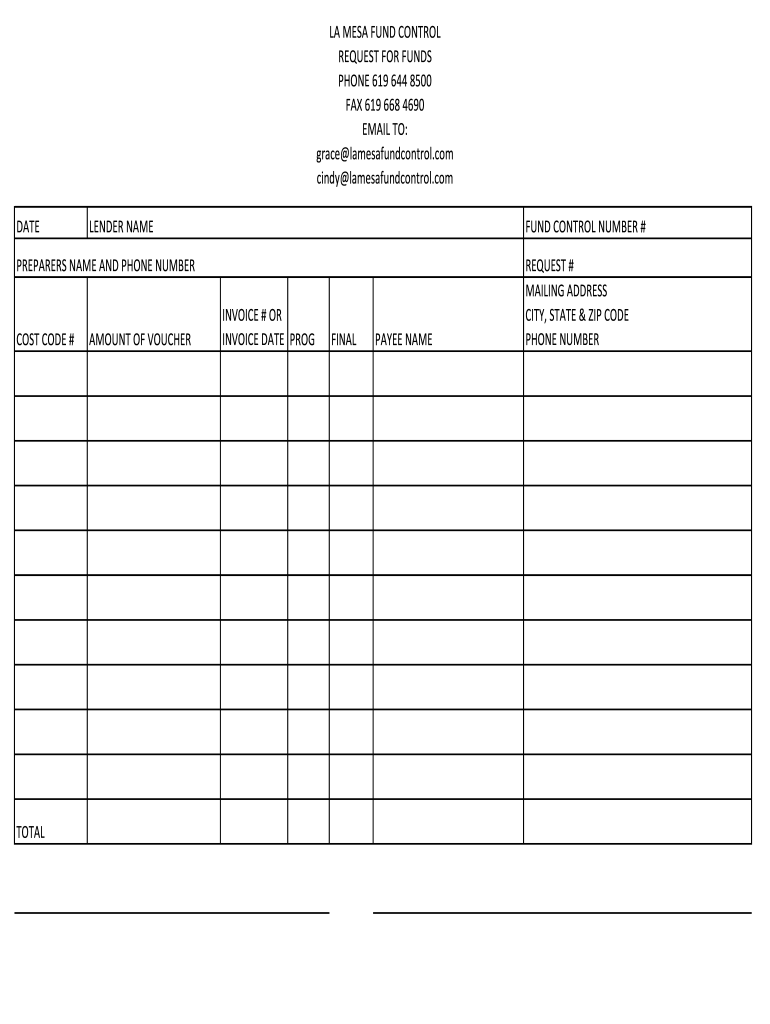







Definition of a Draw Request Form
A draw request form serves as a formal document used primarily in the real estate and construction industries to request funds. It outlines the necessary details associated with a funding draw from a lender or project funding source. The form ensures that both the requester and the funder are on the same page regarding the specific financial request, thus facilitating transparency and accountability in disbursement.
Components of a Draw Request Form
- Lender Information: Name and contact details of the lender or financial institution.
- Fund Control Number: A unique identifier assigned to the project for tracking purposes.
- Preparer's Information: Contact details of the individual preparing the form.
- Cost Codes: Codes representing specific expenses or categories of spending.
- Total Amount of Voucher: The total amount being requested for drawdown.
- Invoice Details: Information about associated invoices that need to be settled.
- Payee Information: The name and address of the entity or individual receiving the funds.
This form is essential for ensuring that funds are disbursed accurately and that all parties involved are aligned regarding project status and financing needs.
How to Use the Draw Request Form Effectively
Using the draw request form involves several key steps that ensure clarity and compliance with financial procedures. It is crucial to utilize this form accurately to facilitate timely payments and maintain optimal project cash flow.
Step-by-Step Process
- Gather Required Information: Collect all necessary data, including lender details, total amount requested, and any supporting invoices.
- Complete the Form: Fill out the draw request form meticulously, ensuring all fields are accurately filled to prevent delays.
- Add Supporting Documents: Attach all relevant documents, such as invoices and contracts, for validation and support.
- Submit the Form: Send the completed form and supporting documentation to the relevant approving authority or funding body.
- Follow-Up: Monitor the status of the request to ensure that disbursements are processed in a timely manner.
This disciplined approach can help prevent misunderstandings and facilitate smooth financial transactions throughout the project lifecycle.
Steps to Complete the Draw Request Form
Completing a draw request form can be detailed. Following a systematic approach can ensure that all necessary information is captured and communicated clearly.
Detailed Breakdown of Each Section
- Lender Information: Start by providing the lender's name and contact information accurately. This is crucial as it identifies the funding source for disbursement.
- Fund Control Number: Include the unique fund control number to track the request within the lender’s system.
- Preparer's Details: Clearly state the preparer’s contact information so that any inquiries can be handled promptly.
- Cost Code Information: List applicable cost codes in accordance with budget categories to categorize the expenses effectively.
- Total Amount Requested: Clearly state the total amount being requested, ensuring it matches your calculations and reflects actual expenditures.
- Invoice Attachment: Include copies of invoices associated with the draw request as proof of expenses incurred.
Taking these steps reduces the possibility of errors that could delay fund disbursement.
Legal Use and Compliance of the Draw Request Form
Understanding the legal implications of the draw request form is crucial in maintaining compliance with regulatory frameworks governing construction financing and project funding.
Important Legal Considerations
- Regulatory Compliance: Ensure that the completed draw request adheres to federal, state, and local regulations to avoid legal repercussions.
- Documentation Standards: Maintain accurate records of all transactions and draw requests to satisfy potential audits or inspections.
- Legal Binding: Recognize that the submission of a draw request form can create obligations under contract law, making it essential to represent the information truthfully.
By adhering to these legal standards, users can mitigate risks associated with non-compliance, thus safeguarding their financial interests.
Examples of Using the Draw Request Form in Real Scenarios
Real-world examples help illustrate how the draw request form is applied in various scenarios, enhancing understanding and demonstrating practical utility.
Practical Scenarios
- Residential Construction: A contractor submits a draw request for funds after completing the foundation of a new home. This request includes invoices for materials and labor costs, providing accountability for the expense incurred.
- Commercial Development: A project manager for a commercial real estate development utilizes the draw request form to request funding after reaching significant project milestones. Each request includes detailed documentation of expenses and progress, ensuring transparency with investors.
- Renovation Projects: In a home renovation project, a homeowner might utilize the draw request form to draw funds from a renovation loan. They submit this form with invoices from contractors who have completed work, aligning expenditures with finances.
These examples highlight the versatility of the draw request form across various project types and its importance in ensuring effective financial management.




