







Understanding the Roommate Application Form
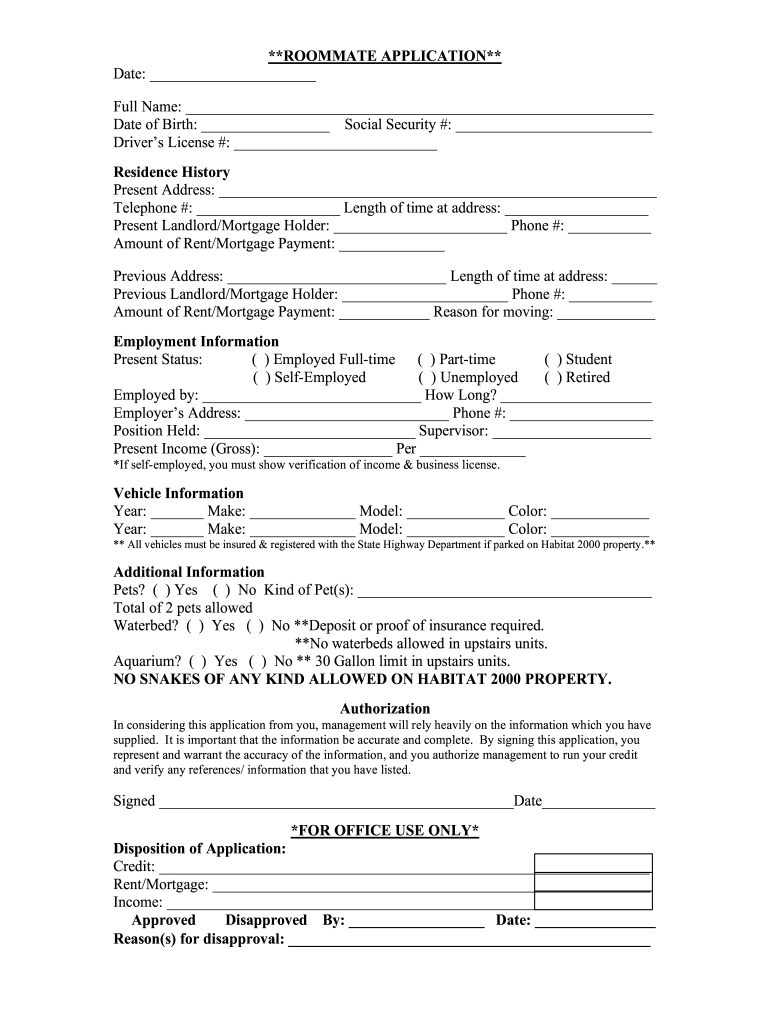
The roommate application form is a crucial document that collects essential information from individuals applying to share living spaces. It serves multiple purposes including screening potential roommates, facilitating communication, and ensuring the renting process runs smoothly.
Key Information Collected
A standard roommate application gathers a range of personal details that landlords and current tenants may find pertinent. The following sections are typically included:
-
Identification Information: Applicants are required to provide their full name, date of birth, and contact information. This establishes their identity and allows landlords to conduct background checks.
-
Residential History: Past addresses, duration of residency, and landlord contact information help to verify rental history and assess reliability as a tenant.
-
Employment Details: Information on current employment, including job title, salary, and the name of the employer, ensures that applicants have a stable source of income to cover rent and shared expenses.
-
Financial Information: Proof of income and any additional financial documentation can be requested to evaluate the applicant’s ability to pay rent regularly.
-
Pet Ownership: Many properties have specific rules regarding pets. This section allows applicants to disclose any pets they own, which can influence the rental decision.
The Importance of Accurate Information
Completing a roommate application accurately is crucial for several reasons. Incorrect or misleading information can lead to issues such as:
-
Credit Check Complications: Landlords often perform credit checks to assess a potential roommate's financial responsibility. Discrepancies in reported income or previous addresses can result in denial of the application.
-
** references Verification**: Many landlords require the applicant's previous landlord’s details for reference checks. Providing accurate contact information allows landlords to receive feedback about past rental behavior.
-
Legal Implications: Falsifying information on a roommate application can lead to eviction or legal actions against the applicant. Transparency is essential for establishing trust between roommates and their landlords.
Application Signature Requirement
Most roommate applications necessitate a signature where the applicant authorizes the collection of their personal information. This signature signifies:
-
Consent for Background Checks: It allows landlords to perform necessary checks, including credit and criminal history, which can be critical for ensuring a safe living environment.
-
Agreement to Terms: By signing, applicants agree to the conditions laid out in the leasing agreement once they secure the rental. This often includes stipulations around rent payments, shared responsibilities, and property rules.
Sample Questions in a Roommate Application
The roommate application form may include various questions that gauge compatibility and reliability. Common questions include:
- Why are you looking for a new roommate?
- What is your daily routine like?
- Do you smoke or have any preferences around smoking?
- Are you comfortable with sharing household chores, and how would you like to divide them?
- What are your expectations for “guest” policies in the shared space?
Types of Roommate Application Formats
There are different formats available for roommate applications, including:
-
Standard PDFs: These can be downloaded and filled out digitally, ensuring easy submission and compatibility with common software.
-
Online Forms: Many landlords and property management companies now use online applications, allowing for real-time submissions and data collection.
-
Manual Applications: Some setups may still utilize paper applications, where applicants fill in their details by hand.
Each format has its pros and cons, but the key is that all applicants should strive to present the most accurate and comprehensive information possible, regardless of the format chosen.




