




01. Edit your bomb threat checklist template online
Type text, add images, blackout confidential details, add comments, highlights and more.

Type text, add images, blackout confidential details, add comments, highlights and more.

Draw your signature, type it, upload its image, or use your mobile device as a signature pad.

Send bomb threat checklist word document via email, link, or fax. You can also download it, export it or print it out.
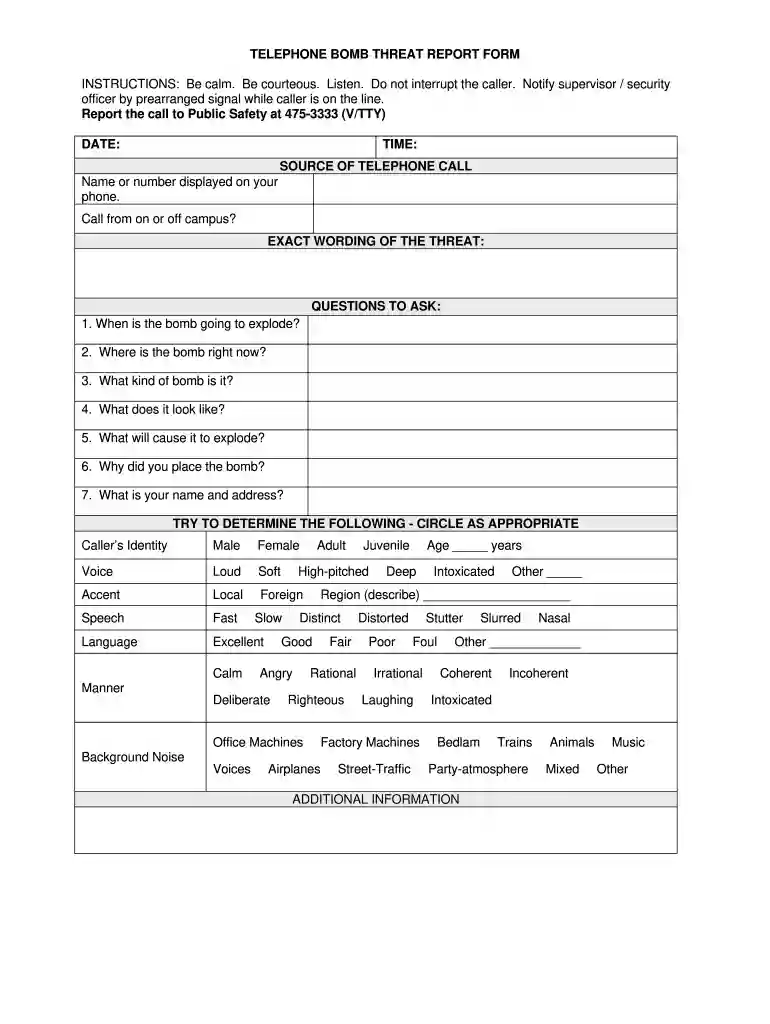
The bomb threat report form is a structured document used to collect detailed information following a bomb threat incident or call. This form is critical for law enforcement and safety personnel as it provides a standardized way to capture essential data about the situation. The form generally includes fields for the time and date of the call, the caller's information, the exact wording of the threat, and details about the caller's voice and background noise.
Completing this form accurately and thoroughly can aid response teams in assessing the threat level and may significantly impact evacuation procedures and safety measures implemented in response to the threat. Understanding the nuances of this form is vital for anyone involved in emergency response or safety management.
When using a bomb threat report form, several critical elements must be accurately captured to ensure thorough documentation of the threat. Important sections typically include:
These key elements help establish a clear, factual basis for further investigation and response.
Using the bomb threat report form requires a systematic approach to ensure that all relevant information is gathered and documented. The process includes the following steps:
Following these steps will create a comprehensive record to guide law enforcement and first responders in evaluating the situation.
Completing the bomb threat report form involves a structured approach:
By maintaining a clear and consistent approach, those responsible for managing bomb threats can ensure that proper protocols are followed, facilitating effective responses.
Scenario-based examples of using bomb threat report forms can enhance understanding:
Example One: A school receives a bomb threat via a phone call. The secretary answers and uses the form to document the time of the call, the exact wording of the threat, and any identifying features of the caller’s voice. This detailed record allows law enforcement to quickly assess the credibility of the threat and guide the school's evacuation plan.
Example Two: A corporate office receives a bomb threat via an anonymous call. The receptionist utilizes the bomb threat report form to capture specific details. The completed form is submitted to the security team, who uses the information to coordinate a rapid response and communicate with local authorities.
In both examples, the structured approach provided by the bomb threat report form allows for a thorough analysis of the situation, aiding in effective decision-making and potentially safeguarding lives.
Understanding terminology is essential when utilizing the bomb threat report form. Key terms include:
Familiarity with these terms can enhance clarity during training and in real-life crisis situations.
Regulations and protocol for handling bomb threats can vary by state, impacting the use of bomb threat report forms. For example:
Understanding these state-specific rules ensures compliance and the appropriate handling of bomb threats, enhancing safety and legal integrity.
The legal context surrounding bomb threat reports involves adherence to local and federal laws regarding privacy and safety. It is imperative that:
Developing a thorough understanding of these legal requirements safeguards organizations during an incident and delineates their responsibilities.
By understanding each of these elements, individuals using the bomb threat report form can effectively document and communicate critical information during a high-stress situation.
At DocHub, your data security is our priority. We follow HIPAA, SOC2, GDPR, and other standards, so you can work on your documents with confidence.
Mar 12, 2020 Complete reports and other forms as required. Suggest Bomb Threat, loss of communications. Other Possible Tasks. OperateRead more
BOMB THREAT REPORT FORM. Threatening Phone Call. Date and time call received. Exact words of person placing call: Questions to Ask: When is the bomb goingRead more
Provides instructions on how to respond to a bomb threat and a comprehensive list of information that will assist law enforcement in a bomb threat.


