
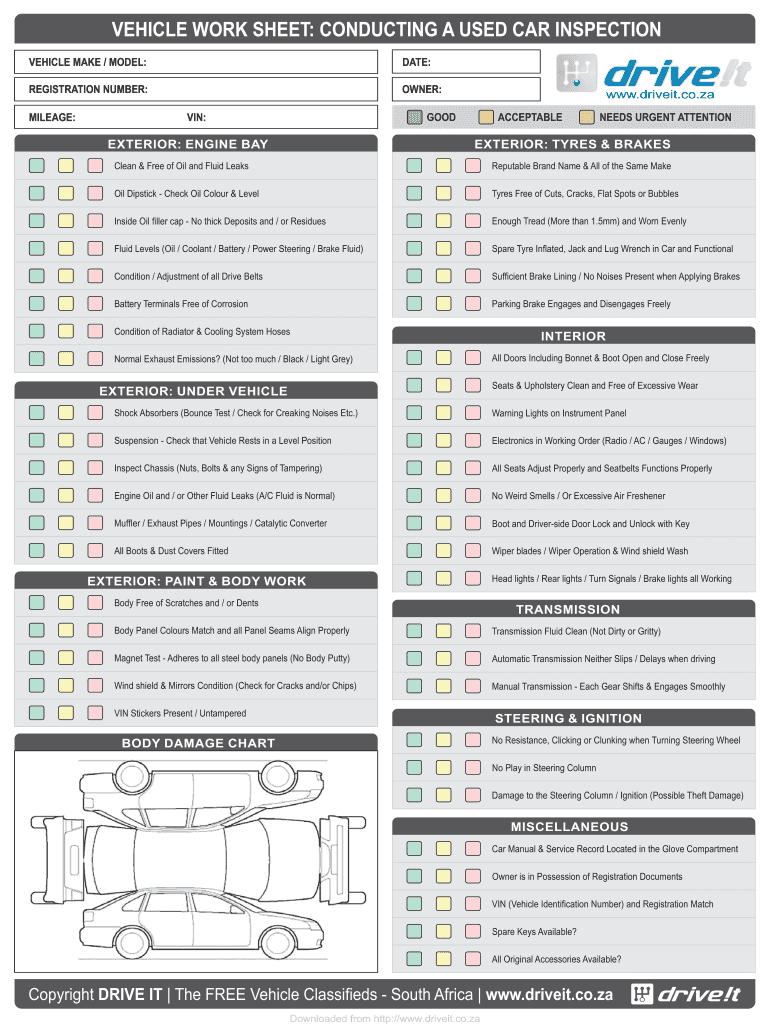







Comprehensive Used Car Inspection Checklist
Conducting a thorough inspection of a used vehicle is imperative for ensuring quality and safety. This section outlines a systematic approach to assessing a car's key components, helping potential buyers make informed decisions.
Exterior Evaluation
-
Body Condition
- Inspect for dents, scratches, and rust.
- Check the alignment of body panels; uneven gaps may indicate past accidents.
-
Windows and Glass
- Ensure all windows operate smoothly.
- Look for chips or cracks that could impair visibility.
-
Lights and Indicators
- Test headlights, brake lights, turn signals, and hazard lights.
- Replace any burnt-out bulbs before finalising the sale.
Engine Bay Assessment
-
Fluid Levels
- Check oil, coolant, and brake fluid levels for consistency.
- Look for any signs of leaks under the vehicle.
-
Belts and Hoses
- Inspect belts for cracks or fraying.
- Evaluate hoses for brittleness and leaks, ensuring they retain flexibility.
-
Battery Condition
- Test battery terminals for corrosion.
- Review the battery’s age and performance history.
Interior Inspection
-
Seat Condition
- Examine fabric or leather for wear and tear.
- Test all adjustments, including seat heating features.
-
Dashboard Functionality
- Ensure all gauges and displays function correctly, including warning lights.
- Test electronic features such as the infotainment system and climate control.
-
Safety Features
- Check seatbelts for proper function and damage.
- Ensure airbags are intact and show no warning indicators.
Underbody Examination
-
Chassis Integrity
- Inspect the frame for signs of serious damage or rust.
- A solid foundation is critical for reliability in structural strength.
-
Suspension Components
- Check shock absorbers for leaks and responsiveness.
- Listen for unusual noises during testing for excessive wear.
-
Exhaust System
- Look for rust or damage on the pipes and muffler.
- Test for outgoing emissions' clarity to meet environmental standards.
Miscellaneous Components
-
Tyres and Brakes
- Ensure tyres have adequate tread depth for safety.
- Examine brake pads and discs for wear.
-
Transmission and Steering
- Test transmission smoothness during shifts.
- Ensure the steering wheel operates freely without noise or resistance.
-
Electronics and Accessories
- Inspect all electronic components, including power windows, mirrors, and doors.
- Confirm the operation of audio and navigation systems.
Document and History Verification
-
Vehicle History Report
- Obtain a report detailing the vehicle’s past ownership, accidents, and maintenance.
- Look for any red flags such as odometer discrepancies or significant repairs.
-
Inspection Records
- Validity of past inspection and service records can validate condition claims.
- Ensure all major component replacements are documented.
-
Warranty and Service Contracts
- Review any existing warranties and understand what they cover.
- Check the transferability of warranties between owners.
Final Review
Utilizing this used car inspection checklist facilitates a comprehensive evaluation of vital vehicle components. This thoroughness is crucial for assessing safety, longevity, and overall value. It empowers buyers to make informed decisions and negotiate effectively before finalizing their purchase.




