




01. Edit your form online
Type text, add images, blackout confidential details, add comments, highlights and more.

Type text, add images, blackout confidential details, add comments, highlights and more.

Draw your signature, type it, upload its image, or use your mobile device as a signature pad.

Send it via email, link, or fax. You can also download it, export it or print it out.
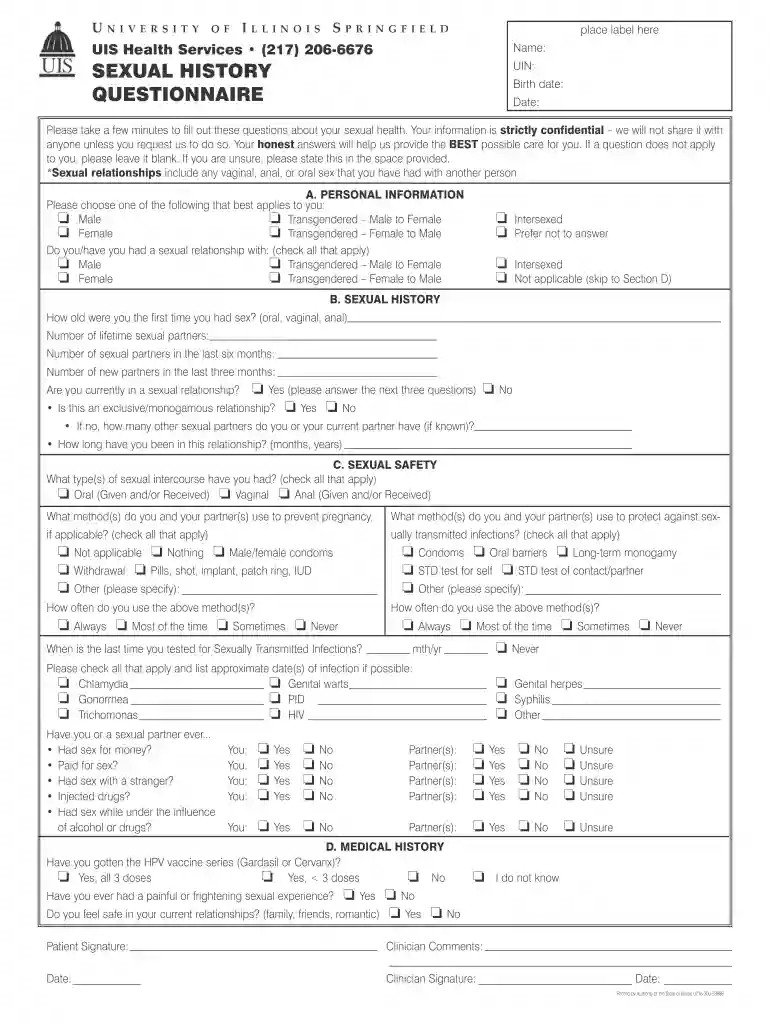
A sexual history questionnaire is an essential tool utilized in various healthcare settings to gather confidential data regarding an individual's sexual health and behaviors. The form typically includes sections focused on personal demographics, sexual experiences, practices, and safety measures. This comprehensive data collection aims to facilitate better healthcare decisions, inform treatment options, and promote overall sexual health.
The sexual history questionnaire consists of several vital sections designed to gather a broad spectrum of information about an individual's sexual experiences and health. The main components often include:
Personal Information: This section collects demographic details such as age, sex, sexual orientation, and relationship status, providing context for healthcare providers.
Sexual History: Questions may include the number of sexual partners, types of sexual activity engaged in, and any history of sexually transmitted infections (STIs).
Safer Sex Practices: This part focuses on current habits regarding condom use, regular STI testing, and communication with partners about sexual health, guiding recommendations on safe practices.
Medical History: Health professionals often inquire about any existing health conditions or medications that may affect sexual health, such as hormonal therapies or chronic illnesses.
A sexual history questionnaire plays a significant role in delivering tailored healthcare. It helps clinicians:
Assess Risks: Understanding a patient's sexual behaviors can assist in identifying potential risks for STIs or unintended pregnancies and guide preventive measures.
Create Treatment Plans: Collecting thorough sexual health information empowers providers to design appropriate treatment plans based on individual needs and risks.
Foster Open Communication: Comprehensive questionnaires encourage discussions about sexual health, helping patients feel more comfortable discussing sensitive topics that may affect their care.
When administering a sexual history questionnaire, it is crucial to uphold legal and ethical standards, including:
Confidentiality: All collected information must be kept secure and shared only with authorized medical personnel to protect patient privacy.
Informed Consent: Patients should be informed about the purpose of the questionnaire and have the option to consent to share their information.
Cultural Sensitivity: Health providers must approach sexual health topics with sensitivity to cultural differences and be respectful of varied backgrounds and experiences.
Healthcare providers from different specialties, including sexual health clinics, primary care, and mental health services, utilize sexual history questionnaires. They are flexible and can be customized to tailor to specific patient populations, such as adolescents, adults, or LGBTQ+ individuals.
There are multiple formats of sexual history questionnaires available, including:
Digital Versions: Many healthcare facilities opt for online formats, which can be filled out easily, ensuring accuracy and efficiency in data collection.
Printable PDFs: Sexual history questionnaire PDFs are commonly used for in-office visits, allowing patients to complete them at their own pace before their appointment.
Adapted Templates: Healthcare providers may create customized templates that include specific questions relating to their practice, ensuring targeted data collection.
Overall, the sexual history questionnaire serves as a foundational tool within sexual healthcare, helping to facilitate informed conversations between patients and providers. Its structured approach not only helps in identifying health risks but also promotes a comprehensive understanding of an individual’s sexual health.
At DocHub, your data security is our priority. We follow HIPAA, SOC2, GDPR, and other standards, so you can work on your documents with confidence.
Aug 6, 2022 Life history theory is a collection of hypotheses in evolutionary biology that explain why animal species differ in so-called life-history traits.Read more
This is a sexual history questionnaire and I will be asking you questions about your sexual education; the sexual behaviors in which you engaged; and theRead more
Jun 26, 2024 This guide offers a framework for discussing sexual health issues to help complete the overall picture of your patients health.Read more


