
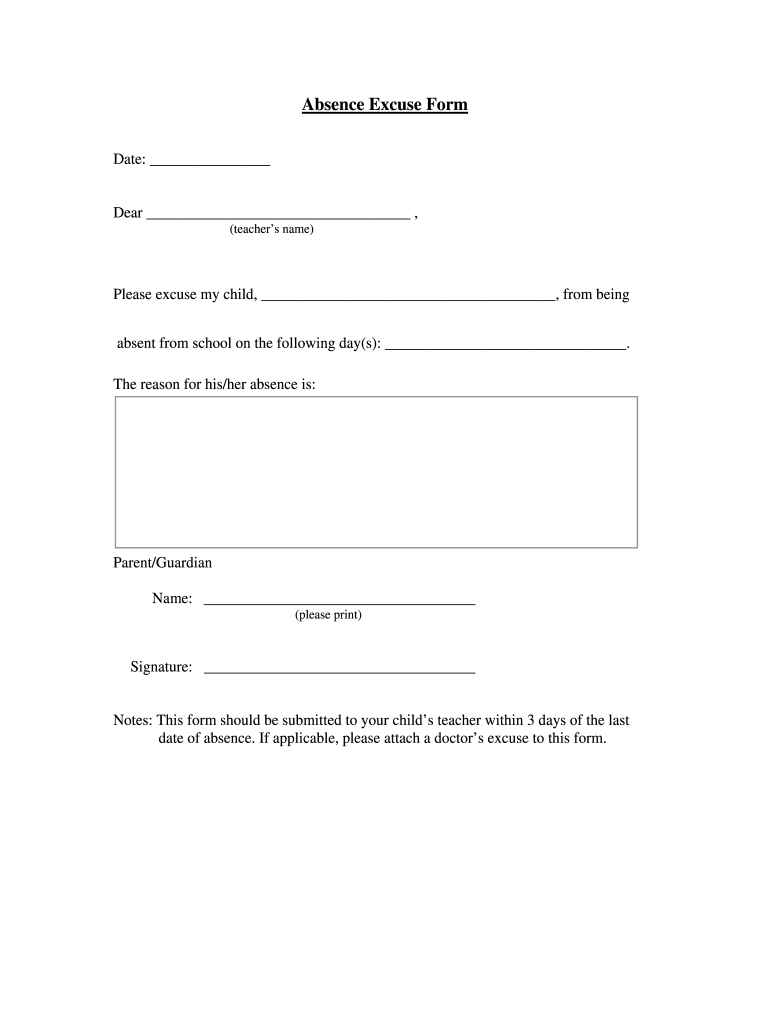







Definition and Purpose of an Excuse Absence
An excuse absence refers to a formal request for permission to be absent from school or work, typically due to legitimate reasons such as illness, family emergencies, or other personal matters. This request serves to inform authorities—whether educational institutions or workplaces—of the reason behind the absence, ensuring that it is acknowledged and documented appropriately.
- Legitimacy: The absence must fall under acceptable justifications recognized by the institution or workplace, often outlined in policies or regulations regarding attendance.
- Documentation: Providing a written excuse absence is essential for transparency and record-keeping, helping to prevent misunderstandings regarding the individual’s absence.
How to Use the Excuse Absence Form
Using the excuse absence form involves several steps, ensuring that all necessary information is appropriately filled out and submitted in a timely manner.
- Obtain the Form: The form can usually be accessed through the school or employer's website or directly from administrative offices.
- Fill Out Required Information:
- Personal Details: Include full name, date, and contact information.
- Reason for Absence: Clearly state the reason for the absence, ensuring it aligns with acceptable criteria.
- Duration: Specify the dates of absence to provide a clear timeline.
- Signature: Ensure that the form is signed, validating the submission and confirming that the information provided is accurate.
- Submission Method: Determine whether to submit the form online, by mail, or in person, depending on the institution's requirements.
Key Elements of the Excuse Absence
Understanding the essential elements of an excuse absence helps in crafting a formal request that meets the expectations of the receiving authority. The following components are vital:
- Date of Absence: This specifies when the absence occurred or is expected to occur.
- Reason for Absence: Provide a clear rationale that is acceptable under the school or employer's policies.
- Contact Information: Always include a way for the recipient to contact you for any follow-up questions or clarifications.
- Signature: A handwritten or digital signature may be required to authenticate the form.
Examples of Using the Excuse Absence
Real-world examples illustrate how to effectively use an excuse absence form in various scenarios:
- Medical Absence: A parent submits an excuse absence form for their child who was sick, detailing the illness and providing a doctor's note if required.
- Family Emergency: An employee explains their absence due to urgent family obligations, which may include attending a funeral or caring for a sick relative.
- Personal Matters: Literature students attending a conference on a school day might use the excuse absence form to notify their school of a legitimate reason for missing class.
Example Scenarios:
- Scenario One: Student unable to attend school due to a doctor’s appointment submits the form with relevant dates and details from the physician.
- Scenario Two: An employee misses work due to a sudden family emergency; they complete the excuse absence form and submit it swiftly to comply with company policies.
Important Terms Related to Excuse Absence
Familiarizing oneself with key terms enhances understanding of the processes and regulations surrounding excuse absence forms:
- Excusal Documentation: Any supporting documents that validate the request, such as medical certificates.
- Attendance Policy: The guidelines set by schools or employers regarding how absences are managed and excused.
- Submission Deadline: The timeframe within which the excuse absence must be submitted following the absence, often within a few days.
Legal Use of the Excuse Absence
Legal considerations are crucial in ensuring that the excuse absence form adheres to applicable laws and institutional regulations. Institutions are typically bound by:
- Rights of Students/Employees: Regulations individuals have to request leave and receive due notice.
- Confidentiality: Ensuring that reasons for absence, especially concerning medical or personal matters, are handled sensitively and are not disclosed without consent.
Maintaining compliance with these legal aspects helps protect the rights of individuals while ensuring accountability in attendance records.




