





Overview of the Application for Employment
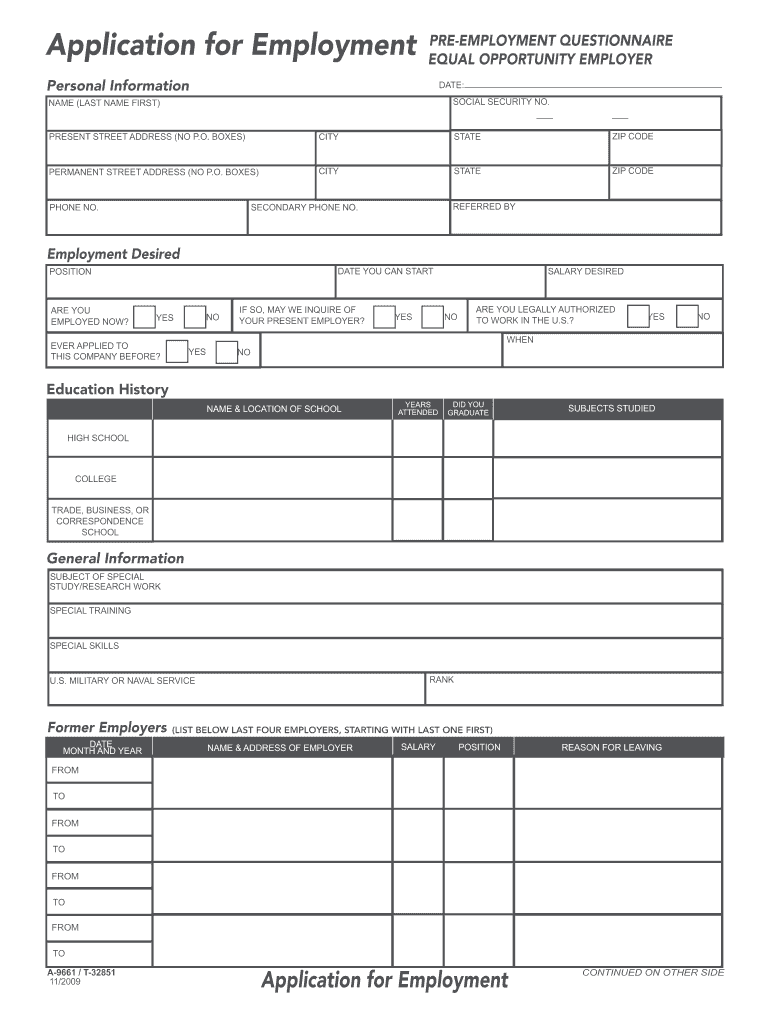
The application for employment functions as a critical component in the hiring process, serving both the employer and the prospective employee. This document is structured to collect essential personal information, assess candidate qualifications, and ensure compliance with equal opportunity employment standards. The application often includes multiple sections such as the pre-employment questionnaire, personal details, employment history, and references.
Key Sections of the Application for Employment
-
Personal Information: This section captures the candidate's basic data, including the applicant's name, contact information, and social security number. Accurate completion of this part is crucial as it establishes the identity of the applicant.
-
Employment History: Candidates are required to list previous employers, job titles, responsibilities, and durations of employment. This section allows employers to gauge the applicant’s experience and relevance to the position applied for.
-
Education Background: Applicants provide details about their educational qualifications. This includes schools attended, degrees obtained, and any relevant training programs. Such information helps employers assess the educational fit for the job.
-
References: Applicants typically need to supply names and contact information for professional references. Having reputable references can significantly impact an applicant’s success during the hiring process.
Certification of Accuracy and Equal Opportunity Employment
An essential feature of applications for employment is the certification clause. Candidates must affirm that the information provided is accurate and complete. Misrepresentation can lead to disqualification from the hiring process or termination if discovered post-hire. Additionally, these applications often contain a statement indicating that the employer is an equal opportunity employer, emphasizing a commitment to fair hiring practices regardless of race, gender, or religion.
Authorization for Background Checks
The application may also include an authorization section allowing employers to conduct background checks. This process can include criminal history, credit reports, and other records to evaluate the applicant's qualifications further. Candidates should be informed about the scope of these checks and any rights they have regarding the information being assessed.
Additional Considerations for Driving Positions
For applicants seeking positions that require driving, there may be a specific request for driving records. This might include information about the individual's driving history and any relevant licenses held. It serves to ensure that candidates meet the driving qualifications essential for the role.
Importance of the Pre-Employment Questionnaire
The pre-employment questionnaire serves as an additional tool for employers to assess candidate suitability. It may include questions about availability, work preferences, and scenarios relevant to job performance. This data can aid in making informed hiring decisions and provide insight into the applicant’s compatibility with the workplace culture.
Security and Confidentiality of Information
Given that personal information and social security numbers are collected during the application process, ensuring security and confidentiality is paramount. Employers should employ secure methods for handling this data, including encryption and secure storage protocols, to protect against unauthorized access.
Completion Tips for Candidates
Candidates should take care when filling out the application to ensure clarity and accuracy. They should:
- Read instructions thoroughly before completing.
- Use black or blue ink if submitting a paper form for clear visibility.
- Double-check for spelling and grammatical errors.
- Provide complete information, especially in mandatory sections as incomplete applications may not be considered.
By adhering to these practices, candidates can enhance their chances of a successful application process.