






Understanding a Sample Letter for Drug Treatment Programs
A sample letter related to a drug treatment program is a formal document that facilitates communication between patients, treatment providers, and legal entities. Such letters can serve various purposes, including confirming treatment completion, providing evidence for legal matters, or offering recommendations for further support.
Types of Sample Letters Related to Drug Treatment Programs
Different types of letters can be generated depending on the specific needs of the situation. Each type serves a unique purpose and may feature varying elements.
-
Completion Letters: These letters confirm that a patient has successfully completed a drug treatment program. They typically include:
- Patient’s name and identification details
- Dates of the treatment program
- Treatment provider's signature and contact information
-
Recommendations: A sample letter of recommendation for drug rehabilitation is written by a treatment provider, detailing the patient's progress and encouraging continued sobriety. Key components may include:
- Overview of the patient's history with substance abuse
- Description of the treatment undertaken
- Statements regarding the patient's readiness for reintegration into society
-
Legal Letters: A sample letter to judge for drug rehab is often required when a patient is seeking leniency in legal proceedings. Essential points often covered involve:
- Reasons for treatment
- Progress made during rehabilitation
- Supporting evidence from the treatment facility regarding the patient's behavior and success
Key Elements of a Drug Treatment Program Letter
When drafting these letters, certain elements are crucial for ensuring comprehensibility and effectiveness. Below are common components found in such letters:
-
Header Information: Include the date, patient's information, and treatment provider's contact details at the top of the letter.
-
Subject Line: Appropriately label the purpose of the letter, such as "Completion of Treatment Confirmation" or "Letter of Recommendation."
-
Salutation: Use respectful and proper greetings tailored to the recipient. For example, "Dear [Recipient's Name or Title]."
-
Body Content: Clearly articulate the purpose of the letter, ensuring that relevant information is included such as:
- Explanation of the program structure
- Duration of treatment
- Observations made throughout the process
- Outcome of the treatment
-
Closing Statement: A brief summary reiterating the patient's achievements or positive outcomes of the treatment program is helpful. Also, encourage future communication if necessary.
-
Signature: Include the name, title, and signature of the person verification the letter, often a treatment program director or counselor.
Sample Format for a Completion Letter
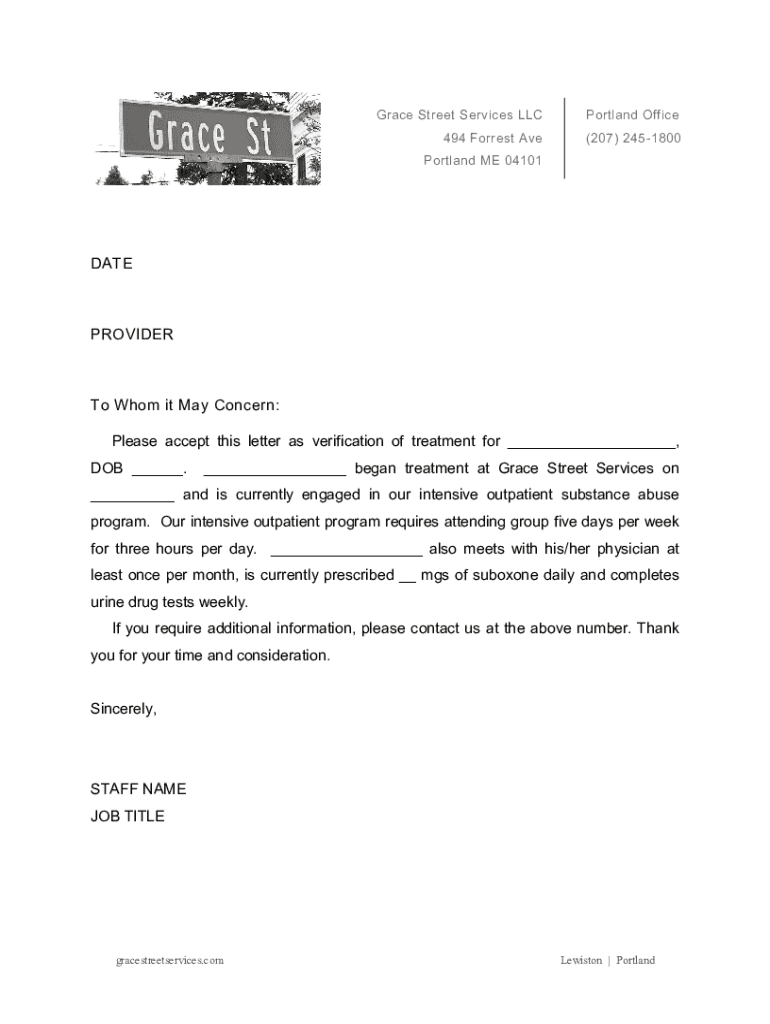
A well-structured completion letter may look as follows:
[Date]
[Patient's Name] [Patient's Address] [City, State, Zip]
[Treatment Provider's Name] [Facility Name] [Facility Address] [City, State, Zip]
Subject: Completion of Treatment Confirmation
Dear [Recipient's Name],
I am writing to confirm that [Patient's Name] has successfully completed the [Name of Drug Treatment Program] on [Completion Date]. The program lasted for [Duration of the Program] and included various therapeutic approaches, including [List Key Therapies Used].
Throughout this period, [Patient's Name] demonstrated a significant commitment towards recovery, engaging actively in all scheduled sessions and required activities. I believe their successful completion marks a milestone in their journey towards long-term sobriety.
Should you require any further information, do not hesitate to reach out.
Sincerely,
[Signature] [Name] [Title] [Contact Information]
Importance of Documentation in Drug Rehabilitation
Accurate documentation related to drug treatment programs plays a pivotal role in supporting the recovery process as well as fulfilling legal requirements. Such letters help validate the efforts made by individuals in overcoming substance abuse issues.
-
Legal Compliance: For patients involved in the legal system, proof of treatment can often demonstrate their commitment to change, influencing court decisions regarding sentencing or probation.
-
Support Networks: Providing family members and friends with documentation assists in building a robust support system, showcasing the patient's commitment to their recovery journey.
In conclusion, crafting effective letters related to drug treatment programs requires attention to detail and an understanding of the context in which they will be used. Whether confirming completion, providing recommendations, or addressing legal matters, these letters serve as essential tools in supporting successful recovery outcomes and demonstrating accountability.